
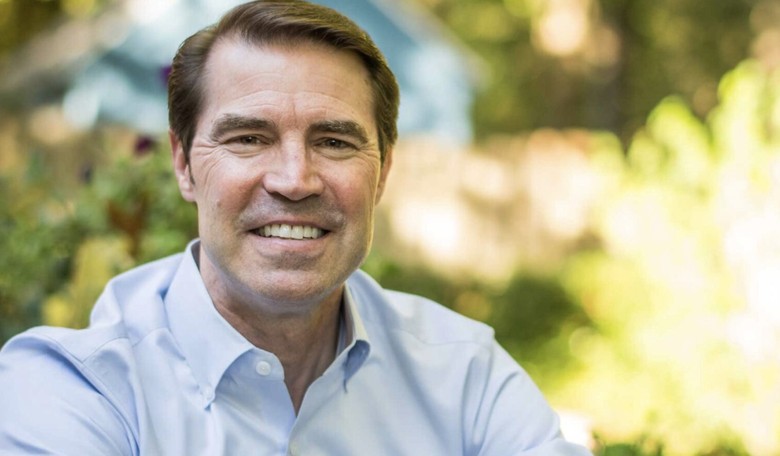
Democrat Sean McCann, the Michigan State Senator running for the House in the state's 4th Congressional District, voted for Gov. Gretchen Whitmer's sweeping green energy mandate. That mandate will funnel billions to Michigan's biggest energy players, guaranteeing both massive spending and record profits for these utility monopolies.
McCann bragged about the vote in a post on X, saying he was "proud" to "move toward a clean energy future."
I was proud to vote for legislation to help Michigan move toward a clean energy future yesterday. These bills will increase utility accountability, improve energy reliability and reduce carbon emissions for homes and businesses. pic.twitter.com/wFPv6KXm6n
— Sean McCann 🇺🇸 (@SeanAMcCann) October 27, 2023
But at the same time, McCann stands to benefit from this green energy windfall. Why? Because his family's personal portfolio holds up to $65,000 in an Environmental, Social, and Governance (ESG) fund that's invested in those same utility giants, per financial disclosure reports. This includes DTE Energy Co. and CMS Energy Corp. (Consumers Energy). They're the main energy providers in Michigan and benefited directly from the green energy mandate vote.
Records also show that — since casting his vote for the green energy mandate — McCann's ESG fund investment has surged 45 percent. Meanwhile, hardworking Michigan families face a 36 percent increase in electric bills and doubled utility rates thanks to these mandates.
Under the legislation, Michigan utilities must transition to 100 percent clean energy by 2040, and under state utility regulation, utilities earn guaranteed profit on capital spending (e.g., grid and renewable rebuilds). The guarantee of spending boosts utility valuations and green bond ratings, which inflates the price of the ESG fund in McCann's portfolio. The Mackinac Center for Public Policy warned in 2024 that only utility giants benefit from Michigan's green climate policies.
What’s progressive about green laws that let corporate behemoths pick the pockets of working Michiganders?https://t.co/LLxtffLg4q
— Mackinac Center (@MackinacCenter) July 5, 2024
The Mackinac Center also pointed out that Whitmer's policies actually reward utilities for being less efficient. "The more they spend, the more they make, and the more they are allowed (by the Public Service Commission) to charge ratepayers," the report wrote. The average Michigan family will see their rates climb an extra $2,746 a year, or an additional $228 a month while putting them at risk for blackouts.
Michigan’s green energy plan could cost $386 billion, double your electric bill by 2050, and lead to blackouts lasting up to 61 hours, all to reduce global temperatures by just 0.0015 degrees. https://t.co/1xkQlkTHDK
— Mackinac Center (@MackinacCenter) August 7, 2025
At the same time, Michigan families will have to decide between keeping the lights on and putting food on their table, shares in McCann's investments went from $310.07 per share to $452.42 per share.
This isn't the only time McCann has put himself first. During his time on the Kalamazoo City Commission, he voted to give himself a 23 percent pay increase while voting to raise fees and taxes on Kalamazoo residents. This includes a 2001 vote to increase wastewater services by four percent, a 2005 vote to increase water revenues by three percent, and championing a $91.5 million tax package that raised property taxes.
While McCann's investments haven't earned him millions of dollars, there's a much simpler question at play here. Why was a state lawmaker voting on legislation that could directly benefit companies included in his investment portfolio?
Michigan voters who will bear the brunt of McCann's green energy vote in the form of higher utility rates, blackouts, and other problems also deserve to know why McCann put his own interests ahead of theirs.