
Socialists are improving Los Angeles one yellow stripe at a time, and congratulating themselves accordingly.
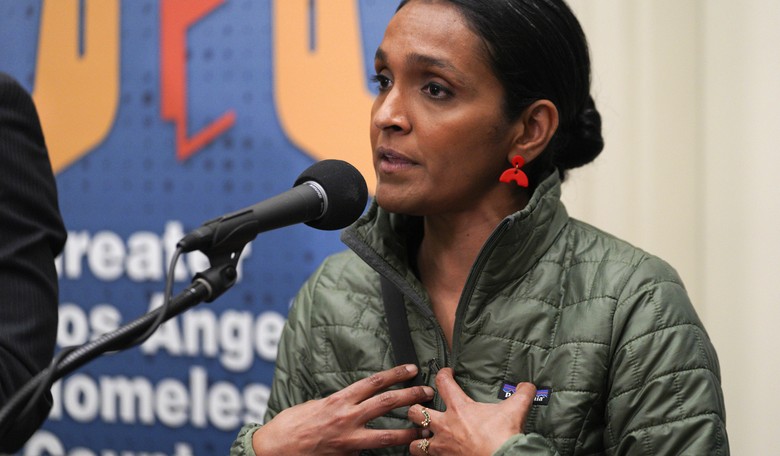
Nithya Raman, a Democratic Socialists of America (DSA)-backed city councilwoman and progressive challenger to Los Angeles Mayor Karen Bass, proudly announced on social media that city government had delivered a major neighborhood upgrade. It painted a new crosswalk over a road badly in need of actual pavement. Even better, the city managed to complete the achievement in only eight months.
Apparently, in Los Angeles, addressing some of the worst infrastructure problems in the country simply means adding some fresh paint and calling it progress.
The Los Feliz Neighborhood Council alerted our office in late 2025 to the need for a crosswalk at Sunset Dr. and Bates St., which has just been completed!
— Councilmember Nithya Raman (@cd4losangeles) August 26, 2026
Thank you to our incredible CD4 Field Team for continuing to problem-solve, push for solutions, and make our streets safer. pic.twitter.com/AmNAyPAhdR
"The Los Feliz Neighborhood Council alerted our office in late 2025 to the need for a crosswalk at Sunset Dr. and Bates St., which has just been completed!" Raman wrote on X. "Thank you to our incredible CD4 Field Team for continuing to problem-solve, push for solutions, and make our streets safer."
Behold the efficacy of progressive government.
In the private sector, this would qualify as the bare minimum expected of a low-skill employee. In California government, it represents the presumed combined effort of dozens, maybe even hundreds of city officials, planners, consultants, meetings, approvals, and paperwork, all working in perfect harmony for nearly a year to accomplish what one person with a bucket of yellow paint and a roller could likely finish over a weekend.
And this is the governing model California Democrats increasingly celebrate. The episode comes as Gov. Gavin Newsom has taken to boasting about California and its economy, an extraordinary exercise in irony given how much the state’s private sector manages to achieve and how little its public sector often does in return. And yet California voters continue to embrace this style of governance, declining to hold progressive leaders accountable for its predictable failures. The answer is always the same. That perhaps one more tax increase, one more bureaucracy, and one more government program will finally make the system work as advertised. It obviously has not worked so far.
At some point, California may want to experiment with a radical idea, cutting the bureaucracy, demanding measurable results, and finding out how far each tax dollar can go when it is not first consumed by layers of useless administrators, consultants, and process.
But that may be asking too much of a state where progress comes in the form of painting a crosswalk over the course eight months, and still managing to earn a victory lap.