

President Donald Trump did not disappoint in his performance at the White House Correspondents' Dinner on Saturday.
During his speech, he discussed CNN’s Kaitlan Collins and praised her for receiving the Award for Excellence in Presidential News Coverage Under Deadline Pressure in the Broadcast category.
“I want to personally congratulate CNN’s Kaitlan Collins on receiving her award. It was all about me. It’s a fake. She shouldn’t get the award. It was a fake. But I didn’t mind,” Trump said. “I said, ‘Kaitlan, congratulations.’ But it was fake, there’s no question about it. But she’s a young, attractive woman. She never smiles. I said, ‘Kaitlan, do you ever smile? Smile. You have a nice position. You’re at CNN fake news. You should be a happy person.”
Then, the president looped in the furor over Dylan Mulvaney’s partnership with Bud Light that took place a few years ago. “I thought Kaitlan had really made it big with a major new sponsorship, but then I informed her that it wasn’t her on the Bud Light can, it was Dylan Mulvaney,” he said, also noting that Mulvaney “cost Bud Light $35 billion in market cap.”
And Dylan Mulvaney cost Bud Light $35 billion in market cap. That was the worst commercial ever made, by the way, for those few people that want to hear that. Most people don’t care, but I would. I wouldn’t want to hire Dylan anytime soon. Think of it. They hired Dylan Mulvaney, and their market cap has gone down by $35 billion. Who wrote that commercial?”
Trump: Kaitlan Collins never smiles. I thought she had really made it big with a major new sponsorship but then I informed her that it was not her on the Bud Light can. It was Dylan Mulvaney pic.twitter.com/TPYSSfcuFP https://t.co/J91JwZFGGT
— Republicans against Trump (@RpsAgainstTrump) July 26, 2026
Trump’s comments sparked outrage from left-leaning users on social media who pilloried him for subtly suggesting Collins looks like a man.
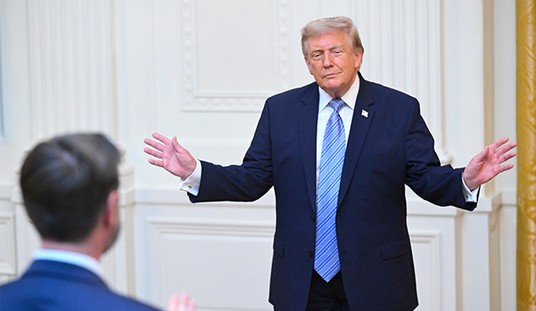
Here's an extended cut of Trump's widely panned, low energy speech at the White House Correspondents' Dinner last night, beginning with his vile joke about Kaitlin Collins -- “I thought Kaitlan had really made it big with a major new sponsorship. But then I informed her that it… pic.twitter.com/ALMvg6xaAr
— Aaron Rupar (@atrupar) July 25, 2026
🚨 EXPOSED: DISGUSTING MONSTER! 🔥
— Ronald Kelly (@RonK3l) July 26, 2026
Trump viciously attacks journalist Kaitlan Collins, raging she didn't deserve her award — demands she "smile more!" Then he sneers she looks like transgender activist Dylan Mulvaney on the Bud Light can before launching a vile transphobic rant!… pic.twitter.com/yVuQQcGqyp
Trump having a normal one and posting a photo of Kaitlan Collins as Dylan Mulvaney. https://t.co/rJextIZHue
— Eric Michael Garcia (@EricMGarcia) July 26, 2026
Bud Light came under fire after it made the ridiculous decision to partner with trans-identified TikTok influencer Dylan Mulvaney on a promotional campaign in which he posted a video celebrating one year of having transitioned to the opposite gender.
The move triggered intense backlash from consumers, celebrities, and commentators who argued it prioritized progressive identity politics over the brand’s traditional working-class and male customer base. It prompted widespread boycotts and a sharp drop in sales that cost Anheuser-Busch hundreds of millions and dethroned Bud Light as America’s top beer.