

Scott Jennings blasted his fellow CNN hosts after they argued that Iran did not pose an imminent threat to the United States prior to Operation Epic Fury. His remarks come as Democrats and many self-described isolationists have swiftly condemned the U.S. strikes, often in sweeping terms that assume any military engagement will inevitably spiral into a forever war. Despite the fact that Iran has been engaged in a war against the United States and Israel since 1979.
🚨 SCOTT JENNINGS DROPS TRUTH: "Missiles. Nuclear ambitions. Terrorism. It stops now because TRUMP had the guts to do it."
— Eric Daugherty (@EricLDaugh) March 2, 2026
"Trump isn’t starting a war - he’s ending a regime at war with the US & Western Civilization for 47 years. May God rest the souls of the Americans who gave… pic.twitter.com/GVfl2yQIzN
"I totally disagree with you about the threat not being imminent," Jennings said Sunday. "I spoke to senior, very senior administration officials yesterday. They believe that the Iranian regime was about to fire ballistic missiles, not at the United States, but into U.S. military bases and civilian targets. They were going to attack Israel. They are already attacking other Gulf states."
"Yeah, but you can't make the case back then," one of his cohosts replied. "Apparatus has assessed that there was not an imminent threat."
"I know. My guess is I've spoken to higher-ranking officials than you," Jennings said.
How long do you want to wait? Death to America? Death to Israel? How long do you want to wait? We waited 47 years. We have crossed every red line. Every president says they want to do something about it. Only Donald Trump had the guts to do it. You said you're not shedding any tears for the regime, but you appear just not to like Donald Trump enough to be mad about it.
"He's the guy who's going to bring peace and not start wars," Jennings added. He went on to argue that, although the conflict began as a preemptive strike against Iran, President Trump is finishing a war, not starting one. Iran, he said, has posed a threat to the United States since 1979, attacking America and its allies while persistently endangering our security, whether through acts of terror or efforts to develop nuclear weapons. Whatever conflict is endured now, if successful, will ultimately lead to a reshaping of the Middle East for the better.

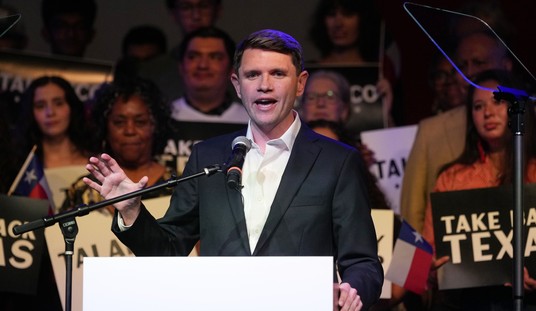
"And he is bringing peace. We're already—Iran has been at war with us for 47 years," Jennings continued.
This is not an attempt to start a war. This is an attempt to prevent further conflict. This is an attempt to get the largest state sponsor of terror off the field. This is an attempt to stabilize the Middle East. I don't view this, Ashley, as starting a war as much as ending the people who are the preeminent terror threat in the world. They're at war with everybody. They're at war with us, and they're at war with Western civilization.
"Okay, so this is a serious question because we have seen regimes fall and countries not be stabilized, and so what's next?" a co-host asked.
"Well, gosh, I don't know. I mean, what if we leave a country that for the next 47 years kills Americans, kills American personnel, funds terror around the world?" Jennings said. "That's what we have now. We couldn't have it any worse now. What comes next? We actually don't know. We don't know, actually. That the Iranian people rise up and take control of their country."
Democrats often treat uncertainty on the other side of a conflict as sufficient reason never to engage at all. While they and other isolationists remain adamant that Operation Epic Fury will devolve into a forever war, they forget, or deliberately ignore, several key facts that point toward a different outcome.
First, President Trump has thus far entered only those conflicts in which he believed the objective could be achieved swiftly and decisively. That was the case with Operation Midnight Hammer, when Iranian nuclear facilities were destroyed; with Operation Absolute Resolve, which concluded in roughly four hours; and now with Operation Epic Fury, in which the Ayatollah was killed within the first day of fighting.
Second, and more importantly, several Middle Eastern countries, including Saudi Arabia, the United Arab Emirates, and possibly Qatar, have indicated a willingness to provide military support. These regional powers have a strong interest in shaping what follows Operation Epic Fury. In the event of a weakened or neutered Iranian government, they are likely to move quickly to fill the resulting power vacuum and to help ensure that Iranian-backed terrorist organizations do not seize control. Many of these nations have long grown weary of Iran’s regional bullying and have every incentive to prevent its resurgence in another form.