
President Donald Trump criticized The Wall Street Journal on Tuesday for using the term “artificial intelligence” instead of his preferred “Super Intelligence” and said his administration will ban the term.
In a post on Truth Social, Trump asked when the newspaper will “start calling Artificial Intelligence (AI), a very bad and inaccurate name, SI (Super Intelligence), the name which virtually everyone else is using, or soon will be.”
In short order, we will be officially BANNING the term, “AI/Artificial Intelligence,” in all relevant documents, and everything else, due to its inaccuracy. Thank you for your attention to this matter. President DONALD J. TRUMP
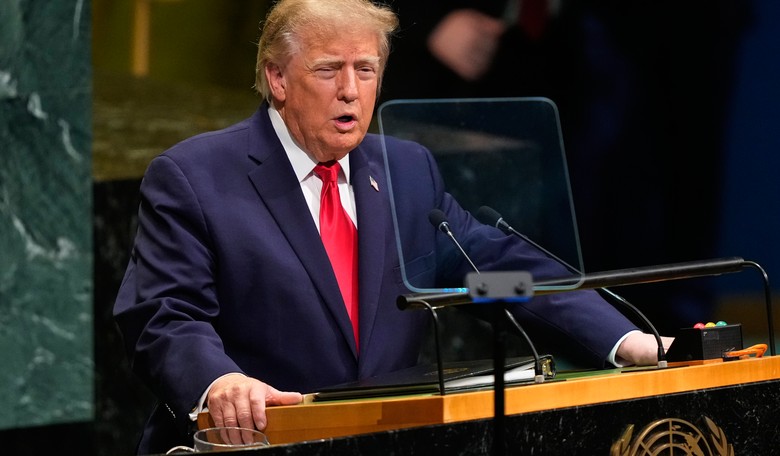
Trump directed federal agencies to use the term “super intelligence” because the technology is suffering from a branding problem. During an address to the U.N. General Assembly, he said his terminology is “much more accurate” because the usual label “makes it sound fake.”
He has aggressively pushed for this rebranding over the past month, declaring that those who do not use the new term will be considered “the enemy.”
Anthropic expects AI that rivals top human experts, works autonomously for weeks and controls robots to become widely available within a few years. Its IPO filing makes super exciting claims: - Expert-level autonomous systems "within a few years": Anthropic expects AI to match or exceed leading human experts across most professional and scientific disciplines. These systems would work for hours, days or weeks, coordinate with other agents, and operate laboratory equipment and robots through digital interfaces. - Millions of highly capable agents: Anthropic’s vision is "a country of geniuses in a data center". Vast numbers of agents working in parallel across software, physics, mathematics, biology, medicine and engineering. The company expects exponential progress in AI capabilities to continue. - AI is already accelerating the development of its successors: Claude helps run experiments, generate and process training data, automate evaluations and safety audits, and write research code. Anthropic calls this "closing the loop": better models help discover improvements that make the next generation more capable. It says over 90% of September’s codebase contributions were written by Claude. - Scientific progress could accelerate dramatically: Anthropic sees the potential for “compressing decades of scientific progress into years”. It also reports discovering a molecular machine with Claude that might become a new biotechnology tool, potentially for gene editing. That remains an early research finding requiring validation. - Compute could remain the limiting factor: Anthropic expects increasingly capable models to unlock new categories of work, keeping demand ahead of available compute for the foreseeable future. It also argues that today’s models already have capabilities the wider economy has barely begun to use.
— Chubby♨️ (@kimmonismus) October 26, 2026
The administration also released a "National Policy Framework for Artificial Intelligence," which recommends that Congress avoid creating new federal rulemaking bodies to regulate the technology, favoring instead sector-specific regulation through existing agencies and industry-led standards.
The framework focuses on protecting children and respecting intellectual property while calling on Congress to supersede state laws imposing onerous regulations on the industry.