
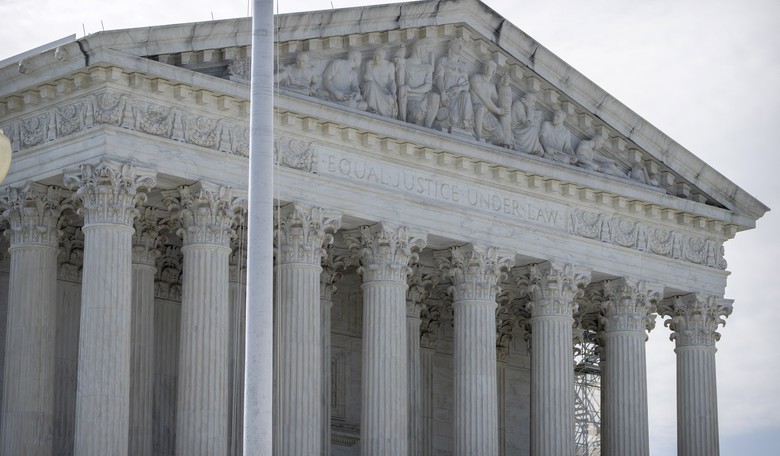
The Supreme Court on Wednesday denied the Trump administration’s emergency request in Trump v. Kingdom and refused to lift a lower-court order that stops the Federal Bureau of Prisons from enforcing its February policy restricting “gender-affirming care” for trans-identified inmates.
The court voted 7-2 with Justices Clarence Thomas and Samuel Alito dissenting.
President Donald Trump instituted the policy through a 2025 executive order recognizing only two sexes, halting “gender-affirming” surgeries, and taper off hormone therapy for trans-identified inmates.
The Supreme Court ruled Wednesday that the Trump administration must continue providing gender-affirming care to transgender inmates in federal prisons.
The decision, in an emergency appeal, maintains a lower court's injunction on a federal Bureau of Prisons' policy that would terminate hormone therapy and other treatments for trans inmates.
The order offered no explanation behind the decision. It simply read, "The application for stay presented to The Chief Justice and by him referred to the Court is denied."
It also said Justices Clarence Thomas and Samuel Alito would side with the Trump administration and would grant the application for stay.
A federal district judge barred the BOP from implementing its policy this summer.
A second court, the U.S. Court of Appeals for the District of Columbia Circuit, also rejected the administration's request to pause U.S. District Judge Royce Lamberth's order.
That's when U.S. Solicitor General D. John Sauer asked the Supreme Court to intervene.
As the federal judge's injunction remains in place, the legal battle over the policy continues.
Li Nowlin-Sohl, senior staff attorney at the American Civil Liberties Union and a lawyer involved in this case, said the organization believes there are more than 2,000 people in BOP custody who identify as transgender. (The BOP stopped publishing data reflecting transgender inmates after Trump took office in 2025. It only records male or female individuals incarcerated in the federal system.)
Kingdom v. Trump represents 1,000 inmates who have a gender dysphoria diagnosis, Nowlin-Sohl explained. Of those, the ACLU believes there are about 800 who have been prescribed hormone therapy and many who are also receiving social transition accommodations, Nowlin-Sohl said.
The Supreme Court on Wednesday left in place a lower court order preventing Trump administration from implementing its new policy on healthcare for transgender inmates. https://t.co/Grc0jGMPAf
— SCOTUSblog (@SCOTUSblog) October 21, 2026
Three trans-identified inmates, with the help of the American Civil Liberties Union (ACLU), brought the lawsuit against the White House. U.S. District Judge Royce Lamberth, a Reagan appointee, blocked the policy in June, deeming it arbitrary and capricious.
The judge noted that the Bureau of Prisons had provided hormone therapy since at least 1992. But now, it has reverse-engineered the policy to implement the executive order.
Nowlin-Sohl lauded the ruling, saying it is “a critical ruling for our clients and all transgender people in Bureau of Prisons custody. The denial of medically necessary health care, including gender-affirming health care, to people in prison is a violation of their fundamental constitutional rights.”