
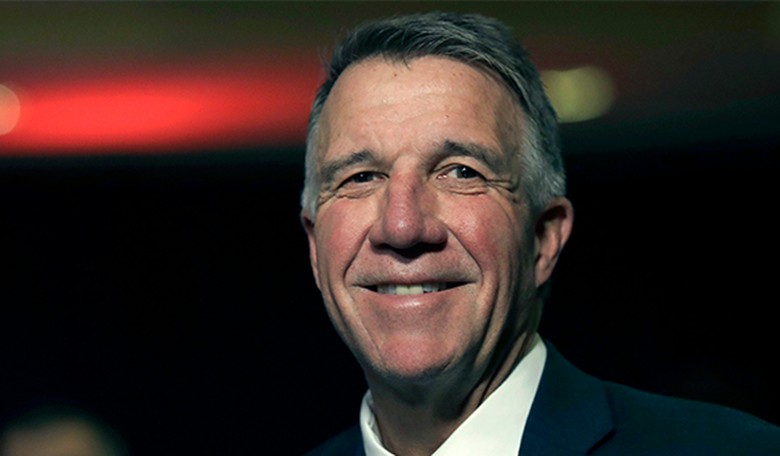
One Republican withstood the blue onslaught that battered his party on Tuesday, and a closer look at the kind of Republican he is could offer lessons about what is popular and what wins elections, especially against progressive Democrats.
On Tuesday, Phil Scott held on to the governor’s mansion in deep-blue Vermont, defeating progressive Democrat Amanda Janoo. Keep in mind, this is Bernie Sanders’ state, the same state that just overwhelmingly elected Democratic supermajorities in both chambers of its state legislature and re-elected a Democrat for its single seat in the House of Representatives.
DDHQ PROJECTS: Republican Phil Scott wins reelection as Vermont governor, keeping the seat in Republican hands. https://t.co/wf8eRNAjGm
— Freespoke (@FreespokeSearch) November 4, 2026
Scott was also re-elected by a comfortable margin, securing 52.5 percent of the vote to his opponent’s 45 percent. So what makes Scott stand out?
He is perhaps best described as a principled conservative, known for supporting economic growth, keeping government small, and adhering to the limits of government power.
Like most races across the country, the race between Scott and his opponent centered on affordability and the cost of living. But their answers were very different. While Janoo advocated taxing the wealthy, rent control, and universal healthcare, Scott emphasized deregulation, economic growth, and increasing supply through the free market.
Rather than calling for higher taxes, more government intervention, or another attempt to “fix” the free market, Scott advocated more housing, more businesses, and attracting more working-age people to live and work in Vermont, so the state could fund public services through a larger tax base rather than higher taxes on existing residents.
His answer was growth, not a greater burden on the people already living there. He campaigned on tax cuts, simpler state and local permitting, and fewer restrictions on development, alongside market-based insurance changes to lower healthcare costs and keeping nuclear energy available as an option. In other words, Scott offered a free-market answer to the affordability problems voters were facing.
He focused on the tried-and-true economic principles conservatives are supposed to stand for, and deep-blue Vermont rewarded him for it.
In the bluest state in the country, in the bluest tsunami you can imagine, Phil Scott still won. By being a pro-growth moderate. Aided by Democrats picking a candidate who is an anti-growth radical. I am BEGGING both parties to learn from this! https://t.co/WbaHROtDtF
— Gary Winslett 🌐🇺🇸 (@GaryWinslett) November 4, 2026
And yet, as I continue to write about free markets, I hear the same argument again and again: people do not care about principles; they care about winning. Well, “caring about winning” got us nowhere on Tuesday, while a principled free-market Republican won reelection in Vermont. Why? Because those principles work when you actually decide to abide by them. They have defined Scott’s governorship, and voters recognize the results.
Very few people deny that the economy drove Tuesday’s tsunami. Yet time after time, conservatives insist that free markets need government intervention, separating themselves from their left-wing counterparts by little more than degree and patriotic branding. If conservatives are confident Americans will reject socialism because of its consequences, they should be willing to consider that Tuesday was also a rejection of government intervention in the economy, this time in the form of tariffs.
https://t.co/eGwp9eihGf
— Phil Magness (@PhilWMagness) November 4, 2026
Free markets work. Gov. Scott is proof, and this is the path conservatives should be considering as they regroup after the midterm elections.
Not only are free markets the best way to bring prosperity to the average American, but they are also our best chance against the rise of the DSA. Socialism will gain ground not because the left has proved it works, but because the right continues to defend, and govern by, its underlying logic of government intervention. When those policies fail, and the electorate punishes Republicans for it, the right will have simply handed over power to the very socialists it claims to oppose.