
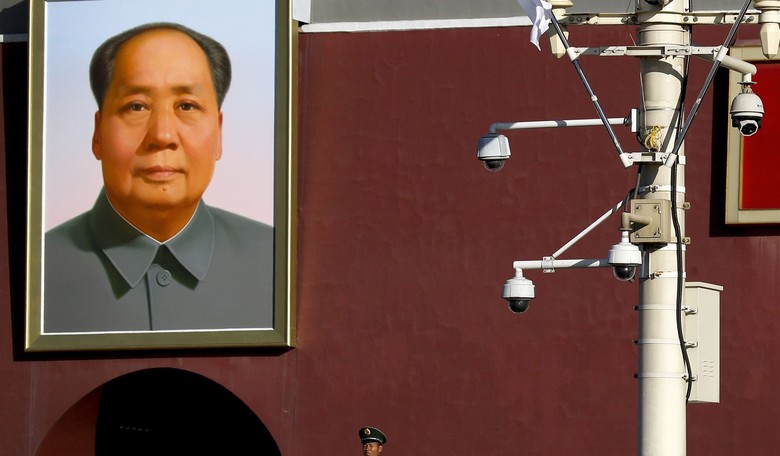
The Left apparently never tires of revering some of history’s most frightening figures. But few examples are as startling as its continued admiration for Chairman Mao.
Associate Cambridge professor Jostein Hauge, apparently determined to outdo even Jason Arday in courting controversy, posted on social media criticizing the characterization of Mao as a dictator. His defense rested largely on a list of purported achievements: life expectancy increased by 30 years, literacy rates and steel output soared, land was redistributed to peasants, and China was unified under one government and developed nuclear weapons.
It is a flattering portrait, provided of course you leave out all of the little details that resoundingly demonstrate just how horrifying China's modernization efforts really were.
"Under 'dictator' Mao, life expectancy in China increased by 30 years," Hauge argued. "Literacy rates went from 20% to 70%, steel output grew from 1 million to 23 million tons, 47 million hectares of land was taken from landlords and given to peasants, and China was unified under a strong central state and got nuclear weapons. Despite his failures, it does not take a rocket scientist to understand why Mao is revered in China."
Under “dictator” Mao, life expectancy in China increased by 30 years, literacy rates went from 20% to 70%, steel output grew from 1 million to 23 million tons, 47 million hectares of land was taken from landlords and given to peasants, and China was unified under a strong central state and got nuclear weapons. Despite his failures, it does not take a rocket scientist to understand why Mao is revered in China.
— Jostein Hauge (@haugejostein) October 27, 2026
From start to finish, Hauge’s argument is an exercise in whitewashing.
To begin with, Mao’s continued reverence in China is hardly surprising when the party he molded in his own bloodthirsty vision still rules with an iron fist. Criticizing Mao means challenging the legitimacy of the party that claims his legacy, and that party has little tolerance for such dissent.
But the data points Hauge presents are even more concerning, because they paint an oversimplified picture of communist China under Mao. According to Our World in Data figures, life expectancy increased by roughly 20 years during his rule, but that period also included a roughly 15-year collapse during the Great Leap Forward's major famine. The picture becomes more complicated still when China’s gains are compared with those of its neighbors. Neighboring countries experienced similar and even greater increases in life expectancy over the same period, so those gains Hauge cites cannot simply be credited to Mao or his leadership. If anything defines Mao’s reign it is the catastrophic collapse in life expectancy.
@haugejostein And you choose life expectancy as a metric for success… https://t.co/2BrN7ssiF8
— Cthulhu President (@Cthulhu4Prez) October 28, 2026
As for the other data points Hauge cites, I will not dispute the numbers. But all of it occurred amid the threat of force, brutality, famine, and the destruction of political freedom. A ruling elite maintained power, while ordinary workers and tradesmen suffered the mob justice of Chinese communism. By some estimates, well over 50 million people died under Mao’s rule to “achieve” these so-called feats, while capitalist countries made even greater advances without paying that price.
Worse still, Hauge doubled down, acknowledging as accurate the community note on his original post citing the tens of millions of deaths under Mao’s rule, and yet still managed to credit Mao with laying the foundations of the China the West knows today.
For once, the community note is actually useful. Millions of people did indeed die under Mao's reign. It was a tragedy. But, for some reason, the Western mind seems incapable of grasping the complex impact of Mao. In the West, we refuse to acknowledge that Mao is actually respected and admired in China. I've listed a few reasons in my original post. Unity and sovereignty are big ones. After a century of being carved up and subjected to imperialism, Mao unified China into a single central state. He removed foreign influence. He stood up to the US. China’s status as a major power today rests on foundations built by Mao.
— Jostein Hauge (@haugejostein) October 28, 2026
Of course Mao deserves credit for laying those foundations. But speaking of that as though it were some magnificent accomplishment is the kind of moral blindness only a professor is capable of.
If greatness means treating human beings as disposable instruments of a nationalist project, then Mao was a fantastic leader. But those of us who take the West’s founding principles seriously judge leaders by a different standard: the dignity of the individual, the protection of personal freedom, and the right to make our own choices. People do not exist to fulfill the ambitions of the state.
In the West, sacrificing the individual is not some unfortunate expense to be balanced against a regime’s accomplishments. It is a betrayal of the very purpose those accomplishments are supposed to serve. No increase in steel production, life expectancy, no nuclear weapon, and no national ambition can turn that betrayal into some sort of greatness.