
Socialists, for the time being, are winning the argument over whose economic system is more moral. Conservatives have spent the last decade treating the defense of capitalism and the defense of the status quo as essentially the same task. That has given socialists an effective line of attack, especially when crony capitalism, a system with more in common with communist corruption than free-market competition, has defined so much of the last quarter-century.
But capitalism wins the moral argument against socialism, when articulated properly. It is no contest. Conservatives have simply failed to make the case.
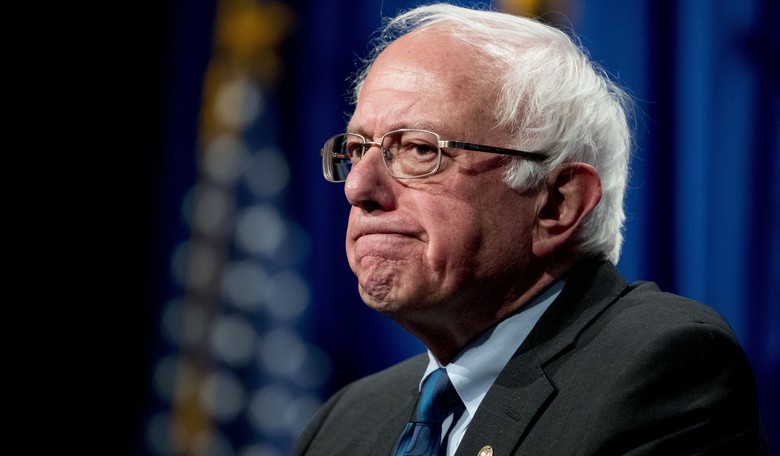
Last week, Bernie Sanders delivered a familiar attack on the free market: Greed, he argued, is not a virtue, yet it defines capitalism. Compassion and empathy, by contrast, are virtues, ones he apparently sees reflected in a wealth tax. The conclusion is simple: If Americans want a more moral economy, they should tax the billionaires.
Bernie Sanders: “Greed is not good. Love and compassion is good. Empathy is good. Billionaires who have more money than they can spend in a thousand lifetimes say I need more and more and more and I don’t care what happens to ordinary people. We have got to take that on full steam ahead”
— Marco Foster (@MarcoFoster_) October 20, 2026
"What we have got to do is not only pass a tax on billionaires, we have got to, from a moral perspective, take on that concept that greed is good. Greed is not good. Love and compassion is good. Empathy is good. But billionaires who have more money than they can spend in a thousand lifetimes, who say, I need more and more and more and I don't care what happens to ordinary people, we have got to take that on full steam ahead."
The clip quickly brought to mind an ever relevant quote from the legendary economist Thomas Sowell: “I have never understood why it is ‘greed’ to want to keep the money you have earned but not greed to want to take somebody else's money.”
That alone, however, only shows that Sanders himself is not immune to the criticism of greed. But let’s go further: Is pursuing your own gain still greed if doing so requires serving others? I would say no.
Private corporations pursue profits, but in a market, they do so by producing more value than they consume. Government programs, however well-intentioned, take and spend someone else’s money, and their intentions rarely guarantee that they will do good. Which system does a better job of producing beneficial results? It isn't the one whose stated intent is virtuous.
To go even further, greed is not what's at the core of free enterprise. Self-interest is. To many people, the two are one and the same. But ask business owners what motivates them, and many are more interested in the work itself than the money. They care more about building and improving their life’s work than simply seeing how much they can earn from it. That is especially true at the top of the economic food chain, from Elon Musk to Jeff Bezos to Mark Zuckerberg.
Yet Sanders and his DSA allies cast the pursuit of that work, and the wealth it produces, as greed, while treating their own desire to take that wealth as a virtue.
For too long, conservatives have let people like Bernie Sanders get away with a warped account of the virtues of command economies and the sins of free enterprise. That failure has been compounded by an education system that too often gives short shrift to Milton Friedman and classical economics, favoring European-style redistribution and Keynesian frameworks instead.
Free enterprise wins the moral debate resoundingly, in theory, in practice and in its understanding of human nature. It is time for those of us who still believe in it to fight for it on those terms.