
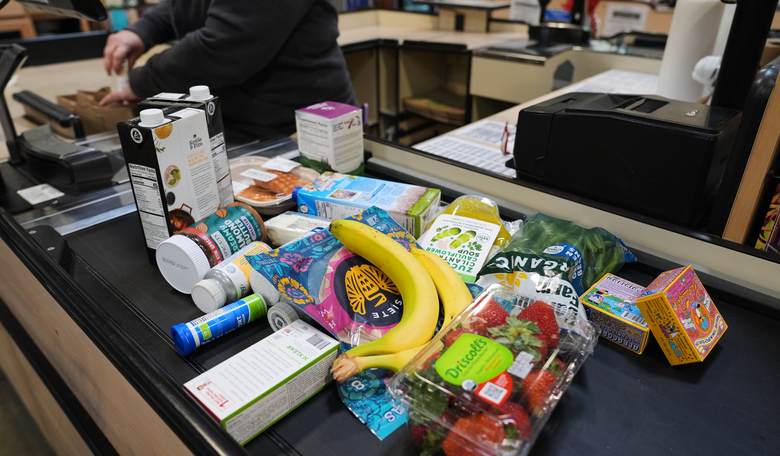
If there is an enduring symbol of capitalism’s success over socialism, it is the American grocery store. Stories of people fleeing communism often reach the same unforgettable moment: their first visit to an American supermarket. Not some luxury boutique. A Walmart. Just an ordinary store, stocked with an abundance and variety that, back home, would have seemed like fantasy. To most people, that is a success story. To the modern American Gen Z socialist, apparently, it is an indictment.
In September, the Party for Socialism and Liberation posted a video on X titled “Grocery stores: The case for SOCIALISM.” It was a response to a video from The Wall Street Journal’s Free Expression page arguing that the typical American grocery store is a powerful illustration of the success of the free market at work.
The socialists, meanwhile, looked at shelves overflowing with food and concluded that what America really needs is socialism. A creative interpretation, certainly. But their rebuttal did more than turn the obvious on its head. It got the basic facts wrong.
Listen to this renowned Gen Z Economist funded by a Billionaire in China tell you why grocery stores mean Capitalism is bad. https://t.co/tNobQgHmzD
— Lee Kuan Yimby (@LeeKuanYimby) October 17, 2026
"What stage of capitalism is this when the Wall Street Journal tries to use grocery stores to convince us that capitalism is good?" the Gen Z socialist began. "Let's actually talk about how grocery stores tell us why capitalism must end."
She opened by pointing to food recalls, suggesting that, sure, groceries may have gotten cheaper, but only at the expense of quality. The evidence for this sweeping indictment? Recalls happen. In 2025, there were about 320 food recalls, or roughly six a week. Never mind that a typical American grocery store carries tens of thousands of distinct food items, the vast majority of which are never recalled. The number alone supposedly settles the question.
The claim that food quality has declined is also common enough among Americans. But it deserves more than a passing assertion, especially in a market that offers foods fortified with added nutrients and an enormous range of choices. And “quality” in an American supermarket means something rather different from what it meant in the Soviet Union or means in communist Cuba.
She went on to accuse grocery stores of price gouging, despite their average net profit margin barely budging between 2023 and 2024, from 1.6 percent to 1.7 percent, according to the Food Industry Association, and remaining largely stagnant even through 2026.
Having declared the grocery store a case against capitalism, she moved on to the solution: put the government in charge.
“Grocery stores should be a place for collective well-being, not for privatization and unruly profit margins for corporations,” she said, calling for billions now spent on the American “war machine” to be redirected toward basic needs, which of course, are to be paid for by the American taxpayer.
"So when Wall Street Journal tries to convince us that capitalism is good, let's actually remember that millions of workers in the richest country cannot afford their groceries, the food that we buy makes us sick, and corporations continue to pocket billions in profit. It sure as hell feels like we need to end capitalism and fight for socialism."
The video was poorly made, the argument even worse. But the real spectacle was a socialist standing inside one of capitalism’s greatest achievements, surrounded by abundance, complaining that it had not delivered enough, and failing to show in any capacity how "fight[ing] for socialism" would make the situation even remotely better.