
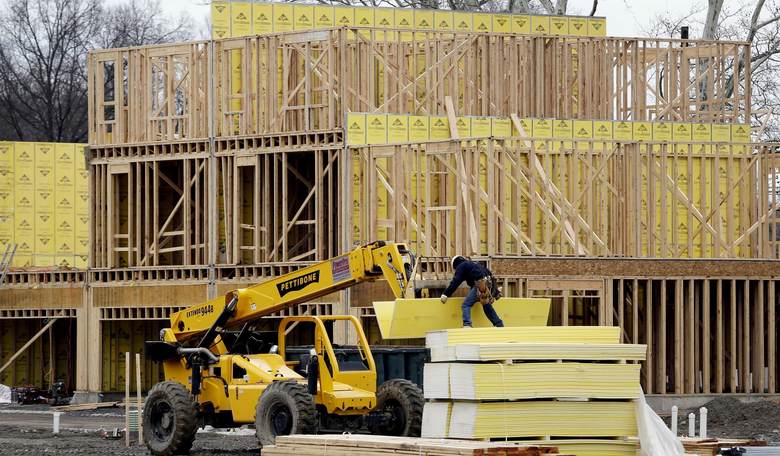
In June, Townhall opinion columnist Jared Whitley laid out the underlying issues of housing affordability and it all comes down to an issue of supply. Housing researchers estimate that the nation's housing shortage is somewhere between four and seven million homes. "That supply gap has accumulated due to years of underbuilding, restrictive zoning, lengthy permitting processes, and local opposition to new development. When demand consistently exceeds supply, prices rise," Whitley wrote.
And according to recent polling, American voters are feeling the housing crunch. 90 percent of poll respondents say housing costs are rising faster than wages and 89 percent believe on-time rent payments should help establish credit for home ownership. A majority also support increased competition, while 88 percent want workforce training so builders can hire construction workers. Roughly 69 percent support cutting regulations to allow builders to build.
And there's evidence that allowing builders to build and increasing the market supply of housing does reduce costs, including rent. Research shows that markets that increased housing supplies between 2017 and 2023 saw rents fall by roughly five percent between 2017 and 2024. According to Aiden Buzzetti, writing for Townhall, Austin, Texas implemented several reforms that saw rents in large apartment buildings fall seven percent from 2023 to 2024, and San Francisco cut homebuilding approval times from 605 to 208 days.
In July, the 21st Century Housing Act became law. That legislation focuses on addressing the housing shortage by loosening regulations to encourage construction and limiting Wall Street investors from buying homes. Housing and Urban Development (HUD) Secretary Scott Turner also believes in the supply-side argument. Turner said that the administration's crackdown on illegal immigration will help with housing supply.
"When we first came in with President Trump, we had open borders. We had tens of millions of illegals in our country," Turner said. And the Federal Reserve Bank of Dallas released data over the summer that showed that for every one percent increase in illegal alien workers, there was a corresponding 1.4 percent hike in rent and a 2.2 percent increase in home prices.
The America First Policy Institute (AFPI) also issued a housing survey that echoed these sentiments, with voters saying red tape is a big part of the housing affordability problem, and noting "broad support" for policies that speed up building, expand the construction workforce, and cut fees. The bottom line of that survey showed that 50 percent of respondents blamed state and local bureaucrats for the affordability problems.
There's also a buried lede here: housing affordability and workforce development go hand-in-hand. We need construction workers and skilled trades (electricians, plumbers, HVAC techs) to help increase our housing supply. By focusing on expanding that supply, the opportunity to create good paying, high-demand jobs is also there.
The good news is the Trump administration and Congress are working to make homeownership more affordable, and voters are showing them the way forward: cut the red tape, reduce the fees, let builders build and increase the housing supply to make homeownership a reality for more Americans.