

I spend my days reading growth curves. A pension fund's unfunded liability, a private equity fund's internal rate of return, a hedge fund's drawdown. You learn to read a line on a chart the way a doctor reads one on a different kind of monitor. Most political organizations produce a flat line for decades, a small bump around an election, then flat again. The Democratic Socialists of America just produced a line that would get flagged in any diligence memo I've written in 30 years. An organization with 6,000 members in 2015 crossed 100,000 in February 2026, and by this July had passed the old high-water mark for American socialism: the roughly 113,000 members the Socialist Party of America claimed at its 1912 peak under Eugene Debs. DSA now calls itself, correctly, the largest socialist organization in American history.
That isn't activist self-promotion. It's an organization that just elected the mayor of the largest city in the country, seated members of Congress, and beat a sitting chair of the Congressional Hispanic Caucus in a primary. The Wall Street Journal's editorial board called the rise of the DSA the biggest domestic political story of 2026, after the president's own sliding approval numbers. When the paper of Wall Street says that out loud, the rest of us should stop treating it as a campus curiosity.
DSA isn't a third party. It doesn't run against Democrats. It recruits inside the Democratic Party, wins its primaries, and governs once it wins. That distinction matters more than the label does. A third party loses elections and stays pure. DSA wins elections and keeps its members.
The organization traces to 1982, when the Democratic Socialist Organizing Committee, an electorally minded socialist faction built around Michael Harrington, merged with the New American Movement, a group that grew out of the New Left and Students for a Democratic Society. One brought labor politics and a strategy of working inside the Democratic coalition. The other brought the organizing energy of the antiwar and feminist movements. For three decades, the merger produced a small, mostly academic organization. Bernie Sanders' 2016 campaign changed that, pulling DSA out of obscurity and into the vocabulary of a national primary electorate for the first time.
What happened this year is a second, sharper inflection. Zohran Mamdani's mayoral campaign in New York doubled DSA's national membership before he'd even won the general election, and he took office January 1 as the city's first self-described democratic socialist mayor. His coattails did the rest. In the June 23 New York primaries, DSA-backed candidates Claire Valdez and Darializa Avila Chevalier both won Democrat primary elections for House seats, the second by defeating Adriano Espaillat, the sitting chair of the Congressional Hispanic Caucus. Chris Rabb won a Philadelphia congressional primary on May 19. Janeese Lewis George won the Democratic nomination for mayor of Washington, D.C. Nithya Raman advanced to a mayoral runoff in Los Angeles. These weren't protest votes in low-turnout special elections nobody was watching. These were contested primaries against sitting Democrats, and the socialists won them.
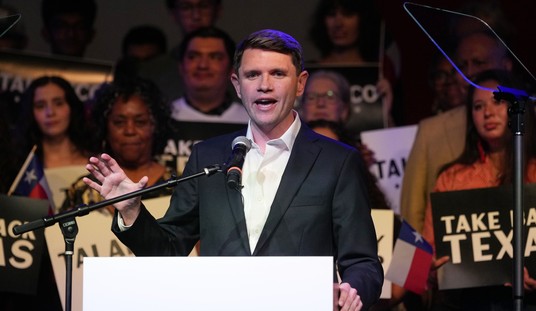

It's worth being precise about what the winning candidates say they believe, because it isn't identical to what the organization itself has just put in writing. Mamdani describes his politics as pragmatic delivery of services, not doctrine. But earlier this summer, DSA's National Political Committee, the body that actually runs the organization, adopted a rebooted platform called "Workers Deserve More!" City Journal obtained and reported the text. It commits DSA to scrapping the U.S. Senate, abolishing the Electoral College, and replacing the president and the Supreme Court with an executive and judiciary chosen by, and subordinate to, Congress. It calls for "abolishing the carceral forces of the capitalist state," meaning police and prisons. It calls for defunding the Department of War, ending overseas bases, lifting sanctions, and universal amnesty for immigrants already here illegally. Its stated aim is to draft a new constitution and build what it calls a democratic socialist republic.
The vote on replacing the presidency and the Court passed by a razor-thin margin inside the NPC, and the vote on police and prison abolition passed 16 to 8. Those numbers matter. This wasn't unanimous, and the document hasn't been ratified by the full membership convention. But it's the platform of the people currently running the fastest-growing political organization in the country, and it's a lot more specific than "healthcare for everyone."
None of this requires a conspiracy theory to explain how it happens. Primaries reward the most organized faction in the room, not the most representative one. A general election turns out most of the electorate. A June primary for a safe House seat turns out a fraction of it, and the fraction that shows up is disproportionately the fraction that knocked on doors all spring. That's not corruption. That's arithmetic, and DSA currently runs the best door-knocking operation in Democrat politics.
It's also worth drawing a line most coverage blurs. Within weeks of the DSA celebrating its record membership, Secretary of State Marco Rubio was convening ministers from more than 60 countries in Washington over what his department calls a resurgence of transnational far-left political violence, with antifa as the unstated subject. DSA is not antifa, and nothing here suggests otherwise. But the contrast is the point. Antifa needs a street protest and a news cycle. DSA needs a primary calendar. One breaks windows. The other rewrites the Senate out of the Constitution on paper and hopes the votes eventually follow. I know which one worries me more, and it isn't the one getting a State Department summit.
The Founders built a republic on the assumption that a faction losing an election couldn't simply abolish the institutions that beat it. The Senate exists because small states wouldn't have ratified a Constitution without it. Judicial review exists because Marbury v. Madison settled, in 1803, that courts check Congress rather than answer to it. An organization that just adopted a platform calling for both to be dismantled, on paper, by a National Political Committee vote, isn't arguing about tax brackets anymore. It's arguing about the document itself. Mamdani may be sincere about pragmatic delivery. The people who run his party's most consequential organizing wing have told us, in writing, what they actually want. Read the platform before you decide which one to believe.
Jay Rogers is a financial professional with more than 30 years of experience in private equity, private credit, hedge funds, and wealth management. He has a BS from Northeastern University and has completed postgraduate studies at UCLA, UPenn, and Harvard. He writes about issues in finance, constitutional law, national security, human nature, and public policy.