

I knew she was right. I knew I was right. And I never had any doubt.
Of course, the people who were dead wrong are moving the goalposts. It’s the only way to save face.
That’s why J.K. Rowling’s recent observation struck such a nerve.
Watching public opinion continue to shift, Rowling wrote, “As the vibe shifts… the obvious place to start is, ‘It’s not that I couldn’t see your point, but did you have to say it that way?’”
That caught my attention because I think she’s exactly right.
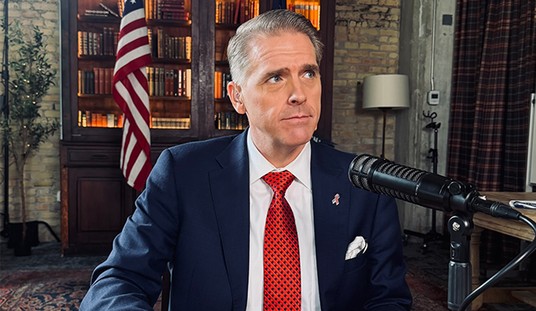
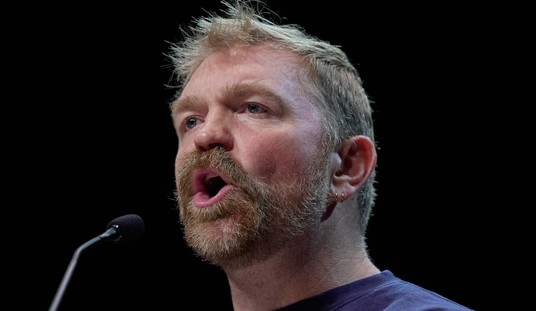
As more voices begin distancing themselves from ideas they once defended with unwavering confidence, the conversation has quietly changed. It isn’t, “Were we wrong?” It’s, “Did you really have to say it that way?”
That’s an extraordinary shift.
That caught my attention. The debate itself seemed to have shifted.
Because it suggests the argument is no longer about whether uncomfortable facts should be faced. It’s about whether the people who spoke those facts aloud were polite enough while doing it.
For years, Americans watched an intense cultural battle unfold over questions that reached far beyond politics. Parents questioned whether children should receive irreversible medical interventions for gender dysphoria. Female athletes objected to competing against biological males. Women raised concerns about privacy and safety in sex-separated spaces. Physicians, researchers, teachers, and ordinary citizens asked whether dissent from prevailing orthodoxy would still be tolerated.
Too often, the response wasn’t a debate.
It was punishment.
Ask uncomfortable questions and you risked losing your reputation. Parents were branded extremists for asking what schools were teaching their own children. Medical professionals who questioned prevailing practices found themselves under enormous professional pressure. Researchers, journalists, and ordinary citizens learned there was a price for refusing to repeat ideas they believed were false.
That’s not what a confident movement does.
That’s what movements do when they believe dissent itself is too dangerous to tolerate.
Language itself became part of the battle.
That may have been the most revealing part of the entire episode. We weren’t simply asked to tolerate ideas we disagreed with. We were expected to adopt language that many believed obscured reality. If you declined to use that language, the argument often ended there. You weren’t simply considered mistaken. You were accused of being cruel.
That’s a remarkable place for any free society to find itself.
Rowling put it this way:
“The alternative to being ‘blunt’… was to surrender freedom of speech and espouse ideological jargon that obfuscated the issues and the harms caused.”
Whether you agree with every conclusion she reaches or not, she’s identifying something that should concern every American. A free society cannot remain free if its citizens are expected to describe reality using words they do not believe are true.
Freedom of speech has never existed merely to protect popular opinions. It exists because unpopular opinions are often the first to challenge assumptions everyone else has stopped questioning.
That’s one reason freedom of speech matters so much. Today’s consensus has a funny habit of becoming tomorrow’s embarrassment. The ability to question prevailing wisdom isn’t a flaw in a free society. It’s one of the reasons free societies keep correcting themselves.
That doesn’t mean every dissenter is right.
It does mean dissent itself is indispensable.
The temptation in every generation is to mistake consensus for certainty. Once that happens, disagreement becomes something to suppress rather than something to examine. That’s a dangerous habit regardless of which ideology happens to hold cultural influence.
The debate surrounding gender identity has never been only about pronouns, sports, or medical protocols.
It has also been about whether objective reality can withstand social pressure.
Can biological sex be discussed honestly?
Can medical risks be debated openly?
Can parents ask questions without fear of professional or social punishment?
Those questions matter because they extend far beyond this single controversy. They speak to whether a free society still possesses the confidence to pursue truth even when doing so carries a personal cost.
There is another lesson we shouldn’t miss.
As public opinion shifts, institutional memories have a funny way of becoming selective. Some who confidently defended yesterday’s orthodoxy now present themselves as if they merely objected to the style of the disagreement rather than the substance of it.
But history doesn’t simply record who was eventually right.
It also records what it cost to say so before it became socially acceptable.
If our first response to an uncomfortable truth is to criticize the manner in which it was spoken rather than honestly wrestle with whether it was true, we’ve already changed the subject.
The people who questioned prevailing orthodoxy didn’t simply endure disagreement. Many accepted real professional, financial, and personal consequences for refusing to repeat ideas they believed were false. They spoke anyway.
Rowling closed with a line that deserves to be remembered:
“We’ve always needed blunt people, but we need them most of all when being asked to bow down to a naked emperor.”
History rarely moves forward because people waited until it was safe to tell the truth. More often, it moves because someone was willing to be ridiculed for saying what everyone else would eventually discover for themselves.
Rowling was right. I believed she was right then, and I believe she’s right now. Those who spent years portraying dissenters as beyond the pale don’t get to quietly rewrite the story now that the cultural winds have shifted.
We’ve already paid the price for speaking plainly.
The least those who got it wrong can do is admit it.
Editor's Note: This column has been updated with quotes from J.K. Rowling for clarity.