

Sanctuary jurisdictions — cities and states that deliberately obstruct federal immigration enforcement — are not the compassionate havens their advocates advertise. They are a deliberate policy choice that transfers billions in costs onto working taxpayers while shielding criminal aliens and systematically undermining the rule of law. As an investment professional who has managed ultra-high-net-worth family offices for more than three decades, I have watched California's single-party government transform a once-dynamic economy into a slow-motion cautionary tale of fiscal mismanagement and ideological overreach. Sanctuary policies are the public-sector equivalent of what happens in Margin Call when a firm's leadership finally reads the risk model: one reckless decision cascades into systemic losses that no amount of spin can contain. The difference is that Wall Street eventually pays for its own mistakes. Taxpayers here don't get that option.
With a mounting fiscal burden and more than 10,000 criminal aliens rearrested after sanctuary-enabled releases, the political class has a simple choice: enforce the law or explain to constituents why they chose not to.
The Senate Budget Committee hearing on March 10, 2026, chaired by Sen. Lindsey Graham (R-SC), stripped away the rhetoric and put the numbers on the table. According to testimony from the Center for Immigration Studies' Jessica Vaughan, 13 states and approximately 100 localities have adopted formal sanctuary policies. Between October 2022 and February 2025, sanctuary policies resulted in the release of more than 26,000 criminal aliens whom ICE was actively seeking.
On March 19, 2026, Sheridan Gorman — an 18-year-old freshman from Westchester County, New York, walking on a Chicago lakefront pier with friends near Loyola University — was shot in the back and killed by Jose Medina-Medina, a 25-year-old Venezuelan national. Medina-Medina had been apprehended at the southern border in May 2023 and released under the Biden administration. Arrested for shoplifting in Chicago a month later, he was released on his own recognizance. He then failed to appear in court, and a warrant sat unexecuted for nearly three years. Sheridan's family gave a statement: "She was 18 years old. She was doing something entirely normal. She should be here." Days later, Chicago's mayor unveiled a new city snowplow emblazoned with "Abolish ICE." You cannot make this up.
In Fairfax County, Virginia, Marvin Fernando Morales-Ortez was released from county jail on December 16, 2025, despite an active ICE detainer — and allegedly shot and killed a man the next day. On February 23, 2026, Stephanie Minter, 41, was stabbed to death at a Fairfax County bus stop. Her killer, Abdul Jalloh, had more than 30 prior arrests and had been released despite three police warnings to the Commonwealth's Attorney. Three dead Americans in a single season. One recurring mechanism.
I earned my criminal justice degree before I ever managed a portfolio, and the foundational principle that has stayed with me through both careers is specific deterrence — the idea that punishing an individual offender directly reduces the probability that the same person reoffends. Confinement incapacitates. A person deported to Venezuela is not stalking a bus stop in Fairfax County. A person in a cell is not on a Chicago pier at 1 a.m. with a loaded gun.
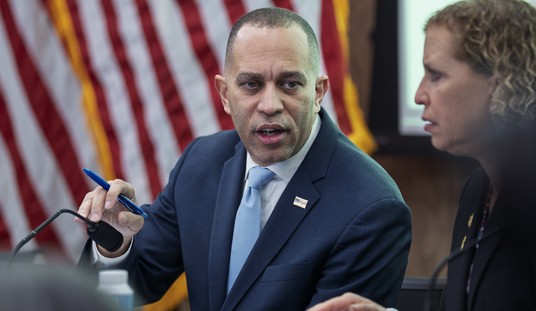
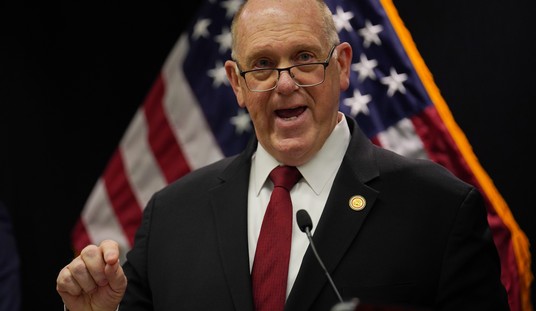
The Medina-Medina case is a textbook specific deterrence failure: three documented intervention points, three decisions to release, one dead 18-year-old. Cook County State's Attorney Kim Foxx's no-cash-bail, diversion-first philosophy wagered Gorman's safety on the honor system of a man with no legal right to be in the country. Fairfax County Commonwealth's Attorney Steve Descano has a documented pattern of dropping charges against criminal aliens — including cases of aggravated sexual battery against a minor. Abdul Jalloh had 30 prior arrests over 14 years in defiance of a removal order. The mathematics of specific deterrence are not subtle.
This is why revoking qualified immunity for sanctuary officials is not a rhetorical gesture — it is specific deterrence applied to the decision-makers themselves. When a district attorney faces no personal consequence for releasing an offender who kills, the rational calculation is to keep releasing. Remove the immunity, create the liability, give officials a reason to read the detainer. That is the animating logic of the Safe Streets and Sovereign Borders Act of 2025. It is also what Beccaria and Bentham argued in 1764.
The fiscal ledger is concrete: 61 percent of illegal immigrant households access at least one major welfare program, Massachusetts alone spends over $1 billion annually sheltering migrants, New York City projects $5 billion in migrant costs, and educating illegal alien children costs taxpayers $23,000 per student per year — a multi-billion dollar burden that falls entirely on the people who never voted for these policies. In my three decades advising on portfolio sustainability and fiscal structure, I have never seen a drawdown rate that could survive that trajectory without structural collapse.
In November 2025, I drafted and submitted to Representatives Darryl Issa and Jim Jordan the Safe Streets and Sovereign Borders Act of 2025 — legislation that revokes qualified immunity for officials who knowingly enable covered crimes through sanctuary policies, imposes civil and criminal accomplice liability when those policies produce harm, and withholds non-law-enforcement federal funds until full ICE cooperation is certified. The bill survives Printz v. United States: no commandeering of state resources — federal supremacy through funding discipline and direct personal liability. Neither congressman has acted on it. Gorman died four months after submission. Minter died four months after that.
The cost of honoring an ICE detainer, as Loudoun County Sheriff Mike Chapman testified, runs about $4.50. The cost of not honoring it runs to human lives and nine-figure budget line items. The Marine Corps had a phrase for the kind of leadership that produces predictable disasters and then refuses to own the outcome. I will leave it at that.
Jay Rogers is a financial professional with more than 30 years of experience in private equity, private credit, hedge funds, and wealth management. He has a BS from Northeastern University and has completed postgraduate studies at UCLA, UPENN, and Harvard. He writes about issues in finance, constitutional law, national security, human nature, and public policy.