

There is a long tradition in political philosophy holding that public policy should reflect certain moral principles.
Not everyone agrees, of course. Friedrich Nietzsche and Thomas Hobbes, for example, came close to saying that “might makes right.” But the political thinkers who shaped the American form of government believed that legitimate government exists for moral purposes.
How does that idea apply to taxation?
The Biblical commandment is clear enough: “Thou shall not steal.”
Since taxation is clearly a “taking” under threat of coercion, we can ask, where does it cross the line from “legitimacy” to “theft”? That there is such a line is implicit in almost all modern political discourse. On the left, for example, there is the frequent claim that the rich are not paying “their fair share.” “Fairness” is paramount. ChatGPT cannot find a single example of a prominent politician arguing that the rich should pay more than their fair share.
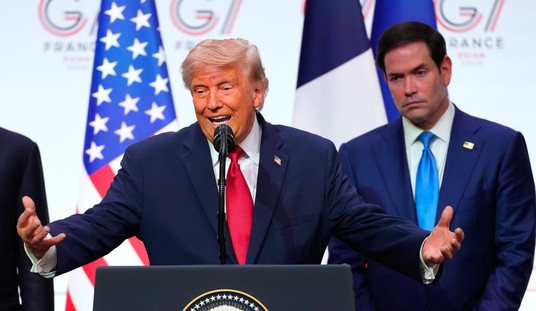
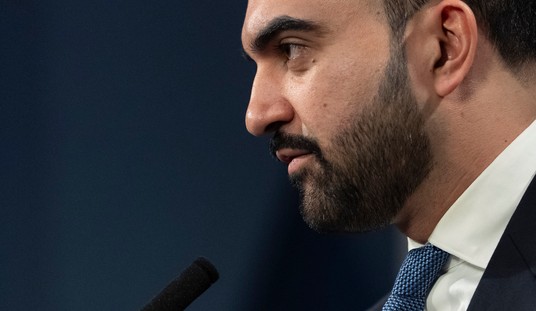
Yet, as I discuss below, there are some prominent Left-Wing thinkers who believe that government should approach the rich the way a common-variety street hoodlum views his prey: take whatever you can get away with.
What would a moral system of taxation look like?
In the writings of John Locke and Adam Smith, we find the seminal idea of the “benefit principle.” As developed more clearly in the writings of Swedish economists Knut Wicksell and Erik Lindahl, it says, “No one should pay more in taxes than the value of benefits they receive from the state.”
User taxes are examples of the benefit principle. People who use roads and highways pay gasoline taxes and tolls. Those with greater use pay more, those with less use pay less.
For public goods generally, writers from Adam Smith to Milton Friedman have suggested that the benefit people get from government rises as their income rises. That is the justification for Milton Friedman’s flat tax. Everyone would face the same percentage tax (say 20 percent), but the more you earn, the more tax dollars you would pay.
In contrast to taking a moral approach to taxation, some argue for an immoral, or at least amoral, approach. The most prominent among them is former New York Times columnist Paul Krugman.
In his early career, Krugman used the term “fair share” quite often. But no more. These days, he wants to take as much as possible from high-income earners. Krugman’s approach to taxation of the rich is the same approach a petty thief would take to garden-variety robbery.
Krugman agrees with supply-side economist Art Laffer on one thing: if you keep raising the tax rate, people will start working less. At some point, revenue maxes out, and revenue begins to decline. Krugman guesses that the revenue-maximizing tax rate for someone like LeBron James could be as high as 90 percent.
In 2013, when Krugman was asked about this, James’ annual income was $22 million. Krugman would have Uncle Sam seize almost $20 million of that amount. As I pointed out at the time, slaves who worked on the plantations in the old South are estimated to have consumed an amount equal to about 90 percent of the value of what they produced. So, the slaves were able to consume a 9-times-greater share of their output than Krugman would allow for James.
I also speculated on this question: since Krugman’s goal is to maximize tax revenue from the rich, what if LeBron James loves basketball so much that he is willing to continue playing regardless of the tax rate? Would Krugman take all his income? Apparently so.
Politicians are generally more careful about their language. But they appear to think just the way Krugman thinks. A wealth tax proposed for California has no relation to any sudden benefits the wealthy are getting from the government. Mayor Mamdani’s desire to tax the rich in New York City is unrelated to any new benefits the wealthy are enjoying.
If morality is unrelated to taxation, why don’t we seize income and assets from the wealthy, wherever they happen to be?
In 1964, billionaire John Templeton renounced U.S. citizenship and became a British citizen. He lived out the rest of his life in the Bahamas, where there are no income taxes. In 2013, “Queen of Rock ‘n Roll” Tina Turner gave up U.S. citizenship and became a Swiss citizen.
If we don’t need to adhere to the benefit principle, why don’t we go after these and other expatriates and seize their wealth? Does the fact that they are not living here and not getting any benefits from the U.S. government matter?
More generally, why don’t we try to seize the wealth of people all over the world if we can get away with it?
Such are the implications of taxation without morality.