

From its inception in 1979, the Islamic Republic of Iran has presented its Mullahcracy as an absolutely bizarre incongruity that has confounded the rest of the world. Yet, throughout its almost half-a-century existence, this Shi’a monster, called the “Guardianship of the Islamic Jurists” – in Pharsi (Persian) the “Velayat-e Motlaqaye Faqih” – has been an internally limitlessly strained, economically suffocated, socially alienated (from the overwhelming number of its multiethnic population), yet regionally defiant and strategically aggressive power. Comprehending this fabricated contradiction is essential for all other policymakers and the worldwide public alike, especially as the United States of America, the Russian Federation, the People’s Republic of China, the European Union, India, as well as the rest of Asia, and the Muslim Ummah are edging closer to multiple confrontations.
Domestically, the Islamic Republic of Iran is governed by an evil version of Islam, sold as a divine political system, in which Allah is the only sovereign who bestowed his powers upon the “Supreme Leader,” which has lost all of its religious cum semi-ideological legitimacy. Accordingly, the Rahbar, namely the Ayatollah, is not elected, but empowered by God. Turnouts in elections, both local as well as national, which are politically meaningless, have collapsed to almost zero, especially among the young and urban middle classes. Lesser powers are firmly in the hands of unelected and mostly incompetent Mullahs and civilian clowns who are driving constitutionally unelected institutions to the ground – most notably the security services – for the benefit of clerical authorities and “Republican” facades. The Islamic Republic has survived not because it inspires loyalty, but because it retains coercive capacity and the tyrannical elite’s cohesion.
This smoldering internal destruction is most visible in Iranian society. Women, youth, ethnic minorities, and educated urban populations are completely alienated from the Mullahcracy that offers neither individual freedom nor personal dignity. The continual protest movements of almost five decades – sparked by economic grievances, social repression, and the unbearable subjugation of women – have never disappeared. They have been brutally suppressed and driven underground.
Economically, the Mullahcracy is trapped in destructive stagnation. Sanctions have undoubtedly played a major role, but they are not the culprit. Chronic mismanagement, corruption, and the avarice of state-linked security-affiliated conglomerates have hollowed out productivity and investments. Inflation remains sky-high, the currency is junk, and unemployment is hopelessly eternalized, in particular for the educated youth the regime most fears. The irredeemably incompetent and ideologically blinded leadership has responded not with reforms, but with economic securitization: rationing, price controls, surveillance, and repression, instead of growth.
Yet, even as the Mullahcracy is at its death-pang internally, it remains outwardly monstrously aggressive. It has doubled down on what it sees as its comparative advantage: asymmetric power projection. Through allied militias and proxies, it still exerts immense influence across Iraq, Syria, Lebanon, and Yemen. However, this lethal strategy is not ideological romanticism; it is regime insurance. By keeping these foreign fronts alive, Tehran seeks deterrence, leverage, and relevance – ensuring that any attempt to isolate and confront it carries heavy costs.
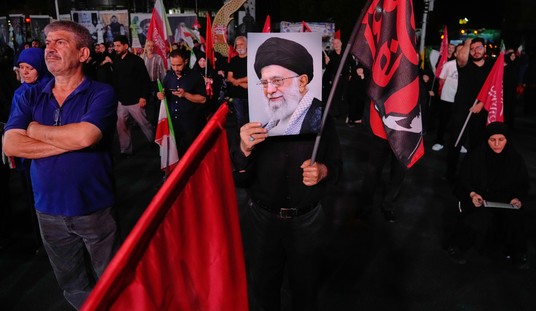

This regional posture, however, comes with foreseeable as well as unforeseeable risks. The margin of error between careful calibration and deadly miscalculation is narrowing. Escalation dynamics – especially involving the United States of America, Israel, the states of the Gulf Consultative Council, and other Western as well as Eastern forces – are getting increasingly volatile. The shadow of a major war is spreading dangerously wide.
Hovering over all this is the nuclear question. Iran’s nuclear energy, albeit essentially destroyed by the United States of America and Israel recently, is still a looming threat for the future. Equally significant is the Mullahcracy’s intent to use its resolve as a bargaining chip. For the Ayatollah and his underlings, the nuclear threat functions as both shield and sword, deterring attack while extracting diplomatic relevance.
Western policy toward the Iranian Mullahcracy has mostly oscillated between two erroneous extremes: President Barack Hussein Obama’s optimistic engagement, which has shown an amateurish incompetence regarding the Mullahcracy’s nature, and maximalist pressure that has overestimated the likelihood of collapse. The reality lies outside these boxes. Today, the Mullahcracy is clearly near the verge of collapse, but in order to disappear, the Iranian people need outside help. The time is ripe for a people’s friendly intervention because the Mullahcracy appears to be neither able to manage the uprising, nor resolve it by brutal oppression.
For knowledgeable observers, a sober conclusion follows. The Mullahcracy is a rotten regime with evil intentions. Appeasement will not transform it; pressure alone will not topple it. What is required instead is strategic realism, in which unbending support for the Iranian people with the principled objective of overthrowing the monster of Islamic Mullahcracy. Clearly, Iran stands at a crossroads. Hesitation by the United States of America, Israel, and their allies will only cement the present status quo. In this case, the world and the region will be forced again to live with the consequences.