
Though 95 percent of currently unionized workers have never voted for the union that represents them, union bosses have generally felt the need to pay lip service to the idea that, at least at one point in the past, a majority of workers expressed a preference for union affiliation. No longer.
Today, just around one in 10 workers are unionized. A Gallup poll shows the vast majority of non-union workers are “not interested at all” in joining a labor union.
Unable to attract the voluntary support of workers, union bosses and their allies are now dropping any pretense of “workplace democracy” in their quest for coercive power over employees. Union operatives have decided it would be easier to just have the government grant them sweeping new powers over workers, whether those workers want it or not.
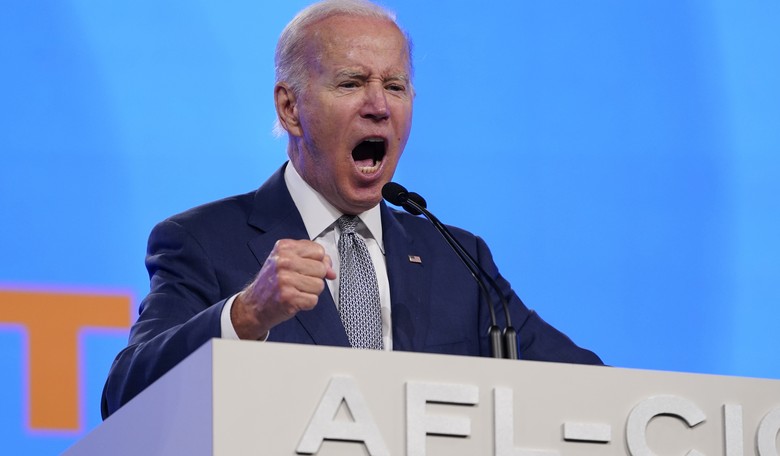
Under a scheme called “sectoral bargaining” — endorsed in June by the AFL-CIO at its annual convention — union bosses seek to collectivize all workers in entire sectors of the economy in one fell swoop by government fiat.
Take, for example, the sectoral bargaining “model legislation” recently released by Harvard’s Center for Labor and a Just Economy. Co-authored by former SEIU lawyer Benjamin Sachs and former Obama Labor Board appointee Sharon Block, the legislation proposes to have government bureaucrats hand forced bargaining power over every employee and every worksite in an industry to Big Labor.
Not only that, union bosses would be granted this control without securing the support of anything close to a majority of the workers impacted. The authors propose that a union can be “certified” as the official representative of an entire economic sector by demonstrating “representation or support” from just 1,000 workers or 25 percent of the workforce, whichever is smaller.
Union organizers could collectivize hundreds of thousands of employees in a large economic sector by just cajoling or inducing a tiny fraction to sign a union card. The vast majority of employees would be disenfranchised, as their positions concerning union representation would be utterly meaningless.
To help union organizers reach this low threshold for triggering industry-wide unionization, an even lower threshold — the lesser of 200 workers or 5 percent of the workforce — is proposed to give union officials employer “assistance” with organizing. This includes union organizers becoming entitled to the personal information of all workers in a sector and access to them in their workplace.
To attempt to get around a recent U.S. Supreme Court ruling that such mandated union access violates the Takings Clause of the Fifth Amendment, the proposal includes a new tax on all private employers that would fund token $1 payments to employers in the affected sector, supposedly as “just compensation” for access to their property.
Once installed in power, the minority union becomes the mandatory “representative” for every worker in an industry and is empowered to force everyone who works, or will work, in that economic sector to accept the union’s compulsory contract, which will likely include a requirement that workers must pay union dues or fees to work in that industry.
Needless to say, no one can look at such a proposal and think this is about empowering individual employees. It is simply about more power for Big Labor bosses without any meaningful input from rank-and-file workers.
This is the opposite of what workers want. For years, polls have shown the American public — including union members themselves — overwhelmingly rejects being forced to join a union or pay dues as a condition of keeping a job.
If union officials can’t win workers’ voluntary support, the answer isn’t cynical proposals like “sectoral bargaining.” There is nothing pro-worker about granting union officials more power to ignore those they claim to represent.