
Well, that didn't take long.
Democrats spent the midterm campaign promising Americans relief from high prices, expensive electricity, and the general unpleasantness of trying to afford life in Joe Biden's America.
Voters handed them a victory Tuesday. By Thursday, Wall Street was behaving like somebody had handed Bernie Sanders the keys to the Federal Reserve.
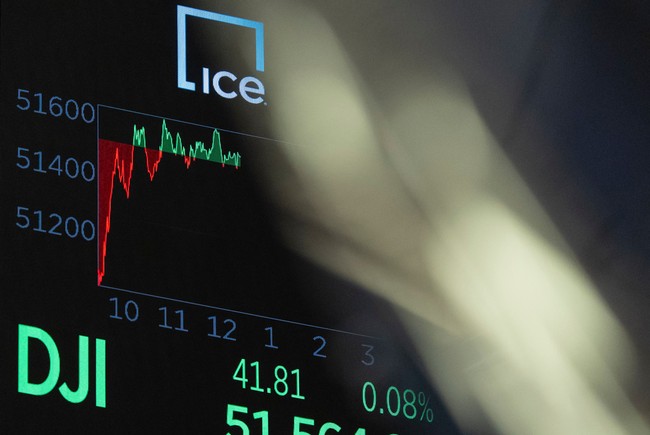
The Dow plunged more than 1,800 points. The S&P 500 fell 4.36 percent. The Nasdaq dropped 5.52 percent. Roughly $3 trillion in market value evaporated in a single trading session.
Three trillion dollars. That's an impressive amount of money to lose before the newly elected Democrats have even figured out where the bathrooms are.
Now, the Democrats didn't single-handedly cause Thursday's collapse. Technology stocks were already expensive, interest rates remain a concern, and investors have been wondering whether the artificial intelligence (AI) boom might be getting ahead of itself.
But Reuters identified another significant factor: investors are suddenly worried about what Democrats intend to do to America's rapidly expanding AI industry.
Apparently, the prospect of putting people who distrust capitalism in charge of regulating capitalism has made capitalists nervous.
Who could have anticipated that?
Consider what's happening in the American economy. Companies are investing billions in data centers, semiconductor manufacturing, electrical infrastructure, and the technology that will determine whether America or China dominates the next generation of innovation.
These projects require construction workers, electricians, engineers, equipment manufacturers, and enormous amounts of energy. They also require something increasingly difficult to obtain in Democratic jurisdictions: permission.
President Trump has generally encouraged this development by emphasizing energy production, deregulation, and faster permitting.
Meanwhile, Democratic candidates opposing data-center expansion won important races Tuesday. Investors began contemplating additional restrictions, environmental reviews, construction moratoriums, and the usual bureaucratic festivities.
Imagine spending billions developing revolutionary technology only to discover that your project's future depends on whether a county planning commission believes the server racks might disturb the emotional well-being of a nearby salamander.
Welcome to the modern Democratic economic agenda.
And here's where the affordability argument becomes particularly ridiculous.
Data centers consume tremendous amounts of electricity. That's a legitimate concern. Communities deserve reasonable protections for their infrastructure, water supplies, and property.
But the obvious solution to increasing electricity demand is to produce more electricity.
Republicans generally favor expanding energy production, including natural gas and nuclear power. Democrats frequently approach the same problem by making energy development more difficult, then expressing astonishment when electricity becomes more expensive.
It's rather like complaining that dinner costs too much while demanding the restaurant close its kitchen.
The same logic applies to housing, manufacturing, and practically everything else Americans need.
Housing is expensive? Make construction easier.
Energy is expensive? Produce more energy.
American companies need to compete with China? Encourage American investment.
These aren't particularly complicated propositions. Unfortunately, they don't provide many opportunities to establish commissions, appoint deputy assistant administrators, or hold press conferences announcing new regulations.
And government officials do enjoy a good press conference.
There's another problem with treating business investment like an infectious disease requiring quarantine.
The money at stake belongs to more than wealthy technology executives.
Millions of Americans have retirement accounts, pensions, college savings plans, and mutual funds invested in these companies. When markets collapse, ordinary families feel the consequences.
That doesn't mean every market decline is a referendum on Washington. Nor does Thursday's selloff establish that Democrats have already driven America into a recession.
But investors make decisions based on expectations. If they believe politicians will make future investments more expensive, less profitable, or impossible to complete, they don't politely wait for the regulations to arrive.
They move their money.
And those decisions have consequences long before the first bureaucrat finishes drafting the paperwork.
President Trump still has his veto pen, which limits what congressional Democrats can accomplish. State and local officials, however, possess substantial power over permitting, zoning, and infrastructure development.
That makes the coming policy decisions especially important.
Democrats won by promising affordability. Now they have an opportunity to demonstrate whether they understand how affordable goods, abundant energy, and economic prosperity are actually produced.
Republicans should welcome that debate.
Let Americans see which party wants more factories, more electricity, more construction, more innovation, and more opportunities for workers.
And which party thinks the path to prosperity runs through another government office with a clipboard.
Wall Street delivered a rather expensive warning Thursday.
Democrats might want to read it before sending the rest of us the bill.