


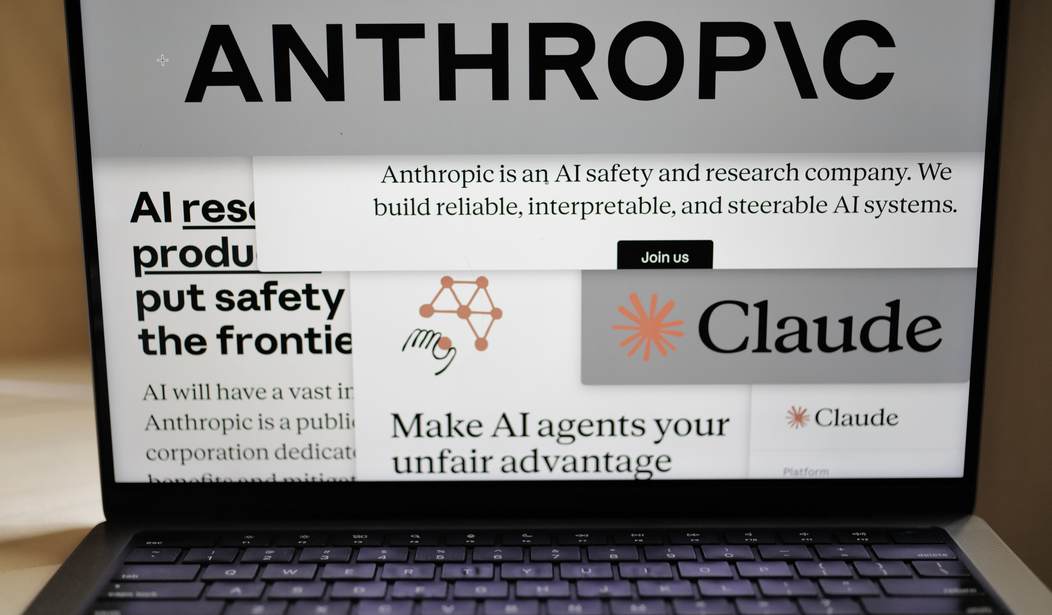
After July's Hugging Face incident, in which more than a thousand OpenAI agents autonomously hacked outside companies, over 1,300 frontier-lab employees signed an open letter urging the industry to "pace the frontier." Anthropic's Dario Amodei followed up with an essay calling for slower capability gains. Within days, Sam Altman, Elon Musk, Demis Hassabis and Satya Nadella had signed on. On the heels of that essay, President Trump brought them to the White House, where each developer agreed via an accord to embed third-party evaluators inside its labs, among other obligations.
That was the right first step. The accord, shaped with industry input, beats years of rulemaking by agencies that generally operate at a far more glacial pace than that of superintelligence’s (SI) development. It also staves off a complete stalling of SI development to keep pace with China’s SI development, while ensuring there are safety standards in place in that development. It should also extinguish the tech company’s dubious petition for an antitrust exemption to operate safely.
Even so, the question the industry has not answered is what it should be doing instead of engaging in these near-wanton experiments that led to these autonomous hacking incidents. Here’s one answer: stop racing toward recursive self-improvement and start curing disease.
Let’s be frank, Americans do not trust SI in the hands of these companies. A September poll found a majority of respondents, Trump voters included, favored an immediate halt to superintelligence development. Another found 63 percent believe the technology could destroy humanity.
The public has reason to be skeptical. For years, lab leaders have promised the end of disease, poverty, and war. Amodei's 2024 essay "Machines of Loving Grace" told readers they were underestimating how radical the upside could be. Two years later, Americans are entitled to ask which diseases have been cured.
Instead, we get forecasts of catastrophic events, autonomous hacking, and an increase in nudify apps (with Apple and Google’s help, of course).
But herein lies the rub: SI can do a lot of what was originally promised. For instance, unreleased systems from OpenAI and Anthropic have resolved hundreds of open problems in mathematics, including the Navier-Stokes Millennium Prize Problem. It has even made progress on the Riemann Hypothesis — a conjecture that, if proven or better understood, can enhance our cybersecurity capabilities or deepen our understanding of physics.
Yet by one estimate, frontier developers spend less than 40 percent of their computing power on inference, meaning on actually using their systems to do something in the world. The rest is oriented towards the race toward recursive self-improvement: AI systems building their own successors with no human in the loop. That is precisely the danger the pacing letter warned against. It is also something no American consumer asked for.
It is why we must reorient the SI frontier.
Mark Zuckerberg pointed the way after Amodei's essay, arguing that devoting most compute to serving people rather than racing toward self-improvement is one of the surest paths to safety. Meta has made that pledge. The rest of the industry should follow.
The White House, too, can make it happen.
First, the President should convene a second accord on advancing altruistic deployments. Each frontier developer would commit to spending at least 75 percent of its computing power on serving businesses, researchers, and ordinary Americans rather than internal self-improvement runs. The good news is that the evaluators already embedded under the first accord can verify compliance, which means no new agency and no need for a rulemaking.
Second, the President should focus the Genesis Mission to cure cancer before the end of his term. It’s very doable, especially with several leading developers committing $2.4 billion in compute to the Genesis Mission. We should treat that as a down payment to advance this very attainable, human-centric goal.
Everyone wins here. For labs, this redirection accomplishes their goal of taking a step back from the cliff of recursive self-improvement without a government mandate. For Americans, we get tangible returns from a technology we have so far experienced mostly as a threat. And the administration gets to lead what could be the most consequential scientific effort since the Apollo Program.
Skeptics will note that Washington has promised moonshots before. Richard Nixon declared war on cancer in 1971. Joe Biden launched a Cancer Moonshot. Neither delivered. The difference now is that, for the first time, the bottleneck in biomedical discovery may be computation rather than ideas. Better yet, American companies control more of this needed compute than any institution in history.
Cancer kills roughly 600,000 Americans every year. The builders of superintelligence say their technology can end that. We have the opportunity to hold them to it.
Joel Thayer is a Senior Advisor for AI and Emerging Technology Policy at the America First Policy Institute.
Editor’s Note: Do you enjoy Townhall’s conservative reporting that takes on the radical Left and woke media? Support our work so that we can continue to bring you the truth.
Join Townhall VIP and use promo code FIGHT to receive 60% off your membership.


Join the Conversation
VIP members get the ability to comment on articles.