
Katie wasn't looking for trouble. She was sitting in a car at a red light, visiting friends at the University of Illinois in Sanctuary, Urbana, Illinois.
A previously deported illegal alien, using an alias and driving drunk at nearly 80 miles per hour, slammed into the car carrying Katie and her friends. Katie and another young woman were killed. Three others were seriously injured.
Katie was 20 years old. She should be alive.
Elected officials in Illinois and other sanctuary jurisdictions routinely remind us that no government can prevent every crime. True, but that becomes a misdirection when used to deflect criticism of their choices. No one demands perfect safety. We demand that elected officials do everything reasonably within their power to mitigate foreseeable risks, enforce the law and protect innocent people, rather than adopt policies that may increase those risks.
That is the front end of public safety: the policies, enforcement decisions and cooperation that can help prevent harm. The back end begins after the damage, when police respond, prosecutors prosecute, and courts adjudicate. These functions are essential, but they cannot undo a tragedy. No conviction restores a life. No sentence returns a stolen future. No victim-services program makes a family whole again.
When elected officials defend their policies while the justice system adjudicates harm after it occurs, who is accountable for preventing the next tragedy?
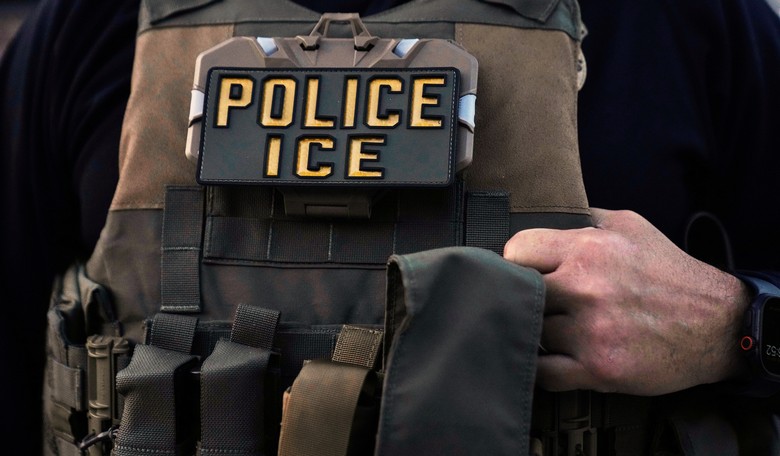
The October 8 ICE shooting in New York City exposed this contradiction. Mayor Zohran Mamdani condemned ICE's operation, demanded Belgal's release and called for ICE to end its enforcement activity in the city. DHS identified Belgal as unlawfully present, with a prior grand larceny conviction and a pending drug-sale case, and said he rammed government vehicles during the attempted arrest.
This is moral inversion: elected officials proclaim public safety as a priority while supporting policies that weaken enforcement and increase risks to the public. If these are the people elected officials choose to defend, citizens should ask a hard question: Who is standing up for the innocent? When their actions contradict their rhetoric, we cannot blindly trust their judgment or become helpless under a worldview that puts political defense of offenders ahead of public safety.
This pattern deserves scrutiny in sanctuary jurisdictions across New York, Illinois, California, Virginia, and elsewhere. When elected officials restrict cooperation with federal immigration authorities or condemn enforcement, they should explain how their policies protect the public, what safeguards replace the cooperation they limit, and how they measure the results. Good intentions are not a substitute for evidence, and political arguments are not a substitute for accountability.
The same scrutiny must apply when sheriffs' offices and local police departments rely on advocacy groups and their dubious studies to justify limiting cooperation with federal immigration authorities. Who funded the research, and what did it leave out? Policies pursued for short-term political gain can jeopardize public safety while eroding public trust and undermining the legitimacy of the very institutions adopting them. In seeking immediate political advantage, these agencies risk compromising their own long-term interests and public support.
After Katie's violent killing, I learned firsthand that victims and their families are left demanding accountability while elected officials, the criminal justice system, and the media too often fail to amplify our stories or confront the failures that cost innocent lives. Families must fight for answers while institutions move on. The system may eventually adjudicate the crime, but the victim has already paid the price.
We must change the incentives confronting decision-makers. If government spends $40 million on services benefiting illegal aliens, I believe it should be required to establish a corresponding $40 million fund for victims of illegal-immigrant crime. Government must account for the human costs of its choices, not just the intended benefits.
When elected officials fail to adequately protect the innocent, they undermine public trust in their ability to keep us safe. We cannot surrender our judgment, preparedness or responsibility for protecting our families to a worldview that too often places political defense of offenders ahead of innocent lives. We cannot control every decision made in a statehouse, courtroom or police department, but we can refuse to become helpless because of those decisions.
Equipping for battle means preparing, not panicking; protecting, not provoking; and taking responsibility, not surrendering to helplessness. It means understanding our rights, recognizing risks, preparing our families, learning lawful self-defense and, where appropriate, responsibly owning and training with a firearm. It also means civic vigilance: questioning policies, scrutinizing evidence, judging decisions by their results rather than their stated intentions, and holding elected officials accountable. We cannot control every threat, but we can refuse to leave ourselves wholly dependent on institutions that have failed to protect the innocent.
Political decisions have human consequences. A policy debate that sounds abstract in a legislative chamber can become painfully concrete for a family whose life is shattered by a preventable tragedy. I know that reality because of Katie. She was 20 years old. She should be here.
I cannot bring her back. But I can refuse to accept a system that treats the suffering of innocent families as an unavoidable cost while failing to examine what could have been done differently.
We must demand better from elected officials, insist that victims count and take responsibility for preparing ourselves and our families. We must challenge the moral inversion that puts political defense of offenders ahead of the safety of the innocent.
The front end matters because the back end cannot undo the damage. And citizens cannot afford to become helpless while waiting for someone else to protect them.