


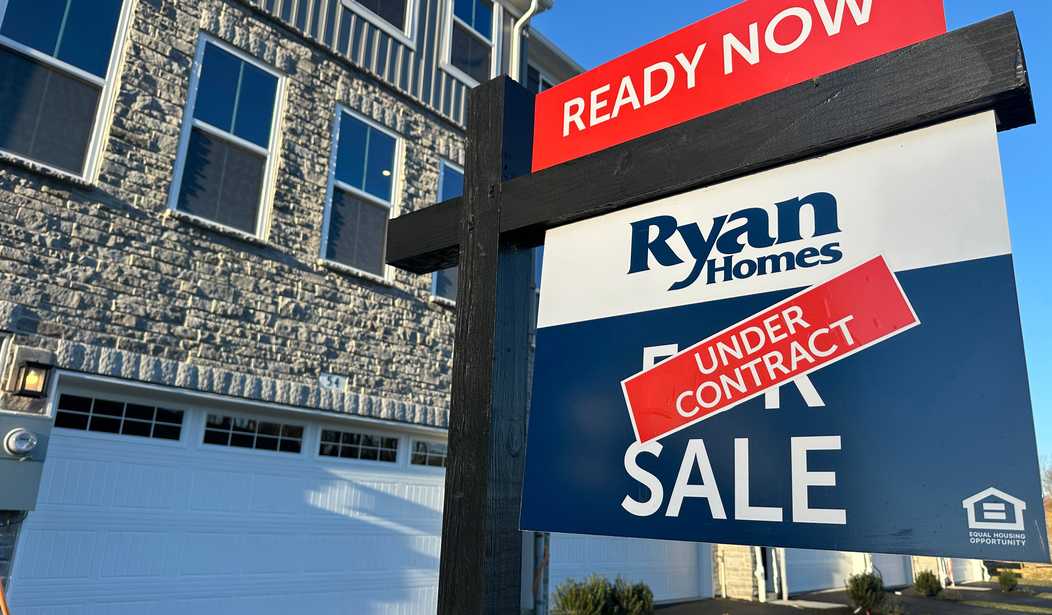
The typical first-time homebuyer is 40 years old, unchanged from last year's record. When I was 22, I figured 40 was the age you bought a sports car and questioned your life choices. Now it's the age you finally get a front door. The National Association of Realtors' 2026 profile found that first-timers made up just 22 percent of buyers, barely above last year's record low of 21 percent, and that sellers stayed a record 12 years.
Washington loves to answer a shortage with a gimmick, and the portable mortgage is this season's model. Applied to loans already written, it sends the bill to bond investors and possibly to the taxpayers who stand behind Fannie Mae and Freddie Mac. A better plan makes selling cheaper, gets builders moving, and rewards owners who downsize. That plan does more for Gen Z than any new mortgage product.
Start with the trap. Freddie Mac put the average 30-year rate at 7.18 percent on November 5, up from 6.22 percent a year earlier. Roughly 49.1 percent of outstanding mortgages carry rates below 4 percent, according to Realtor.com. Those owners are doing the math. Selling swaps a 3 percent loan for a 7 percent loan on a pricier house. FHFA economists modeled the damage: lock-in prevented an estimated 1.72 million sales between mid-2022 and mid-2024 and pushed prices up 7 percent. Realtor.com says contract signings fell 17 percent from a year earlier in October, the weakest October on record. The housing market has become Hotel California. Owners check in and never leave, and the buyers outside can't get a room.
California is the extreme case. Prop 13 generally limits assessed-value growth to 2 percent a year until a home changes hands, so long-time owners pay a fraction of what new neighbors do. Redfin found that Los Angeles homeowners stayed a median 19.4 years in 2024, longer than in any other U.S. metro, against 11.8 nationally. A 2024 FHFA study put San Francisco-area owners at an average 3.56 percent rate and a San Jose mover's added cost at about $1,200 a month.
So why not make mortgages portable? The MOVE Act would direct Fannie Mae and Freddie Mac to buy portable conventional loans, and the Take Your Rate Act orders a federal feasibility study. Neither bill says whether existing loans would qualify, and existing loans are the ones causing the jam. I've spent my career in investment management, so here's where this breaks. A mortgage pool is a bond, and investors price it on a forecast that borrowers will sell and pay it off. Realtor.com economist Jake Krimmel warned that portability would stretch loan duration unpredictably, so investors would demand more compensation and mortgage rates would rise. Gen Z would pay that higher rate too.
Picture who wins first. A 52-year-old with a 3 percent loan can outbid a 28-year-old facing 7.18 percent, and a bigger bid usually means a higher price. A move also frees one house while consuming another, so total supply barely changes. The first-time buyer still shows up with the 7 percent loan. I've seen this movie in credit markets: subsidize one side of the bid, and the price absorbs it.
Skeptics will say Gen Z is doing fine, and the data give them a point. Redfin found just over 38 percent of 28-year-olds own their home, ahead of the 36.8 percent of millennials at that age. A median first-time buyer age of 40 says plenty of others are still waiting.
Portability's supporters have a fair reply: apply it only to new loans and price it when the loan is written. Nobody's contract gets rewritten, and borrowers pay for the option. I'd back that experiment, but it would matter in the 2030s and does nothing for owners already locked in. FHA, VA, and USDA loans are already assumable, but the buyer must cover the gap between the old balance and the price in cash.
Now fix what Congress controls, starting with the cost of selling. The home-sale tax exclusion stands at $250,000 for singles and $500,000 for couples, and it has remained unchanged since 1997, while home values are up more than 260 percent. The administration says it's weighing changes, including a higher limit and inflation indexing, though experts say Congress would have to act. Raise the cap, index it, or drop it for primary residences. An empty-nester who can sell tax-free has reason to downsize and hand a family home to a family.
Then get builders moving. The National Association of Home Builders says regulation adds $131,734, or 26.4 percent, to the price of a new home. That's a trade group's number, so discount it a little, but even half would matter. Thomas Sowell's famous line, as National Review's Tanner Nau tells it, is that there are no solutions, only trade-offs. A permit gathering dust protects nobody.
Finally, reward the move itself. California already lets owners 55 and older carry their tax base to a replacement home up to three times, anywhere in the state. Los Angeles tenure still rose from 18.7 years in 2023 to 19.4 years in 2024, which tells me tax relief alone won't empty the house. Sacramento should still extend the offer to any owner who downsizes, so Prop 13 savings follow the person to the new address.
Epictetus opened the Enchiridion by sorting the world into two piles: “Of things some are in our power, and others are not.” Interest rates belong in the second pile, and a signed mortgage is a promise Washington shouldn't rewrite after the fact. Taxes, permits, and paperwork belong in the first. Fix those, and the owner at 3 percent can sell without a penalty, the builder can pour a foundation, and a 28-year-old can buy a house before turning 40. Hotel California is a great song. It makes a lousy housing policy.
Jay Rogers is president of Alpha Strategies and a financial professional with more than 30 years of experience in private equity, private credit, hedge funds, and wealth management. He writes about issues in finance, constitutional law, national security, human nature, and public policy.
Editor’s Note: Do you enjoy Townhall’s conservative reporting that takes on the radical Left and woke media? Support our work so that we can continue to bring you the truth.
Join Townhall VIP and use promo code FIGHT to receive 60% off your membership.



Join the Conversation
VIP members get the ability to comment on articles.