
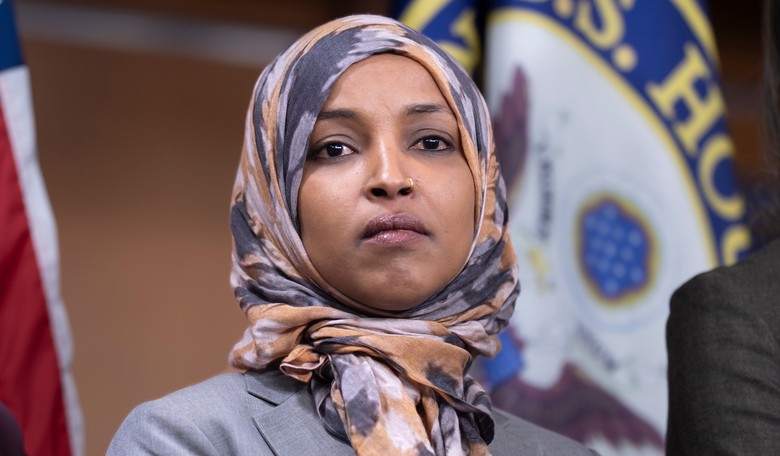
When federal agents left Democrat Rep. Ilhan Omar's (MN-5) Washington home on Oct. 12, they reportedly carried out her phone, notebooks, computers and passport. A Minnesota grand jury has since issued more than a dozen subpoenas, including to some of her relatives. The next day, U.S. Attorney Jeanine Pirro said her office is running a separate review of Omar's financial disclosures. Omar calls it all an attempt to "weaponize federal law enforcement." She hasn't been charged with anything yet.
Where there's smoke, there's fire, or so the saying goes. I've testified as an expert witness in securities and fiduciary cases since 2015, so I'll add the courtroom version: smoke gets you a warrant, and only evidence gets you a verdict. Omar now faces at least two federal investigations, and each has a real paper trail behind it. She owes voters straight answers. The government owes her a case built on documents a jury can read.
Start with the immigration probe, the one that put agents at her door. Omar derived her citizenship through her father, who naturalized in 2000. Investigators reportedly want to know whether she was 17 or 18 when he applied, since an 18-year-old couldn't ride in on a parent's application. Investigators are also reportedly examining whether her father misrepresented his military service. The warrant reportedly listed conspiracy, immigration fraud and false statements. Vice President JD Vance said in May the administration would look into the fraud allegations, so this didn't come out of nowhere. In 2019, her congressional staff asked Minnesota's legislative library to change her listed birth year from 1981 to 1982. Omar says the change corrected a mistake. In my line of work, a date that moves after the fact is the first thing opposing counsel circles.
Here's the part cable news skips. Criminal naturalization fraud carries a 10-year statute of limitations, so conduct tied to a 2000 application likely falls outside it. Civil denaturalization has no deadline. That's why the Wall Street Journal reports the real objective is stripping her citizenship. It's also a hard case to win. Her father died in 2020. Homeland Security Investigations looked at the age question under Biden and passed for lack of evidence. A 2019 review under the first Trump administration reportedly found no evidence she became a citizen fraudulently.
The family file is messy, and some of it is documented. In 2019, Minnesota's campaign finance board found Omar had filed joint tax returns in 2014 and 2015 with Ahmed Hirsi while still legally married to Ahmed Nur Said Elmi, and ordered her to repay her campaign nearly $3,500 plus a $500 penalty. The internet's favorite charge, that Elmi is her brother, has no public proof behind it, and a DNA test can clear that up. Her father served as a senior officer in Siad Barre's army, but fact-checkers have found no evidence he committed war crimes. Conservatives weaken the case every time they repeat what can't be proven.
The money probe looks stronger. Omar's disclosure covering 2024 valued her husband's venture firm and winery at $6 million to $30 million, up from as little as $15,000 the year before. An amended filing then cut the couple's total assets to between $18,004 and $95,000. I've worked with single-family offices since 2001. When a reported valuation swings that far, the auditor calls the same day, and "accounting error" doesn't end the conversation. House Oversight Chairman James Comer demanded records on both firms in February. The Office of Congressional Conduct voted 5-1 in September to recommend dismissal. Pirro apparently wants a second opinion.
Then there's the backdrop that makes Minnesota voters skeptical. Feeding Our Future, which prosecutors call the largest pandemic fraud case in the country, stole roughly $250 million meant for hungry kids, and 68 people had been convicted by July. Omar's campaign took $7,400 from three defendants, two tied to Safari Restaurant, and in 2020 she praised Safari on Somali TV for handing out "2,300 family and kids' meals" a day. As a dad who coached youth football and rugby for years, I know what it costs to feed a team after practice. Nobody feeds 5,000 kids a day from one neighborhood kitchen, yet Safari's owner billed for more than 3.9 million meals and was convicted. She gave the donations to food charities, a move with a whiff of Captain Renault in "Casablanca." No one has charged her in the scheme, and President Trump's suggestion that she profited from it came without evidence. Still, federal prosecutors said last December that half or more of $18 billion in Minnesota Medicaid billing may be fraudulent, and Gov. Tim Walz abandoned his reelection bid in January. Voters there have stopped extending the benefit of the doubt.
Omar's defenders have a fair point on timing. Justice Department practice generally avoids overt steps against candidates within 60 days of an election, and the midterms are weeks away. Her lawyers say agents ignored a judge's order to notify the House counsel before searching a sitting member's home, and kept her from reaching her attorney for more than an hour. Their letter calls the probe "vindictive, retributive, and politically motivated." DOJ calls the letter "riddled with false allegations and inaccuracies." If prosecutors cut corners on a member of Congress, they hand her the best defense she could ask for.
The fix is daylight. DOJ should file charges or close the immigration case before the next Congress is sworn in, and unseal the warrant affidavit either way. The House Ethics Committee should make members explain how they value private businesses they report. Campaigns holding money from convicted fraudsters should send it to victim restitution.
Marcus Aurelius set the standard for both sides: "If it is not true, do not say it." That binds a congresswoman filling out forms and a prosecutor drafting an affidavit. Follow the evidence wherever it leads, and if the smoke turns out to be fire, let a jury say so.
Jay Rogers is President of Alpha Strategies and a financial professional with more than 30 years of experience in private equity, private credit, hedge funds, and wealth management. He writes about issues in finance, constitutional law, national security, human nature, and public policy.