


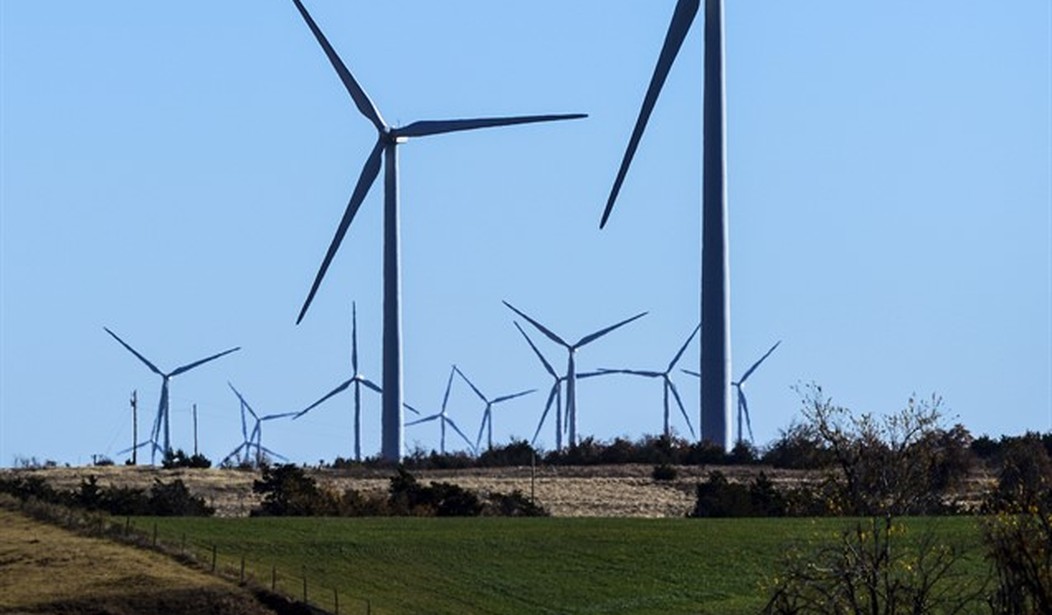
Voters just handed Democrats control of Congress, and the cost of living was at the center of the campaign. Few bills arrive more regularly than the electric bill, and the new majority's answer is more wind and solar subsidies, more of the same policies that drove up our bills in the first place. We pay dearly for the intermittency problem that drives unreliability and causes price spikes we all pay for.
Before the election, Sen. Chuck Schumer (D-NY) pledged that restoring the clean energy tax credits would be among his first acts after retaking the majority. "We will put it back and go even further," he said. Democrats now have that majority, and more than 120 House Democrats already back the Energy Bills Relief Act to do exactly that.
The pitch is that more subsidies for wind, solar, batteries, and transmission will lower your electric bill. That pitch does not survive the evidence. We have already run the experiment.
Before the new Congress moves another subsidy dollar in January, one question must be answered in plain terms: What firm capacity will retire, and what charges will come off the ratepayer's bill once the wind or solar plant is built?
Building 1,000 megawatts of solar does not retire a single megawatt of firm generation. The firm plants remain, with their crews, maintenance, pipelines, and financing. Ratepayers pay for both systems.
Start with the price. Republicans ended most wind and solar credits for projects not under construction by July 4 of this year or in service by 2027. Repealing the energy credits, including EV credits, saved a projected $496 billion over ten years. Restoring them means spending about that much again, or more, and adding it to the inflation-causing $40 trillion national debt.
The original official score for the energy provisions was about $370 billion. Goldman Sachs later put the 10-year cost near $1.2 trillion. The Cato Institute's range for the uncapped credits runs up to nearly $2 trillion. Even at the repeal figure, that is more than $3,500 per household paid in higher taxes or in more debt and interest.
Look at the results when the credits were fully in force. In 2025, the Energy Information Administration projected a record 63 gigawatts of new capacity, with solar and batteries making up 81 percent. Electric bills still rose at roughly double the rate of inflation, according to Democrat Rep. Mike Levin (CA-49), the bill's co-sponsor.
Data centers and other factors played a role, but the record subsidized build added to the increases. A University of Chicago study of state renewable mandates found electricity prices 11 percent higher seven years after adoption.
Wind and solar generate electricity without fuel, an advantage. But firm power keeps the lights on all the time, not only when the wind blows and the sun shines.
The grid must deliver every second, including cold, dark, windless evenings. The Midcontinent Independent System Operator (MISO), which covers Minnesota and 14 other states, counts wind and solar for only a fraction of their nameplate capacity when the system is under stress.
Firm capacity is becoming scarce. NERC rates 13 of 23 regions at elevated or high risk of a shortfall within five years as retirements outpace reliable replacements. Many plants are closing for climate policy reasons, not because they are worn out.
Capacity auctions show the price of that scarcity. PJM's capacity price was $28.92 per megawatt-day for 2024/25. It cleared at $333.44 for 2027/28, more than 11 times higher. Dependable capacity is getting expensive because it is getting scarce.
Anyone proposing more ratepayer or taxpayer money for wind, solar, batteries, or transmission should state the answer. If they cannot name the firm plants that will close and the charges that will disappear, they are not replacing the grid. They are adding a second one.
America needs more electricity for data centers, manufacturing, and growth. We should build it with plants that run when the wind doesn't blow, and the sun doesn't shine. Affordability requires counting every cost.
Until intermittent capacity allows the retirement of firm capacity, ratepayers will keep paying for both.
Voters asked for lower bills. The new majority should start by answering the question, not by writing a second check for a second grid that will keep driving up our energy bills.
Frank Lasee is President of Truth in Energy and Climate
Editor’s Note: Do you enjoy Townhall’s conservative reporting that takes on the radical Left and woke media? Support our work so that we can continue to bring you the truth.
Join Townhall VIP and use promo code FIGHT to receive 60% off your membership.


Join the Conversation
VIP members get the ability to comment on articles.