


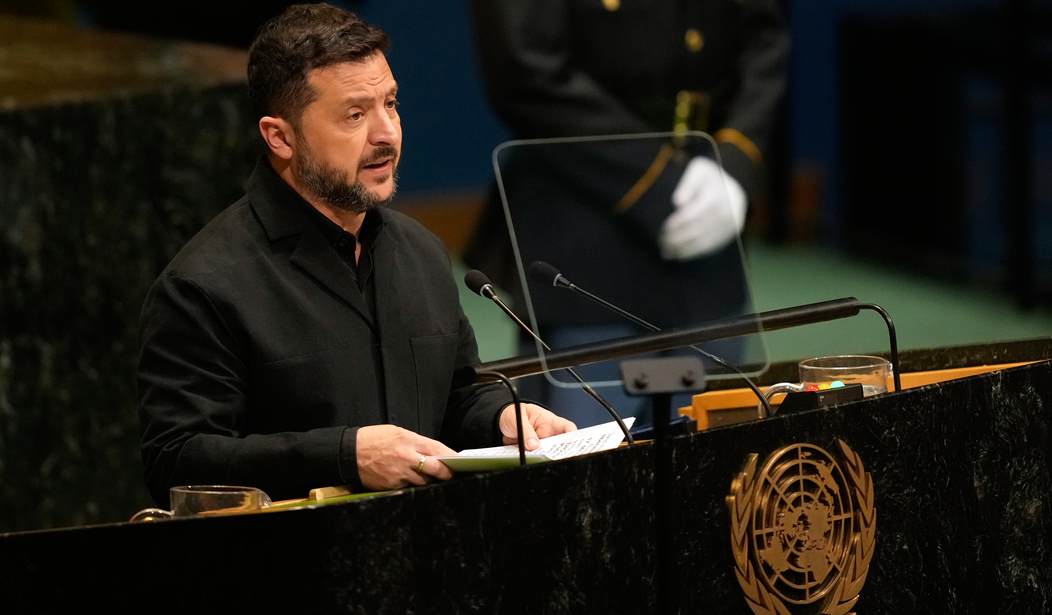
After nearly five years of war, the question is no longer only who can defend Ukraine. It is who can negotiate a peace that lasts.
In late October, something rare happened in Ukraine: Russian and Ukrainian forces held their fire around the town of Oleshky so civilians could get out.
The localized ceasefire, brokered by First Lady Melania Trump, let aid reach residents who had gone months without power, water or reliable food. Evacuees reached safety, and Newsmax cameras documented the operation.
Oleshky did not end the war. But it proved that even bitter enemies can reach agreements when there is political will, effective mediation and a clearly defined objective.
Now comes the harder question: who can turn limited breakthroughs into a lasting peace?
Trump’s Challenge
“I suggest they get a new leader who can make a deal...” President Donald Trump said on October 10. On Newsmax’s “Finnerty,” he called Zelensky “not a good guy for us to deal with.”
Zelensky deserves credit for rallying Ukrainians and securing Western support, and his government cooperated in Oleshky. But defending a country and ending a war demand different skills. The question is whether he will, or can, deliver a comprehensive settlement, one requiring painful decisions on territory and security, public trust and political legitimacy.
Does Zelensky Want This War to End?
Trump’s frustration reflects a pattern. On October 11, he announced an energy ceasefire. Within days, Zelensky declared Kyiv “done” with it, resumed strikes on Russian refineries and said he would stop again only if Washington supplied Patriot interceptors. Kyiv says Russia kept hitting its power grid, a fair complaint. But Zelensky ended a truce the American president had announced and named his price for another. Trump called the strikes “a disgrace” and told Newsmax he finds Zelensky “more difficult to deal with than Putin.”
Zelensky’s offers, such as freezing the current front line, are ones Moscow has already rejected. He says Ukrainians would reject any deal handing Russia the rest of Donbas. Each position lets Kyiv look flexible while the war grinds on.
His defenders blame Moscow, and Russia’s demands are indeed extreme. But a leader determined to end a war prepares his public for compromise. Zelensky has done the reverse. His record is that of a leader who finds reasons to keep fighting, not ways to stop.
Ukrainians Are Questioning Their Leadership
The leadership debate is not confined to Washington.
Vadym Novynskyi, a prominent Ukrainian businessman, former parliamentarian and Orthodox protodeacon living in European exile, called in October for Zelensky’s resignation and a parliamentary role in launching direct peace talks.
Novynskyi says he helped organize the April 2022 Istanbul negotiations and believes they presented an opportunity for compromise. “But Zelensky chose the path of war,” he wrote. He argues that Zelensky abandoned the peace platform behind his roughly 73 percent victory in the 2019 runoff.
“Zelensky will never agree to the end of the war, and his stay in power is a guarantee that the war will continue,” Novynskyi said, warning that prolonged fighting could imperil Ukrainian statehood.
Novynskyi has his own dispute with Kyiv: Zelensky sanctioned him in December 2022; his businesses faced searches, frozen assets and suspended gas licenses. Ukrainian authorities allege wrongdoing and later accused him of treason and other offenses. Novynskyi describes political retaliation and a crackdown on his church.
Lawmaker Oleksiy Goncharenko argues that Ukraine is losing a war of attrition. Rather than settle everything at once, he proposes a series of smaller agreements on shipping, energy and civilian infrastructure. Oleshky is a working example of that approach.
The Mandate Problem
Zelensky’s five-year term expired in May 2024. Elections are suspended under martial law, and he has called a wartime vote a “tsunami” that would split the country. There is a case for caution. But it leaves Ukraine negotiating its future through a president whose term has lapsed and whose office is under a cloud.
In November 2025, chief of staff and lead negotiator Andriy Yermak resigned hours after anti-corruption investigators searched his home; in May, they named him a suspect in a money-laundering case. In August, Zelensky fired deputy chief of staff Iryna Mudra as investigators targeted an alleged money-laundering ring involving his office.
Zelensky himself has not been accused of wrongdoing, and Ukraine’s independent anti-corruption agencies deserve credit for pursuing these cases. But in 2025 his own government moved to curb those agencies’ independence, backing down only after public protests.
America First Means Delivering Results
Trump’s challenge is not an American demand to pick Ukraine’s next president. That decision belongs to Ukrainians.
But Washington is entitled to ask what its support is achieving. After over $175 billion in aid related to Ukraine, approved under President Joe Biden, “stay the course” is no answer.
On October 11, Zelensky told ABC’s “This Week” that Ukraine would hold elections if Putin agreed to a full 60-day ceasefire. The Kremlin rejected the idea. Washington should not let it die. If a ceasefire can be brokered for one town, the United States can put an election ceasefire on the table at the Abu Dhabi talks expected this month. Moscow questions Zelensky’s legitimacy; Zelensky says he is ready to face voters. Both claims can be tested.
Peace should also deliver for Americans. It should deter another Russian attack and keep America out of a direct clash with Moscow. It should hold Europe to its pledge of 5 percent of GDP for defense by 2035, delivered as ammunition, air defenses and deployable forces. It should free American arms and intelligence for the Indo-Pacific, where China is the bigger long-term challenge. And it should open doors for American business, from possible projects in Arctic energy and critical minerals to the minerals and reconstruction deal Washington already has with Kyiv.
An endless war is not a strategy. A rushed agreement that invites another invasion is not peace.
After years of sacrifice, Ukraine needs more than a president who can sustain international support for its war effort. It needs a leader with the mandate to turn that support into a peace that lasts.
Editor’s Note: Do you enjoy Townhall’s conservative reporting that takes on the radical Left and woke media? Support our work so that we can continue to bring you the truth.
Join Townhall VIP and use promo code FIGHT to receive 60% off your membership.

Join the Conversation
VIP members get the ability to comment on articles.