


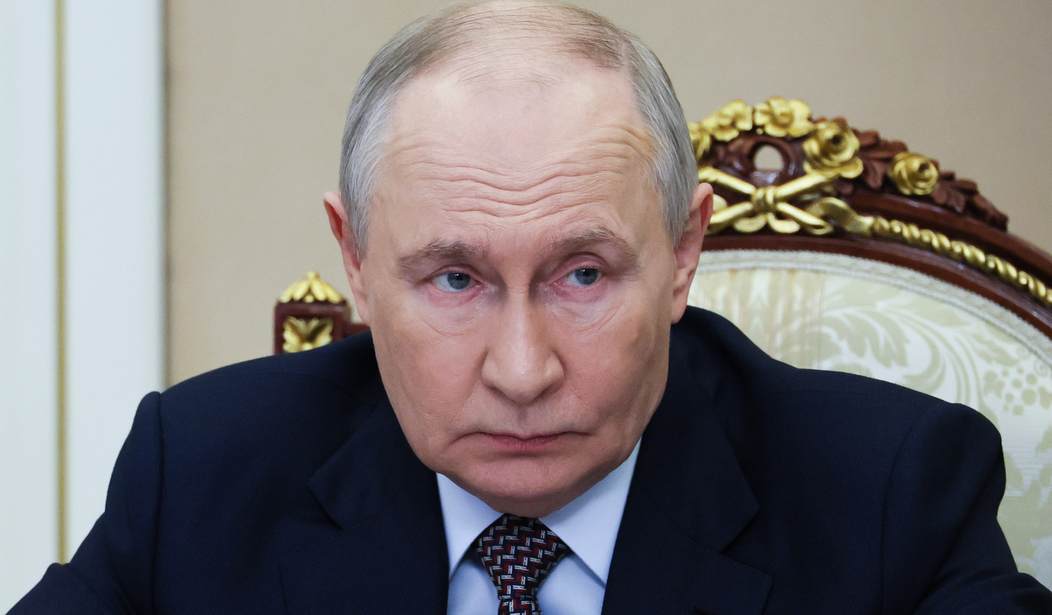
Last month, the Kremlin set aside 17.1 trillion rubles, about $203 billion, for defense in 2027, a 27 percent jump over what it had budgeted for that year only 12 months earlier. Add internal security and the men with guns consume roughly 44 percent of federal spending. The only treaty ally that has sent soldiers to die for Moscow is North Korea, which put an estimated 14,000 troops into Kursk under a mutual defense pact signed in Pyongyang in June 2024.
The headlines treat these as two stories, one about money and one about manpower. Yet, the story is the same. A state that cannot say what it stands for will define itself by what it is against. A state that characterizes itself by its enemies ends up building nothing except the means to destroy them.
I left the Soviet Union in 1990. The system I left was cruel and bankrupt, but it had an idea. Communism was a lie, yet the lie obliged the regime to claim it was building something: factories, schools, a future worth the sacrifice. Boris Yeltsin understood the void when the lie collapsed. In 1996, he ordered a commission to produce a new Russian national idea within a year. It produced nothing.
Vladimir Putin inherited that empty pedestal. Over 25 years, he has filled it with grievances: NATO, the West, "Nazis" in Kyiv, "foreign agents" at home. The sociologist Lev Gudkov called this negative identity two decades ago. Russians knew whom they were against long before anyone could say what they were for.
The mechanism matters more than the label. A regime with no positive promise needs a besieged fortress to justify its own existence. A rent economy needs oil wells and loyal officials, not citizens. An elite whose fortunes were built on seizure cannot propose any future that puts the seizure at risk. Combine those three conditions and the only coherent program left is to blow up, to poison, and to destroy. Salisbury, Bucha, and the winter strikes on Ukraine's power grid follow directly from it. So does the Kremlin's habit of treating every neighbor’s independence as a theft of Russian property.
The fair test is for countries that emerged the same way as Russia began. Azerbaijan signed its Contract of the Century with Western oil majors in September 1994. Kazakhstan brought Chevron into Tengiz in 1993. Both were newly independent post-Soviet states, with Soviet-trained elites and major Caspian oil resources. Their paths diverged in how they brought in foreign capital and managed the proceeds.
At the end of September 2026, Azerbaijan’s State Oil Fund reported $74 billion in assets, about 94 percent of the country’s IMF-projected GDP for the year. Russia’s National Wealth Fund had $45 billion in assets classified as liquid by the Finance Ministry, down from about $113.5 billion before the invasion, and the Finance Ministry had sold more than half of the fund's gold to plug deficits. Russia’s full fund was larger, at $153.8 billion, but included substantially less-liquid domestic investments. The comparison is striking: Azerbaijan’s oil fund is larger than the liquid portion of Russia’s NWF, while Russia’s spendable buffer has shrunk sharply.
Norway and the Gulf monarchies prove the same point from the other direction: what a state does with oil money is a choice. Baku and Astana turned rent into balance sheets, pipelines that bypass Russia, and the freedom to pick their partners. Moscow turned the same rent into Shaheds.
Germany built Nord Stream and put a former chancellor on Gazprom's payroll; today it is rearming against Russia. The United States offered a reset in 2009. Ukraine, the nation closest to Russia by language and family, is now a front line. Kazakhstan's president sat beside Putin at the St. Petersburg forum in June 2022 and refused on stage to recognize the Donetsk and Luhansk "quasi-states." Azerbaijan watched Russian air defense shoot down an AZAL airliner in December 2024, killing 38 people, then waited 10 months for Putin to admit it. Armenia, a treaty ally, froze its participation in the Russian-led security bloc and, in March 2025, its parliament voted to begin EU accession. Uzbekistan quietly routes its trade and its students elsewhere.
Not one government that counted as Moscow's friend 20 years ago is closer to it today. The sole addition to the list is Pyongyang.
This is what Russia has become: North Korea with 11 time zones and a veto at the U.N. Security Council. The economy runs on a war footing. The circle of friends has shrunk to one, and that one sends conscripts. The exports that matter are drones, missiles, grievance, and fear. Pyongyang spent 70 years perfecting that model. Moscow reached it in 25, with a far larger inheritance to squander.
For the West, the lesson is uncomfortable but useful. Russia has nothing to offer at a negotiating table because it has nothing it wants to build. A state whose only idea is destruction does not trade concessions — it trades time. Each ceasefire proposal from Moscow has been a request for a pause to reload.
The answer is to stop waiting for a Russian national idea to emerge and to plan for its absence. That means deterrence by production: more interceptors, more drones, more shells than the war economy of a declining petro state can match. It means treating Baku, Astana, and Tashkent as the partners they have chosen to be, rather than as Moscow's backyard. And it means saying plainly that a country which has nothing left to offer its neighbors except the threat of destruction has forfeited the right to be treated as a great power. It is a large, armed, angry state with a small idea. The world has handled those before.
David Zaikin is the founder and CEO of Key Elements Group, a London-based strategic consultancy specializing in defense and international affairs. He has written on defense procurement and drone warfare for the Jerusalem Post, Forbes, and Stars and Stripes. He has also been featured in interviews with the BBC, Sky News, and CNBC.
Editor's Note: Do you enjoy Townhall's conservative reporting exposing the radical left and woke media? Support our work so we can keep bringing you the truth.
Join Townhall VIP and use promo code FIGHT to receive 60% off your membership.
Join the Conversation
VIP members get the ability to comment on articles.