





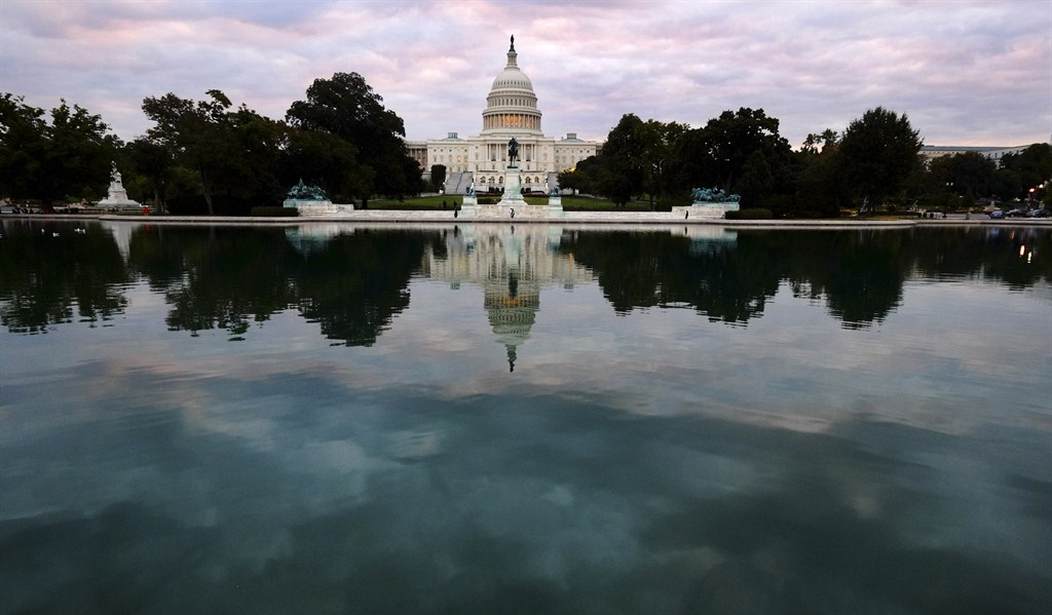
The way to have the foreign policy you want is first to figure out what kind of foreign policy you want. It is a task at which American leaders grow less and less adept, possibly on account of Americans' general inability to figure out what they want: involvement, isolation or variations of the two? What, exactly?
Barack Obama, who plans a major foreign policy speech this week at West Point, merits a modicum of sympathy. A modicum, I said -- let's not get over-generous -- for his disposition to figure out things on the fly, such as Syrian chemical weapons, Putin, the Ukraine, Egypt, the Middle East and other dangers.
Our hesitating commander-in-chief has no visible sense of how to use military personnel, as distinguished from standing in front of them in Afghanistan, taking salutes and selfies.
The president's perpetual tendency, on domestic and foreign policy alike, is to confuse leadership with showmanship. At the same time, he's had his enablers, meaning the voters, who, by and large, have slipped back into their pre-9/11 mode of incoherence when it comes to foreign policy. Nobody but John McCain, it often seems, is in a confrontational mood over Iranian nuclear capacity, North Korean intransigence or anything else. What kind of confrontations? And to what ends, with what expected outcomes? Hardly anyone ever asks such questions. The country that backed, more or less, George W. Bush's Afghan-Iraqi strategy is like the cat that, in Mark Twain's telling, sat on a hot stove: He won't sit on one again, and he won't sit on a cold one either.
It is true that polls show growing discontent with the incoherence and flabbiness of the Obama foreign policy. Voters seem to think a country should have a foreign policy; what they think it should be is the hard part. Where do we step in as a nation? When do we keep away and let happen whatever seems likely to happen? Obama seems poised, while at West Point, to suggest some possible answers, which is not the same thing as defining national interests in ways that speak to the present moment's needs. Some minor clarifications may be all we can expect from our present leader -- a man showing signs of personal need for admiration, whatever he does.
What indeed does a nation want by way of a foreign policy? It depends on size and others' expectations. The world's powerful nation -- for now -- both economically and militarily, has a target on its back, and sometimes a sign reading, "Kick me." That nation is going to get kicked and shot at, for which eventualities it had better be prepared, militarily, diplomatically, economically.
Crises like Syria, for which "apparent solutions" are non-apparent, arise in the absence of general belief that the United States is too weak or too distracted to care much one way or another. Voices at home are too discordant and angry, opinions on national goals too varied.
Even on terrorism, Americans seem to have calmed down, appropriating as normal the duty of personal humiliation at the hands of the TSA and regular consumption of news stories about America-hating jihadists. Russia rises, but what's to do about it? The same with China. They don't really want a war -- do they?
In the moral leadership vacuum known as Washington, D. C., answers to such questions come fitfully. Popular indifference and confusion could be tendered as excuses. On the other hand, what are leaders for if not to -- excuse me -- lead; to point out to citizens the pathway of enlightened, sometimes costly, responsibility?
One generation's viewpoint can contradict, for circumstantial reasons, the viewpoint of another. That isn't the point. The point is that, where supposed leaders react instead of lead, crises and the need for snap decisions multiply. What's it all about -- Syria, Iran, Russia, North Korea, terrorism, drones and so on? And has the president, against his apparent inclination, figured it out at last? Nice of him, if so, finally to share the news with us.


Join the Conversation
VIP members get the ability to comment on articles.