
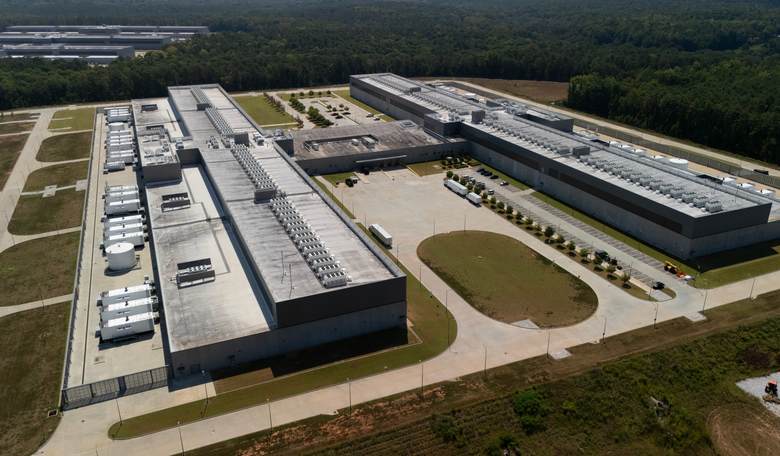
AI firms now account for most of the increase in output and jobs in the U.S. and are projected to be the engines of economic growth in the coming years. But the success of AI firms is now threatened by a backlash against data center construction. In 41 ballot measures in the recent midterms, citizens voted against the construction of data centers in all but one.
The fatal flaw in these ballot measures is that citizens are presented with a binary choice: should a data center be constructed, yes or no. These ballot measures do not consider all of the impacts of data centers on a community and the broader society.
AI has both positive and negative impacts on communities, but ballot measures often focus on the negative impacts. Data centers have positive impacts through job creation and increased demand for goods and services. Data centers can also generate tax revenues to help communities meet increased demand for electricity, water, roads and infrastructure investments.
AI is the classic example of a public good. AI has created a discontinuous increase in the stock of knowledge. My use of that knowledge does not diminish the value of the knowledge to other citizens. Like all public goods, the knowledge generated by AI will likely be underproduced. That is why virtually all governments around the world are promoting AI development. Countries such as China have vowed to be on the cutting edge of AI technology. As a transformative technology, success in developing AI is crucial to economic growth and prosperity, and national defense.
Joseph Schumpeter maintained that technological change and innovation are the engines of economic growth in capitalist systems. He introduced the concept of creative destruction. Transformative technologies, such as AI, will bring rapid growth in some sectors and retardation of growth in other sectors. The problem in capitalist systems, he argued, is economic sclerosis. Over time, bureaucracies in both the private and public sectors emerge to defend the status quo. If special interests block transformative technologies, this will result in retardation of economic growth.
The U.S. now appears to be at such a turning point. If special interests are successful in blocking data centers, you can be sure that other countries, especially China, will take leadership in the development of AI. The U.S. will be left behind in developing this transformative technology, with negative impacts on our economic growth and national defense.
There are alternative ways to give U.S. citizens and communities a voice in data center construction. In many counties, citizens can initiate ballot measures that create a different path for data centers than the binary choice presented to them in the recent midterm election. Citizens and communities can negotiate with AI firms to design a ballot measure that reflects both the benefits and costs of data center construction.
When citizens and communities negotiate an agreement with AI firms that addresses the costs of data centers, this can be a win/win outcome for all. Communities can negotiate taxes and fees with the AI firm that cover the increased cost of electricity, water, and infrastructure investments. Citizens can negotiate compensation from the AI firm for any diminution in property values resulting from construction of the data center. If an agreement can’t be reached through negotiation, citizens should have the right to seek compensation through a jury trial.
Citizens and communities can draft ballot measures that create this alternative path to the binary choice presented to them in ballot measures in the recent midterm elections. We should expect this path to reflect the unique characteristics of each community. These differences are clear in the data centers constructed in my own state, Colorado. Citizens in Boulder County and other high-income communities across the Front Range have rejected construction of data centers. Citizens in nearby Weld County and other rural counties have welcomed data center construction; investment in data centers has created new jobs and much-needed tax and fee revenues.
Dr. Barry W. Poulson is professor emeritus at the University of Colorado, Boulder, and on the Board of the Prosperity for US Foundation.