
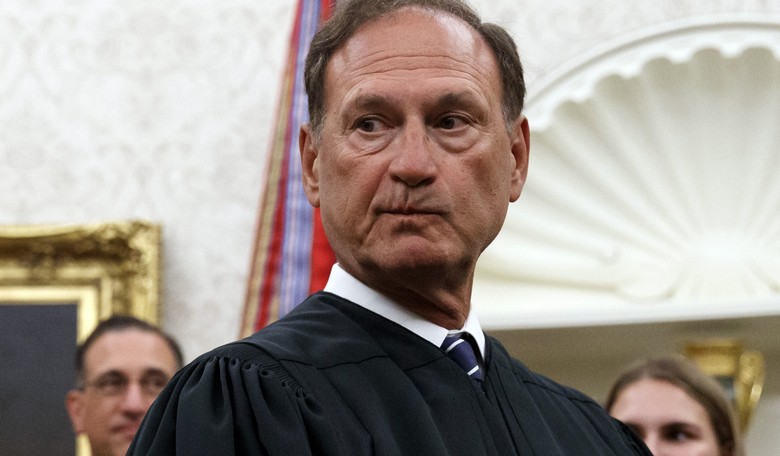
Before the year 2026 ends, make sure that you read Mollie Hemingway’s new book, Alito: The Justice Who Reshaped the Supreme Court and Restored the Constitution
I didn't follow Federal judicial politics closely until early 2006, when President George W. Bush needed to fill the vacancy left by retiring Justice Sandra Day O'Connor. The judicial process was already underway when Justice Rehnquist passed away, and Justice John Robertss took his place as Supreme Court chief justice, but there was little ideological difference, at least on paper, between them.
President George W. Bush was facing an angry voter base that wanted the courts back from liberal domination. Ronald Reagan had appointed three justices, but Antonin Scalia was the only winner. George H.W. Bush was hit-and-miss, with his appointment becoming a liberal turncoat, while Clarence Thomas has become one of the keenest originalist minds on the United States Supreme Court. He remains the most popular Justice among conservatives to this day.
Samuel Alito’s nomination and confirmation were Republicans' first major step toward replacing previous failed Supreme Court appointments with effective constitutional conservatives. Newspapers nicknamed him “Scalito” because of his long record of originalist interpretation of the United States Constitution. Alito was a winner, and he would be the first tried-and-true conservative justice to successfully weather the confirmation process.
After reading Molly Hemingway's biography of the Italian-American, New Jersey-born, baseball-loving justice, along with her insight into judicial politics and the inner workings of the court, I think that Justice Alito deserves another look, and in some ways, he has been a more effective Justice than Justice Thomas!
Hemingway's prose is straightforward and engaging. She doesn't treat readers like ignorant rubes, but she doesn't refrain from providing basic context and explaining the basics of the United States Supreme Court, from the confirmation process to the delivery of judicial opinions, from stare decisis to amicus briefs.
Taking a more non-linear approach, Hemingway begins the biography/recent history of Alito's confirmation and work on the Supreme Court by exploring his judicial philosophy and his consistent commitment to constitutional originalism despite media and political pressures. An important phrase defines his overall temperament: "Let justice be done, even if the heavens fall"
Of the nine current justices, Justice Alito has endured, you know, considerable pain and pressure for his work. His wife is also a conservative activist, and aggressive progressive partisans in Congress have done everything they can not only to delegitimize the Supreme Court, but to undermine Justice Alito.
He has weathered the storms, and he never backed away from his principles.
One key section of the book explores his seminal role in overturning Roe v. Wade, one of the worst, if not the worst, judicial opinions issued by the Supreme Court. Completely activist at its core, relying on slim to no precedent, the 1973 opinion forcing abortion as a constitutional right on the fifty states reads more like legislation than a judicial ruling. Hemingway takes us behind the scenes into the political jockeying over Dobbs v. Jackson Women's Health Organization from late 2021 to 2022. Chief Justice Roberts wanted to uphold a Mississippi law limiting abortion after 15 weeks, but preferred a measured approach before overturning Roe v. Wade.
Thankfully, five justices voted after the court arguments that it was time for the 1973 abortion-setting precedent to go. Liberal pundits, left-wing activists, and constitutional conservatives across the country believed that Roe v. Wade would end.
Since Roberts didn't support the full reversal of precedent, he had to assign Justice Thomas the task of choosing the author for the majority opinion. He could have written an excellent judicial ruling, but Hemingway reveals that Thomas went with Justice Alito because he was not only a sound constitutional scholar and committed conservative, but a pragmatic originalist who would craft an opinion precisely enough that the input and concerns of the five signers would feel respected. Unlike Thomas, who has routinely been the lone dissenting vote in key decisions, Alito has a record of skillfully drafting opinions that target bad precedent while maintaining fractious majority coalitions, especially when other justices are less keen to review and reverse previous bad rulings.
Alito's role received extensive attention when the draft of the majority opinion was leaked to the press in March 2022. This unprecedented breach of protocol and trust in the United States Supreme Court shocked justices and clerks alike (some staff members burst into tears over the betrayal of confidence), according to Hemingway. She discusses the history behind it in early 2022, when pundits recognized this violation of the court’s secrecy as a last-ditch attempt to intimidate the conservative majority into overturning Roe v. Wade. In this section of her book, Hemingway shares that the Supreme Court had dealt with similar leaks in the past, all revealing how the court was going to decide key cases, but never was the entire draft of an opinion released before, and in such brazen fashion.
Throughout the book, tying in with the controversy over Roe v. Wade, Hemingway reveals Justice Alito's resolute courage and calm confidence when standing by constitutional principles. Alito didn't back away from his opinion, and the seminal decision ending a so-called constitutional right to abortion ended June 24, 2022.
Hemingway explores personal aspects of her featured justice, as well. From his humble background as a New Jersey kid of Italian descent, his working-class Catholic upbringing, and the work and care of his parents, his interest in debate and his outstanding achievements in law school, Alito developed a humble character with an impressive, erudite mind. He treats his clerks with utmost respect, and unlike most federal judges, he does most of his writing, but happily welcomes input — including differences of opinion — from his clerks.
While Justices Sonya Sotomayor and now-deceased Ruth Bader Ginsburg have children's books, documentaries, and glowing articles praising their lives and unabashed judicial activist liberalism, Justice Samuel Alito deserves more praise and accolades. Currently, he is the least highlighted of the nine justices, but he deserves more attention and respect, and Hemingway's biography makes the case.
If you are interested in Supreme Court politics, want more reasons to appreciate President Trump’s brave Supreme Court legacy, or are just looking for a good book to inspire future conservatives, Hemingway's latest is a great read.