
Some great things often end with a whimper.
Sports offer so many analogies and lessons for life. Imagine an incredible Super Bowl. Lots of scoring, sacks, turnovers, smash-mouth tackling. The game is pure entertainment. Then it comes down to the final seconds. The team with the ball is leading and has no need to do anything more for victory. So what does it do? The quarterback gets the ball and kneels while his teammates surround him so that he is not flattened. And with that, the game is over.
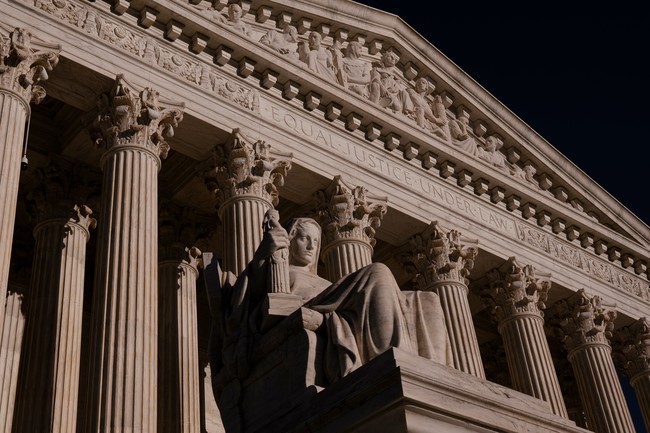
I had this image pass through my mind when I received an email from a friend who is also our lawyer in New York. It succinctly stated that the U.S. Supreme Court declined to hear our case again, as per the request of the lawyers representing the Palestinian Authority (PA) and PLO. In professional terms, the defendants were denied “cert” (certiorari). After 22 years, dozens of hearings, and millions in legal fees, it all came to a one-line decision from the justices of the Supreme Court. The case is over on the legal side. They have no more appeals other than to run to the State Department and beg for Foggy Bottom intervention.
And what a case it was and still is. The attacks occurred around 2002. The original case, Sokolow v. PLO, was filed in the Southern District of New York in 2004. Discovery proceeded very slowly. It was none other than Condi Rice during her time in the Bush administration who told the PA to get serious lawyers after they lost their first two cases by default. The active timeline is below:
2014: Depositions
2015: Trial. PA and PLO guilty on 24 counts in seven attacks with 10 American families as plaintiffs. $188.5 million judgment automatically trebled to $655.5 million.
Later that year, Tony Blinken, an undersecretary to John Kerry, asks that the judge reduce a potential appeals bond due to the potential of the PA going broke, Hamas taking over, and the Chicago Cubs again winning the World Series. The judge reduces the appeal bond: $10 million and $1 million a month. The PA changes law firms and takes on the top firm in Washington: Patton Boggs, as both lawyers and lobbyists.
2016: We lose on appeal. While the judges seemed almost apologetic, they concluded that the PA and PLO did not have enough contacts in the U.S. to be considered “at home” for litigation. A lack of personal jurisdiction meant that the case had no basis.
2017: We went to the Supreme Court. The justices asked the Executive Branch if it should take the case. We understand that the Department of Justice (DOJ) planned to answer in the affirmative when someone (and we know who you are) in the White House told them to say no. The Court declined to hear the case.
2018-2019: Two laws were passed by Congress and signed by President Trump. The first made the PA at home if they accepted U.S. aid. The Palestinians swore off all U.S. assistance, even bringing home students from Lebanon whose scholarships were funded by the United States. The State Department and Congress wanted to give the Palestinians money and asked that this law be removed. It was, and its replacement changed the hook: if the PA continued to pay Palestinian terrorists in Israeli jails and those folks had American blood on their hands, then the PA would agree to jurisdiction in the U.S.
The new law gave the PA 120 days to stop the payments. I felt like a guy in solitary, scratching a line on the wall as each day passed. The four months passed and they couldn’t stop the payments. They tried lots of tricks: the payments have ended! They are now based on need and not how many Israelis they whacked! The PLO is in charge of the payments! And so on. They couldn’t stop the payments because the whole purpose of the Palestinian Authority is to kill Jews, and these guys were their Olympic champions.
2020-2024: The new law was challenged in district and appellate courts, and in each case it was found unconstitutional. The simple argument was that either a person or organization was at home and thus knew the laws, or it was not. Saying that a guy in Baghdad wears a red shirt and thus agrees to be tried in the U.S. was several bridges too far. When the Second Circuit once again ruled against us, we went back to the Supreme Court.
2025: The justices agreed to hear the case for constitutionality of the new law. Our New York lawyer told me by phone why we would win 9-0. I assumed that he was on drugs, but he went through each justice and explained why he or she has, in the past, ruled in a manner that was supportive of our claims. Along the way, during the Biden Administration, the Department of Justice (DOJ) not only wrote a brief on behalf of the law, but it also joined the case to make it USA v. PLO. This sounds like Rocky VIII. Their lawyer and ours argued before the Supreme Court. And we won 9-0. In matters of national security, the Fifth and not the Fourteenth Amendment controls, and the president and Congress have the power to make laws that extend the national security of the United States. Pinch me.
2026: The case returned to the Second Circuit without arguments. We won 3-0. The PA’s lawyers asked for the entire circuit to rehear the case. Denied. They asked Justice Sotomayor to hear an emergency appeal. She denied. Then they asked the full court to hear the case, and in one line, they said, “No.” And with that, Sokolow v. PLO came to a quiet finish after 22 years.
The next steps involve collection, and our lawyers have been preparing for this phase for several years. I want to focus a little bit on why our case took such a challenging route. When Leon Klinghoffer was murdered aboard the Achille Lauro by Palestinian terrorists, Congress felt that U.S. citizens needed legal protections overseas. In that specific case, since the murder occurred at sea, there were some anti-piracy laws in favor of the Klinghoffer family. But not for anyone hurt in a foreign country. Congress passed the Anti-Terrorism Act (1992), which sat fallow until our lawyers began to use it against the PA and PLO in the early 2000s. The hole in the law came out in our case as well as parallel cases: the law could not be applied to any group that did not have some significant presence in the U.S. When we and hundreds of other families sued Arab Bank, that was not an issue: they had a big branch in Brooklyn. But the PA and PLO had some people in Washington and New York, and they were deemed not enough to meet “minimal contacts” to establish jurisdiction over them. The new law, the Supreme Court ruling, and the Second Circuit reversal all mean that other cases that died on the vine can now again be prosecuted on the merits. The corrective law was needed because the original legislation was fatally flawed. With the PA now at home in the U.S. (until such time when it really does stop ponying up “pay for slay” funds), other cases are moving forward. Ours was the only one that reached a jury verdict, before it was thrown out on the first appeal.
I am grateful for all of those folks in Washington who helped us hold our attackers responsible for their actions. From Chuck Grassley initiating the law to Donald Trump signing the fixer laws, much of Washington was involved in our finishing off this case last week. We are truly grateful.