
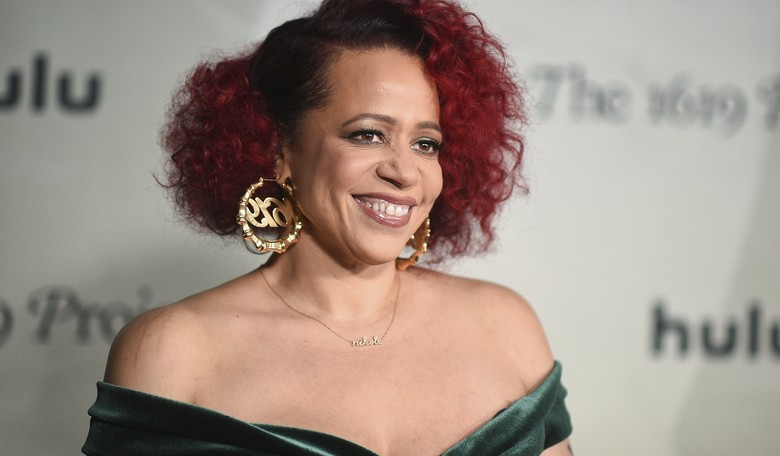
Nikole Hannah-Jones, a leading author behind the infamous 1619 Project and a prominent face of DEI and progressive education politics, has found herself under fire after enrolling her own daughter in a struggling public school, a decision critics say put ideology ahead of her child’s education. Hannah-Jones said she hoped the move would draw attention to the school’s problems and help spur improvement. Instead, the experiment reportedly backfired when her daughter’s education began to suffer, the sort of sacrifice that is much easier to romanticize when it is someone else’s child making it.
Now, the story has become even more damning. Newly surfaced audio reportedly captures Hannah-Jones’s daughter blasting her mother for putting ideology ahead of her education.
Nikole Hannah-Jones’s daughter is smarter and wiser than her mother, and is correctly outraged by the ideological zealotry that led her mother to privilege a bunch of mawkish nonsense over her only child’s wellbeing. https://t.co/gXa2bgGtsZ
— Charles C. W. Cooke (@charlescwcooke) September 29, 2026
“It's like, why should my child be the one that's rescued? Like, you should escape what we consigned so many other kids just like you to? I just would never feel right about that,” Hannah-Jones said.
Her 16-year-old daughter, Najya Hannah-Jones, responded that she should not have been expected to sacrifice her own education for a broader political statement.
“Why? Why? It makes no sense. You're talking about, 'oh, I'm just going to give you the worst just because it's not fair that you...' I didn't ask to be born. All you're supposed to do is just, like, put me in a good school,” Najya Hannah-Jones replied. “Like, oh, well, I didn't want to put you in a great school and have you have advantages over other kids. Isn't that what you want? Isn't that what you want me to have? Is that not a normal thing you want me to have? You don't want me to...”
“You do, though. But you do. You have advantages. You have so many advantages,” her mom said.
Najya countered that a solid education is not just another privilege, but an advantage that shapes nearly everything that follows. Hannah-Jones then argued that her daughter had still managed to reach the same level of academic success as her classmates, an assertion Najya immediately challenged.
“I got through it because... Well, not even, though. Like, I... Everyone last year, I had my grade come out. I remember crying because everyone else's, like, score was so good,” Najya said. “And I was just like, how is it so easy for everyone else but me? So, no, I don't think that I got through it. I think I just tried my hardest.”
“Everyone's not your kid,” she added.
“That's fair,” Hannah-Jones replied. But Najya’s point was not that every child has the same circumstances. It was that no child should be forced to accept a worse education because an adult believes deprivation is more equitable.
“You can't save everyone who doesn't want to be saved,” Najya said.
“That's what you think, though? You think, like, other kids don't want better?”
Najya pushed back, saying she was not claiming other students did not want more. Rather, that her mother’s decision had ultimately benefited no one.
“I'm not saying that. I wanted better. All the kids in my school wanted better. Everyone wanted better. There's no benefit that came out of you putting me in those schools. There's no benefit at all.”
Najya Hannah-Jones seems to understand something her mother does not, that despite the subpar education she was given, giving one child a worse education does not give anyone else a better one. It does not fix failing schools, close achievement gaps, or imbue the system with fairness. It simply gave her a poor education, a price her mother was willing to pay in the name of ideology.