
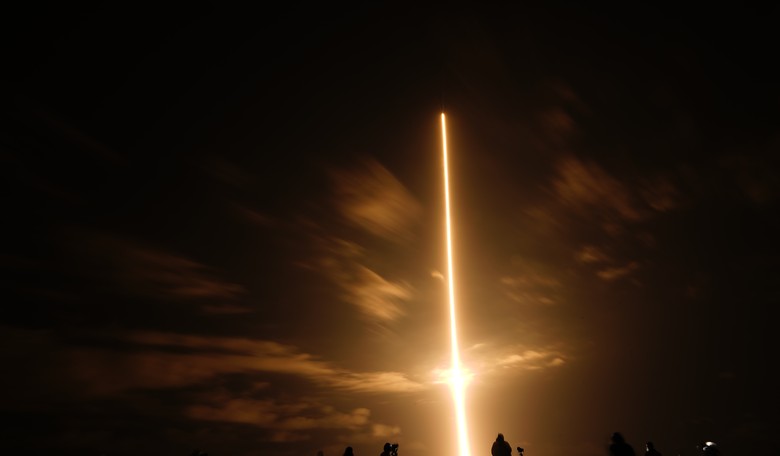
SpaceX’s highly-anticipated Starship has made its first-ever flight to orbit, delivering a slew of new Starlink satellites in a successful mission that helped prove the capabilities of the world’s most powerful rocket.
Liftoff of Starship Flight 14 from Starbase, TX.
— Star✦Fleet Tours (@StarFleetTours) September 28, 2026
The first orbital launch attempt for the program.
Seen from 4 miles (6.4 km) away. pic.twitter.com/mvWYKFWNpX
SpaceX's Starship rocket just performed a flip maneuver and splashed down on target in the Pacific Ocean. Seems like tower catch could be a go for flight 15. pic.twitter.com/LrkvxLGkeB
— Sawyer Merritt (@SawyerMerritt) September 28, 2026
First orbital flight of Starship successful! https://t.co/xVNsnUKTm0
— Elon Musk (@elonmusk) September 28, 2026
While the entire trip was originally slated for 10 hours, mission controllers decided to cut the journey short after three hours due to an upper-stage engine failure. Still, Starship 14 managed to complete its mission objectives and conducted a successful turn maneuver before touching down in the Pacific Ocean.
The super-heavy rocket’s success could solidify the ambitious roadmap laid out by NASA leadership and President Donald Trump to launch crewed missions to the Moon by the end of 2028. The new milestone also marks a huge leap since the reusability concept with the Starship vehicle was proven after a successful catch of the main-stage booster in 2024.
Starship Flight 5: Featuring Booster 12 Tower Catch
— D Wise (@dwisecinema) October 13, 2024
There are no words.
📸 - @NASASpaceflight
📺 - https://t.co/sxIywGdvpz pic.twitter.com/pSdq03TSVC
The massive Starship vehicle could be set to become the workhorse of American advancements in space transportation, as it has a thrust capacity of double that of NASA’s Space Launch System, which transported the Artemis crew around the Moon for the first time since the Apollo missions.
The next Starship launch could occur as early as mid-October.