
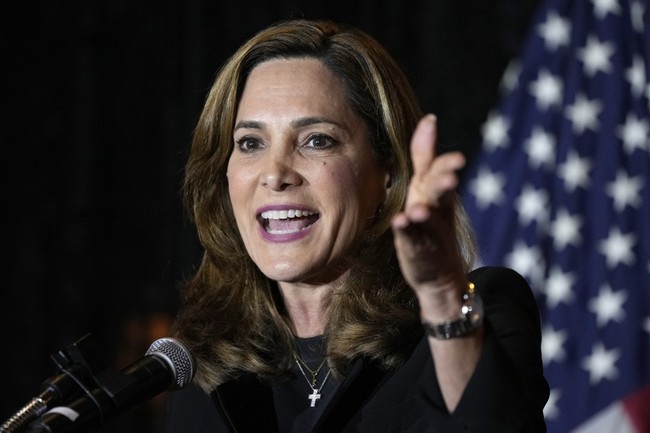
In something of a “September Surprise,” Rep. Maria Salazar (FL-27) released a video of herself appealing directly to President Trump to “be for immigration what Lincoln was for slavery.”
“I’m not talking about giving them amnesty,” Salazar says in a clear reference to the Dignity Act (H.R. 4393), which does precisely that. “I’m talking about giving them a dignified life in this promised land.”
Her timing is bitterly ironic, coming within a few days of the anniversary of Booker T. Washington’s famous plea to American employers and politicians to fill the next job openings with left-behind Americans (freed slaves and their descendants) instead of importing workers from foreign lands. In his 1895 Atlanta Exposition address, Washington told the story of the crew of a ship lost at sea and dying of thirst. A second ship heard their distress and answered, “Cast down your bucket where you are!” To their amazement, the sailors discovered that they had drifted into the mouth of the Amazon and were surrounded by the precious fresh water they were desperate to find.
Washington himself was about nine years old when Union troops emancipated him from slavery. He spent his adult life fighting for the economic emancipation of his fellow Americans. Washington understood the labor impacts of slavery and mass immigration as well as anyone in his time or ours. He was an immigration restrictionist.
Rep. Salazar surely cares for and admires the illegal workers she champions. Washington had similar feelings in his own time. He often held up immigrants as role models for grit and enterprise. But he did not admire mass immigration policies that encouraged employers to bypass their fellow Americans. His message to American industry was “cast down your bucket where you are.”
Who might be the beneficiaries of employers casting down their buckets today? Start with the 7 million who are unemployed and looking for work, according to the latest Bureau of Labor Statistics jobs report. Or the 4.4 million who are working part-time because they can’t get full-time employment. And the 5.7 million who want a job but haven’t actively looked in the last four weeks. That’s 17 million people — more than the population of Pennsylvania.
The contrast with Salazar’s bill is striking. My organization estimates that the Dignity Act would add 17 million permanent foreign workers through amnesty and immigration increases — almost exactly the same as the number of workers who desire better economic opportunities right now. The bill buries a few good policies under a heap of awful ones. It mandates E-Verify — but only after giving permanent work permits to most people working illegally. That’s just another version of the familiar formula: amnesty first, enforcement later.
Salazar’s bill would also further reward employers engaged in illegal hiring by freezing deportations for two years — a dangerous message that could trigger another border surge all by itself.
Very few illegal immigrants are nefarious actors seeking to do America or Americans harm. But illegal immigration is not a harmless act. It subverts our immigration system, dilutes democracy, and diminishes economic opportunities for citizens and legal immigrants.
You can care about immigrants without believing that American employers should import workers while Americans are struggling to find adequate work. The share of economic output that goes to American workers has fallen to a record low, while stock prices remain near all-time highs. Immigration policy can’t be held entirely responsible for that gap, but it is a major factor. Immigration increases the supply of labor, which suppresses the bargaining power and wages of workers in affected occupations while increasing the returns to employers and investors.
A generous but moderate immigration system would help.
The immigration surge from 2021 to 2025 was the largest in U.S. history at roughly 8 million net (legal and illegal). The surge strained community resources, contributed to rising housing costs, and provided employers ample opportunity to bypass American workers with foreign workers at lower wages.
The Wall Street Journal recently reported that unemployment for young Americans without college degrees has improved, especially for those in skilled trades, “as older generations retire and immigration drops.” That’s evidence that a properly regulated immigration policy can improve Americans’ opportunities to live self-sufficient lives of dignity. This holds across the educational spectrum.
Recent college graduates are still more likely to be in the labor force and employed than their non-college counterparts, but their economic outlooks have dimmed. Only twice in the past two decades have young college-educated workers experienced higher unemployment rates than today: during the pandemic and the 2007-09 recession. And yet Congress has not passed any legislation to adjust nonimmigrant foreign-worker programs such as H-1B and OPT.
To her credit, Rep. Salazar is fighting for her bill and her vision. Congress should fight at least as hard for the millions of Americans struggling to earn their fair share in the marketplace. The 119th Congress has left itself only a post-election lame-duck session to deliver lasting immigration reforms that prioritize American workers.
Lawmakers should take a serious look at the Americans First Immigration Act (H.R. 8586) by Rep. Barry Moore (AL-01). Moore’s bill moderates immigration by replacing a system built on luck with an intentional merit-based program that requires employers to prioritize American workers and the rule of law. It would preserve immigration for spouses and minor children, end extended-family “chain migration” and the visa lottery, and reduce overall numbers by roughly 275,000 per year while maintaining the most generous immigration levels in the world. Sen. Tommy Tuberville (R-AL) has just introduced the Senate companion, so every member of Congress now has an opportunity to support the bill.
An immigration system that offers true economic emancipation for left-behind Americans is one of lower numbers. Cast down your bucket where you are!
Jeremy Beck is Co-President of NumbersUSA.