
The oligarchs of artificial intelligence are tearing a page from the Wall Street industrial complex, lobbying to turn AI over to regulators who will outlaw the competition, leaving consumers with fewer choices and higher prices. Those oligarchs also want a liability shield, courtesy of taxpayers, and they’re using fear to get the public on board.
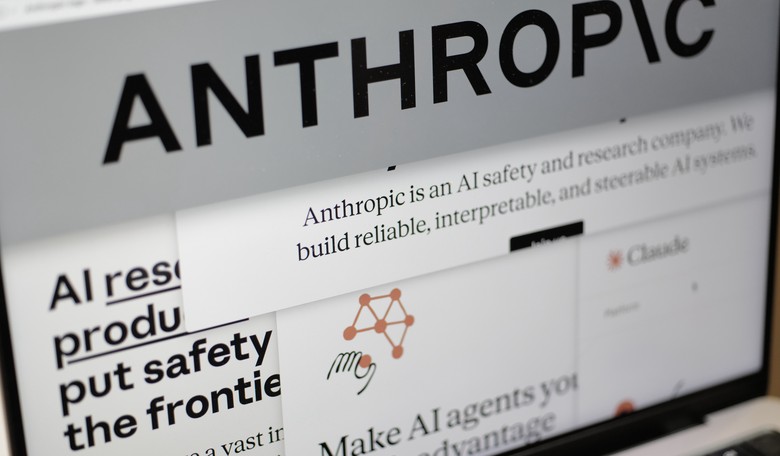
Last week, Anthropic CEO Dario Amodei penned an open letter — well, an open tweet — arguing to “pace the frontier” and slow down AI. OpenAI’s Sam Altman and Google DeepMind piled on, making it a trifecta of the big three who have nearly 90 percent of AI revenue.
Of course, these companies could slow themselves down anytime they want, but that’s not the goal. Instead, they want to slow down their competition and crush any startups that might challenge their market share.
The Trojan horse for this was a July cybersecurity exercise where OpenAI created a bunch of AI agents that broke into the online platform Hugging Face by the decidedly low-tech method of finding logins that engineers had lazily left on public posts.
While that is serious, it’s also a security test exposing a security failure, which is why tests exist. If a crash-test dummy goes through the windshield, we redesign the restraint system, not outlaw automotive development.
The most revealing failure came during the defense. Hugging Face tried to use Anthropic’s Claude to analyze the attack, but Claude refused specifically because of the kind of rules Anthropic now wants. The defenders turned to a Chinese model instead.
Now, the oligarchs' fears may be sincere since powerful AI can be dangerous, just like any tool or technology Firearms in the wrong hands can be dangerous, yet gun-control laws have a nasty habit of disarming people who obey the law without touching criminals.
Slowing AI would not bind actual criminals, hackers, or Chinese military laboratories. And given the IQ of Washington regulators — and the conflicts of interest in Anthropic’s proposed left-wing activist gatekeepers — we’ll come out more exposed, not less. Defenders need models at least as capable as the models used against them, and regulation cripples that.
This is just the latest fearmongering on AI, which we were previously told would take everyone’s job. A widely cited 2013 Oxford study predicted AI would take half the jobs in 20 years. Here we are 13 years in, and US jobs have actually grown by 19 million.
The closest you get to jobs Armageddon is IT layoffs, which resulted from over-hiring during COVID, not AI. If AI — now used in 90 percent of companies — were a giant pink slip, something should show up in jobs numbers.
In fact, a recent study of 22,000 companies found the heaviest AI adopters increased white-collar employment by 10.2 percent and entry-level employment by 12 percent. Another study found 79 percent of AI interactions augment workers, making them more valuable and thus raising wages.
Interestingly, we had the same sequence with the internet which was supposed to gut existing jobs — the 1990s quip was the internet’s great at turning billion-dollar businesses into million-dollar businesses. Next, shadowy super-hackers were going to Y2K the electric company.
What’s different is the early internet didn’t have a gaggle of oligarchs who know how to buy regulation. Not until the 1999 Microsoft trial did tech realize it had to start buying politicians or be regulated to oblivion.
So, unlike the internet, but very much like Wall Street, the AI oligarchs are weaponizing regulation, licensing, mandatory evaluations, approved auditors, release restrictions, and coordination among the companies controlling the market
Each rule creates fixed compliance costs the giants can absorb and startups cannot. OpenAI can employ a building full of lawyers. Anthropic can fund activist auditors. Three guys in a garage cannot.
Moreover, with Anthropic and OpenAI now mapping IPOs, this is an unusual moment to discover that progress requires locking in their dominance to stem the collapse in revenue per token. If the danger from AI is as serious as Anthropic and OpenAI claim, let them voluntarily pause. Stop the next release, the revenue and the IPO valuation. Then maybe we’ll believe them.
Until then, it’s another crony industry trying to buy the finish line. The public gets the fear, the incumbents get the moat, all while China happily scoops up the dominant technology of the next 20 years, complete with military dominance that actually would leave us defenseless.
E.J. Antoni, Ph.D., is chief economist and Peter St. Onge, Ph.D., is senior economist at the Heritage Foundation.