
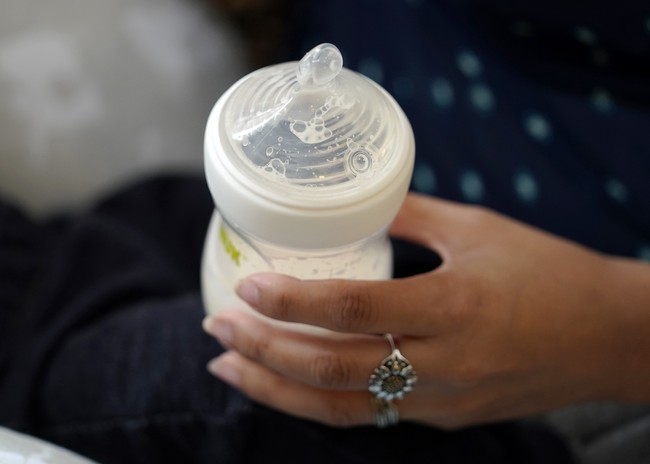
An infant formula company whose products appeal to consumers seeking more “natural” alternatives to conventional formulas has been told to withdraw or modify claims suggesting its whole-milk formula is closer to breast milk and nutritionally superior to competing products.
The findings could have broader significance amid the Trump administration’s “Make America Healthy Again” (MAHA) campaign, which has focused new attention on the ingredients and processing methods used in infant formula.
In an Aug. 31 decision, BBB National Programs’ National Advertising Division (NAD) found that Kendal Nutricare Limited substantiated some claims about the whole milk used in its Kendamil infant formula. But the advertising watchdog found that evidence did not support several claims about nutritional benefits, comparisons with breast milk, human milk oligosaccharides (HMOs) and the history of the brand. The case resulted from a challenge brought by Abbott Laboratories.
Kendamil has distinguished itself in the U.S. formula market in part by emphasizing whole milk from European grass-fed cows and naturally occurring milk fat.
NAD agreed that whole milk is a primary ingredient in Kendamil and contributes naturally occurring milk fat. But it drew a distinction between accurately describing those ingredients and claiming that they make the resulting formula nutritionally superior.
NAD recommended that Kendamil discontinue advertising suggesting competing formulas lose “natural milk fats and important nutrients,” finding the record did not establish that competing formulas are nutritionally inferior or that infants receive superior nutritional benefits from Kendamil.
The watchdog reached a similar conclusion about comparisons with breast milk.
While evidence supported qualified statements about compositional similarities between whole milk fat and breast milk, NAD found that the evidence did not demonstrate that those similarities translate into comparative nutritional benefits.
It recommended that Kendamil discontinue claims that using whole milk keeps natural fats “closer to breast milk” and provides “natural milk fat instead of relying on vegetable oils.” NAD also recommended modifying or discontinuing graphics comparing the milk-fat composition of Kendamil with competing formulas because they did not accurately represent the products.
Those findings touch on issues that have become increasingly prominent in the MAHA movement.
Health and Human Services Secretary Robert F. Kennedy Jr. launched “Operation Stork Speed” in March 2025, directing the Food and Drug Administration to undertake its first comprehensive review of infant-formula nutrients since 1998 and increasing scrutiny of formula ingredients, contaminants and labeling.
Kennedy and other MAHA advocates have also promoted greater reliance on whole foods and questioned seed oils and highly processed food products. Within the broader MAHA-oriented wellness community, European and whole-milk infant formulas have attracted attention as alternatives to conventional American products.
Kendamil has not presented itself as a MAHA product, but its emphasis on European whole milk, natural milk fats and reduced reliance on vegetable oils overlaps with many of the concerns that have driven the movement's interest in infant formula.
The NAD ruling does not conclude that whole-milk formula is unhealthy, nor does it resolve the broader debate over formula ingredients. Instead, it finds that some of the specific nutritional advantages Kendamil claimed for those differences were not established by the evidence.
NAD also rejected an immune-health claim involving HMOs. Kendamil advertising conveyed that its particular combination of 3'-GL, 4'-GL and 6'-GL helps support infant immune health. NAD concluded that the scientific evidence presented was not sufficiently applicable to Kendamil's specific blend and recommended discontinuing the claim.
The company was also told to clarify claims about its history.
According to NAD, statements including “Est. 1962” and “60 years of experience” could reasonably lead consumers to believe that the Kendamil brand or formula has existed continuously since 1962. NAD said the references instead concern the history of the manufacturing facility or formula-production heritage and recommended that Kendamil make that distinction clear.
Kendal Nutricare said it would comply with NAD’s recommendations.
The decision illustrates an important distinction as federal officials reconsider U.S. infant-formula standards: questioning how formulas are made is different from demonstrating that products marketed as more natural, less processed or closer to breast milk actually provide superior nutrition.