
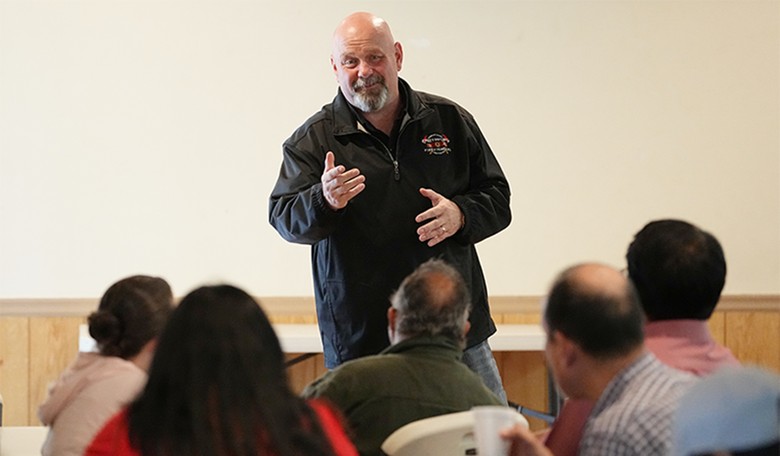
In July, Townhall reported that Bob Brooks, the Democrat running for the House in Pennsylvania's 7th Congressional District, has a history of financial troubles. That report stems from suspicious donations sent to his campaign and ongoing litigation over property transferred to his current wife to avoid paying his former in-laws a $130,000 debt.
But it seems that's not the only financial trouble Brooks has had. In fact, court records show multiple financial issues, including foreclosures, liens, and debt collections.
On June 16, 2004, Blue Eagle Custom Builders, Inc. filed a lien naming Robert Brooks in Northampton County Court. That lien was released the same day. The reason for the lien's release is unclear. But in October 2005, Brooks filed a lawsuit against Blue Eagle Custom Builders, Inc. That case was disposed in 2007.
In 2012, Wells Fargo filed a foreclosure against Brooks. That case was discontinued without prejudice in 2018. That same year, another lien was filed against Brooks, this time involving Midland Funding. That lien was in the amount of $5,480.84. The case remains open, although the status is unclear, but a 2019 filing showed the court directed the sheriff to garnish Brooks' assets to satisfy this debt. A second judgment was entered against Brooks in 2012, this time involving a debt-collection case with FIA Card Services. That judgment was in the amount of $7,872.59 and reported as satisfied in 2024.
U.S. Bank also filed a second foreclosure against Brooks in June 2016. That case was closed in December 2016.
The $130,000 court-ordered judgment against Brooks isn't going away, either. The balance on that debt has now grown to over $162,000 while the lawsuit works its way through the courts. On August 5, a Northampton County judge ruled that the fraud lawsuit against Brooks — brought by his former in-laws — may proceed. Brooks continues to deny any wrongdoing in that case.
But what's most concerning is Brooks' federal financial disclosures. His original 2025 disclosure failed to list that judgment on that disclosure.
One of Brooks' Democrat opponents, Ryan Crosswell, called out Brooks for his falsified disclosure, specifically in relation to the $130,000 judgment.
I'm calling on Bob Brooks to disclose any and all pending debts in his House Ethics Disclosure filing, which is due today. His last disclosure was falsified: it did not disclose a court-ordered debt of $130,000 to his in-laws. Because he didn't include it in his previous…
— Ryan Crosswell (@Ryan_Crosswell) May 15, 2026
"Because he didn't include it in his previous disclosures, voters only learned about it when his mother-in-law filed a fraud lawsuit against him in February," Crosswell wrote. "Only then did his campaign admit they intentionally didn't disclose this debt in their House Ethics filing." Crosswell then linked to a piece in the Lehigh Valley News covering that lawsuit.
Brooks also failed to list a pension that he bragged about having from his time as a firefighter with the city of Bethlehem. While that page is no longer accessible, Brooks said "I personally have a good pension from 20 years of working for the City of Bethlehem as a firefighter, but I'm one of the lucky ones. Every hardworking American, especially young people, should be afforded the opportunity to get a pension, and that starts by passing the PRO Act and giving everyone the chance to join a union." Divorce records also show Brooks had a 457 retirement account through the City of Bethlehem.
With the election two months away and mail-in voting starting soon, Pennsylvania voters deserve to know what's going on with Brooks and his financial history. But Brooks wants to hide this from the public, and has — so far — refused to debate his Republican opponent, Rep. Ryan Mackenzie.
Mackenzie has agreed to multiple debate opportunities in September so that voters can hear from both candidates on the issues. Brooks has either declined or ignored these opportunities. Instead, Brooks has agreed to a debate arrangement that would have part of the debate not air until just before Election Day.
Is Brooks hiding from voters because he doesn't want to answer questions about his financial history, court proceedings, and financial disclosures?
While Ryan Mackenzie is ready to debate, Brooks is delaying facing voters. And voters in Pennsylvania's 7th Congressional District deserve accountability, transparency, and the full story before they cast a single ballot.