
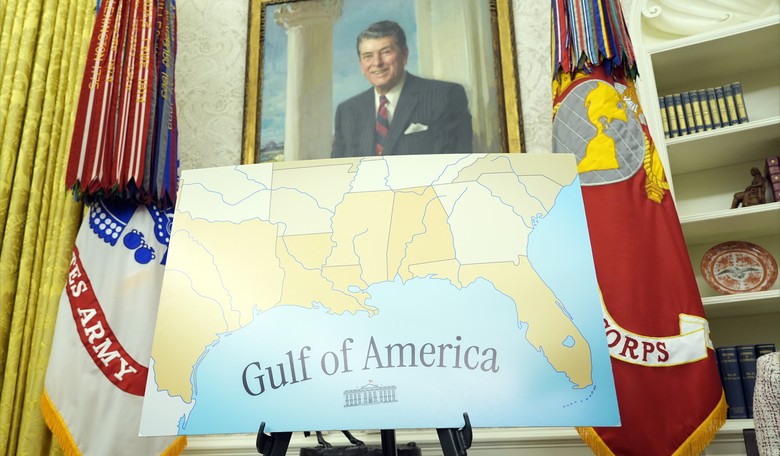
A new Silicon Valley may be emerging along the Gulf of America, as the regulatory burdens and soaring costs of California and the Northeast make it harder for companies to build, expand, and innovate. From Texas to Florida, the Gulf South is becoming a center for the industries that will define the next era of American growth, from energy, to logistics, to advanced manufacturing, to defense, and even artificial intelligence.
The shift is a reminder that no region holds an economic title forever. Silicon Valley became America’s technology capital by fostering investment, risk-taking, and innovation, but years of progressive, anti-free-market policies have taken a toll. If the trend continues, politicians like California Gov. Gavin Newsom may soon have far less to brag about as jobs, capital, and the industries of the future head for more business-friendly states.
The next major U.S. innovation corridor may not look like Silicon Valley. The Gulf South is emerging around energy, advanced manufacturing, logistics, aerospace and defense—industries built on infrastructure, scale and global connectivity. pic.twitter.com/9RnilcjLYt
— Bill Ross (@ThruTheNoise) August 31, 2026
The Gulf states are already well positioned for the economy taking shape beyond Silicon Valley, with each bringing a distinct advantage that supports the next generation of American industry.
Texas leads the nation in energy production, Louisiana pairs its energy and petrochemical base with the Mississippi River and one of the country’s most extensive port networks. Mississippi offers proximity to Gulf shipping routes, comparatively affordable land, and growing aerospace and advanced-manufacturing capacity. Alabama brings a deep manufacturing tradition and a strong aerospace sector. Florida, meanwhile, has the Space Coast, major defense and aerospace operations, international ports, and a growing technological ecosystem. The same was once true of Silicon Valley.
What also increasingly distinguishes the South, however, is its pro-growth environment. It's a willingness to expand energy production, welcome private investment, and make room for the infrastructure that an industrial and AI-driven economy requires. Across much of the region, lower tax burdens, lighter regulation, and a more free market-oriented approach have made it easier to build, whether that means a factory, a data center, a port expansion, an energy project, or a new business. Where California politicians and other progressives see wealth inequality and despair, the South increasingly sees a source of economic hope, and an opportunity to lead the United States into the future.
While the shift looks increasingly plausible, it is far from guaranteed. The anti-growth instincts once most associated with progressive regulators in states such as California are becoming bipartisan. And nowhere is that more clear than in the growing resistance to AI data centers among conservative leaders, including Texas Gov. Greg Abbott and Florida Gov. Ron DeSantis. Their opposition, and sometimes downright hostility, along with that of conservatives in general, is rooted partly in concerns about energy use, local infrastructure, and the economic benefits these projects will actually deliver, but also, in large part, in a well-established distrust of Big Tech. If that sentiment begins to drive its economic policy around the tech-industry, the Gulf South may miss its chance to become the next Silicon Valley.
Distrust of Big Tech should not become a rejection of technological progress itself. The best check on corporate power is not an ever-expanding regulatory state, but a competitive free market, a fact too many people have been eager to overlook. Let these Big Tech firms compete in a truly free market like the one taking shape across the South, and companies will be driven to build the technology of the future, not to grease the pockets of politicians or influence elections.
The Gulf South now has the resources, industrial base, energy capacity, and pro-growth spirit to write the next chapter of American economic and technological dominance if its leaders do not let distrust of Big Tech become an excuse to abandon the future. The choice they now face is simple. It can embrace the investment, infrastructure, and competition needed to become the new Silicon Valley of the AI age, or it can allow the same fear of growth and hostility toward industry that eroded California’s advantage to take root at home and haunt them decades into the future.