
Data centers are controversial for plenty of reasons, but this is a new one.
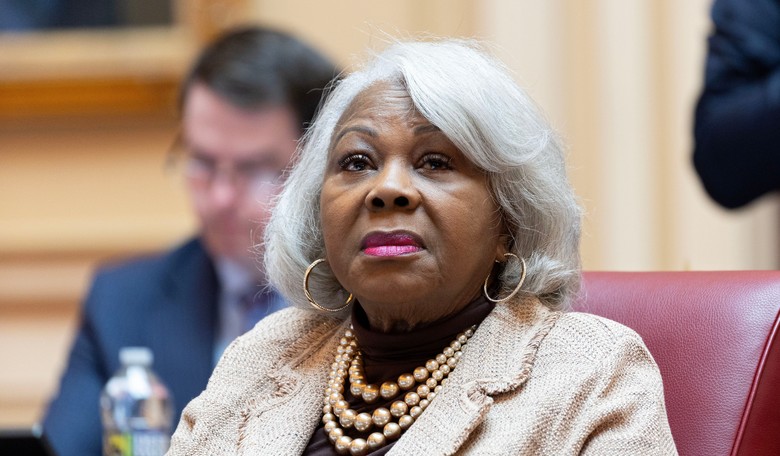
L. Louise Lucas, a Virginia state senator who authored a bill for a statewide $15 minimum wage, complained last week about the construction of AI data centers. Her argument was that these projects are simply paying construction workers too much money, so much, she fears, that workers will be pulled away from residential construction, an area Virginia has done little to make easier to pursue.
🇺🇸Virginia’s top Democrat state senator, who authored a $15 minimum-wage bill, is now slamming data centers for paying construction workers too much.
— NewsForce (@Newsforce) August 21, 2026
L. Louise Lucas said the sites are “swallowing up” the labor force with $100,000 to $250,000 salaries and leaving too few…
"Mr. Chairman, I don't know who to direct this question to, but I was just wondering, are there any concerns to employment in other construction fields, especially if we're trying to build residential housing?" Sen. L. Louise Lucas asked. "And that's because the data centers seem to be swallowing up all of the labor force by paying $100,000 to $250,000 a year to get these data centers built. And so where are the employees to help with our residential construction sites and things like that? Because I mean, I know once these data centers move on, they go to other places, build other data centers. But then where is the labor force for us for residential housing?"
"I mean, that's a concern I have," she added. "And I don't know to whom I could direct that question. I'm not sure to whom that question should be directed to. That is probably something that we'll have to take a look at."
It appears to be one of the first complaints of its kind: a Democrat arguing that blue-collar workers are being paid “too much,” and worrying that Virginia may not have enough labor left to build housing the state has plainly failed to prioritize.
The point is especially ironic because one of the central complaints about data centers is that they create mostly short-term construction jobs and relatively few permanent jobs. That may be true. But when critics begin complaining that the workers filling those “short-term” jobs are being paid too much, it adds a human element to the discussion. For the electrician, equipment operator, plumber, or construction worker on the site, a temporary job paying well is not just a "short-term" job. It can mean feeding a family, paying bills, affording groceries and gas, and putting money aside for a child’s education. In other words, it is far less a “short-term job” than the difference between a stable livelihood and poverty, for thousands of people across the country.
Data centers have become an increasingly controversial issue: seven in 10 Americans now oppose having one built in their own area. Concerns range from water use and electricity prices to land use, jobs, and a broader aversion to “Big Tech.” Conservatives, too, have climbed aboard the regulatory bandwagon, as Democrats and Republicans alike pursue moratoria and sweeping restrictions rather than allowing individual localities to find solutions that work for themselves.
But one thing remains clear amid the debate: Americans are increasingly fearful of the future. That is something conservatives must confront before we cede valuable ground to foreign adversaries, or, worse, become a country devoted to defending old and unproductive ways of living out of a misplaced sense of virtue, while the rest of the world leaves us behind.