
Of course it was a Massachusetts judge. Of course she was appointed by Barack Obama.
And of course, when President Trump signed an executive order in March requiring basic verification safeguards for mail-in voting, Judge Indira Talwani in Boston reached for the injunction pen, blocking the federal government from applying key provisions in 23 states and the District of Columbia ahead of November’s elections.
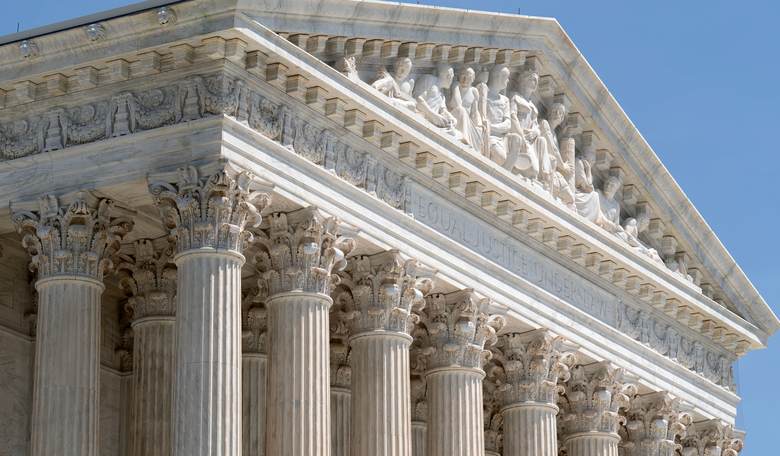
On Monday, the Supreme Court told her no.
Not on the merits. Not yet.
But the administration can move forward.
And before anybody starts hyperventilating about voter suppression, let’s look at what Trump actually ordered.
He directed Homeland Security to compile lists of adult U.S. citizens and make that information available to state election officials before federal elections. Why? So states have another tool for verifying who is actually eligible to vote.
He told the attorney general to prioritize prosecutions when officials knowingly issue federal ballots to people who aren’t eligible to receive them.
And he directed the Postal Service toward a system in which states identify the voters who are supposed to receive mail ballots before those ballots start moving through the mail.
That’s it.
Read it again if you need to.
We’re talking about verifying eligibility, enforcing laws already on the books and knowing who is supposed to receive a ballot before the government puts one in the mail.
Apparently this was alarming enough that 23 states and the District of Columbia went running to federal court before much of it even happened.
Which brings us to the Supreme Court.
The majority didn’t need to settle every future constitutional question surrounding Trump’s order to expose the problem with Talwani’s injunction.
The Court basically told the states: you aren’t there yet.
The DHS citizenship provision is currently an instruction from the president to his own subordinate. The states haven’t yet been ordered to do anything under it.
Trump’s direction to the attorney general about prosecution priorities? Presidents direct executive-branch enforcement priorities. That’s part of the job.
And the Postal Service provision hadn’t even reached the point of a final rule when these states sued.
So what exactly was Judge Talwani stopping?
That’s the question.
The states went to court over consequences that, in significant part, hadn’t occurred yet. A federal district judge nevertheless stopped the administration from moving ahead.
The Supreme Court said that’s premature.
Justice Ketanji Brown Jackson accused the majority of helping the administration “foment chaos ahead of the November elections.”
Chaos?
From checking whether people receiving federal ballots are eligible to receive them?
That word is doing an awful lot of work.
Because underneath the legal maneuvering is a question that shouldn’t require a constitutional-law seminar to answer:
What’s wrong with verifying eligibility before a ballot goes out?
Seriously.
If somebody knowingly gives a federal ballot to an ineligible voter, there should be consequences.
If a state is mailing ballots, election officials should know that the people receiving them are entitled to receive them.
And if the federal government already possesses information that can help states maintain accurate voter records, use it.
I keep coming back to how basic this is.
We require identification and verification for countless things in American life that are considerably less consequential than choosing the people who run the country. Yet somehow election verification continually gets treated as though asking a government database to confirm eligibility is the first scene in a dystopian movie.
It isn’t.
It’s basic election integrity.
And voters have every right to demand it.
The resistance to even modest verification measures is exactly why confidence in elections has become such a problem. Americans shouldn’t have to wonder whether voter rolls are accurate. They shouldn’t have to wonder whether ballots are being mailed where they’re supposed to go. They shouldn’t have to discover after an election that officials possessed information capable of identifying problems but weren’t using it.
Election integrity isn’t complicated.
Know who’s eligible.
Know where the ballots are going.
Punish officials who knowingly violate the law.
Count every lawful vote.
Then publish the results and stand behind them.
Judge Talwani tried to freeze portions of Trump’s effort before the feared consequences had even materialized. Twenty-three states and the District of Columbia wanted one federal judge in Massachusetts to stop an election-integrity initiative before much of the machinery they were complaining about had even started moving.
Think about that.
The administration says it wants better eligibility verification.
The response wasn’t, “Let’s see whether it works.”
It was: Get a judge.
And this time the Supreme Court said no.
The states may have opportunities to litigate concrete applications of these policies later. But they don’t get to turn speculation about what might happen into a nationwide roadblock against the president doing what the executive branch is legally permitted to do right now.
Good.
President Trump should move ahead.
Figure out who is eligible.
Make sure ballots go where they’re supposed to go.
Enforce the law when somebody knowingly breaks it.
Then count every lawful vote.
For the life of me, I still can’t figure out which one of those we’re supposed to be afraid of.