
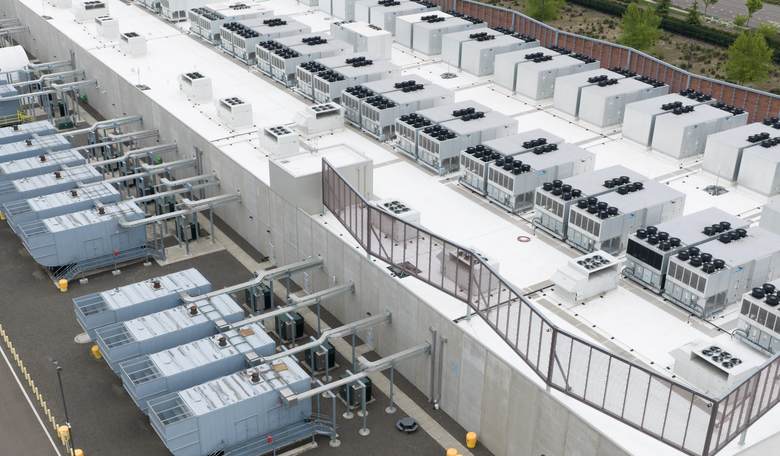
The fight over AI data centers is increasingly hampering the United States, putting the country on a trajectory that could allow China to overtake us in the AI race. Not because China is necessarily more innovative or better positioned with the technology, but because Americans have chosen to shoot our own AI industry in the foot.
One of the most astonishing statistics to emerge from the debate is that as of August, more than 500 local jurisdictions across the country have banned data centers, with more than 150 reportedly occurring in July alone.
STAT OF THE WEEK: 500+ local data center bans are now active across the U.S. after 150+ towns and counties passed new ones in July, according to The Information. Officials are blocking projects over residents' worries about higher power bills, water use, and noise. pic.twitter.com/ywNrcQGRvp
— Shopifreaks E-commerce Newsletter (@shopifreaks) August 10, 2026
“There’s a pretty strong sense that local people want to oppose these and part of it is the tech bros are forcing AI on us,” Paul Triolo, a partner at consulting firm DGA-Albright Stonebridge Group said.
“The popular message around AI is like pretty pretty negative. Part of the game is changing that public narrative. We’re saying, ‘Hey, there may be a way to solve this problem that’s good for both sides.'”
Americans have grown increasingly concerned over claims about AI data centers’ water consumption, electricity use, and allegedly rising utility prices. But upon reviewing the most recent studies, the evidence suggests that data centers are a net positive: they can drive down electricity prices, use less water annually than many restaurants, and raise local property values. In some cases, data-center projects have revitalized struggling rural towns. In others, the new tax revenue has been substantial enough to fund significant bonus pay for every local teacher. These are just brief glimpses into all the benefits the AI industry has to offer.
However, negative sentiment continues to drive the conversation, and it's bipartisan. New York became the first state in the country to impose a one-year moratorium on new data-center construction, and Texas quickly followed with its own restrictions on approving and auditing new projects. Yet while public concerns were repeatedly cited, little data was offered to support the case for blocking construction.
AI companies, thankfully, are beginning to seek public approval, something they should have done long ago. That is one benefit of the growing opposition to AI data centers: companies are being pushed to prove that the communities hosting their projects will share in the rewards.
Meta, for example, announced a $1 billion “Future Is for Everyone Fund” to invest in the communities where it builds. The initiative includes support for teachers, law enforcement, and local infrastructure, along with free training for trade workers and access to guaranteed high-paying jobs connected to its data centers.
America must remain committed to winning the AI race and ushering in the next technological age, one that will benefit all of humanity. That requires trusting the principles of the free market, which relies on the less direct but more powerful forces of the invisible hand rather than the inefficient, and often destructive, hand of government.
Regulation has never been the answer. Why so many believe it will somehow become the answer now is anyone’s guess. Let it be said plainly: much of the opposition to data centers is driven by fear, fear of change, fear of disruption, and fear of something new.
That instinct has followed humanity throughout history. Yet history also shows that, at every great technological turning point, the world has emerged stronger and more prosperous on the other side. The Industrial Revolution pulled countless people and countries from agrarian poverty. Innovation transformed technologies once reserved for the wealthy into tools accessible across socioeconomic lines. The lesson is not that every new development is risk-free; it is that progress requires the willingness to build, adapt, and move forward.
History is on the side of new technology. America should be, too.