
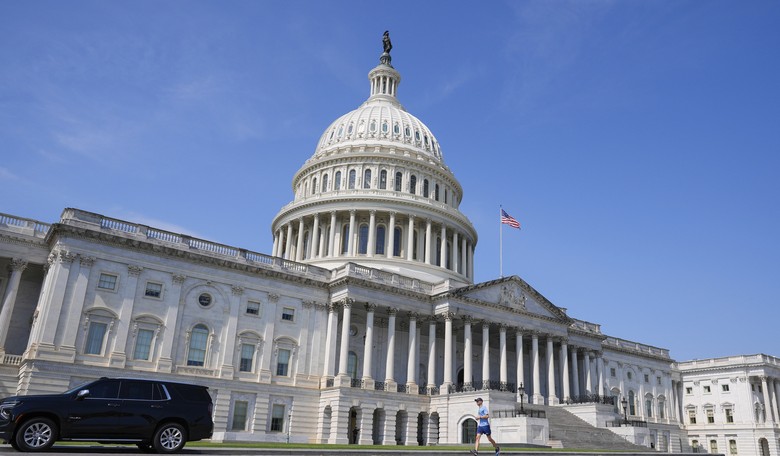
The July jobs report is in, and it is a discouraging sign for an economy that continues to weigh on Americans’ minds.
The labor market shed 23,000 jobs in July, badly missing economists’ expectations of an 83,000-job gain. The report was made worse by substantial downward revisions to the prior two months: May and June job gains were revised down by a combined 103,000 jobs, erasing much of what had initially appeared to be a stronger stretch of hiring.
There was at least a modest silver lining, the unemployment rate edged down one-tenth of a percentage point, falling from 4.3 percent to 4.1 percent. But that decline was driven largely by Americans leaving the labor force, not necessarily by a surge in hiring.
Administration officials say the downturn was anticipated, coming after the World Cup’s conclusion and the expiration of its short-term boost to economic activity.
BREAKING: U.S. nonfarm payrolls fell 23,000 in July, while the unemployment rate edged down to 4.1% from 4.2%.
— RedWave Press (@RedWavePress) August 7, 2026
Fox Business: “No rebound for the July jobs report… A disappointing jobs report. DOW Futures WAY UP doubling where they were before.” pic.twitter.com/wVWkICOJ1d
Fox Business Lauren Simonetti: “Revisions for June down by 37,000 [jobs], May down by 66,000 [jobs], combined 103,000 fewer jobs created in the months of May and June.” pic.twitter.com/Na9tnhpKLe
— RedWave Press (@RedWavePress) August 7, 2026
The government sector accounted for virtually all of July’s job losses, shedding 53,000 positions. Private-sector payrolls, by contrast, increased by roughly 30,000 jobs, hardly a robust gain, but enough to show that the overall decline was driven overwhelmingly by government cuts.
Looking more closely at the sector-level data, manufacturing, an industry the Trump administration has made a central policy focus, added roughly 5,000 jobs in July. Even so, factory employment remains around historic lows. Elsewhere, retail lost about 19,000 jobs, while financial activities shed roughly 14,000 positions. Healthcare provided one of the few meaningful bright spots, adding approximately 22,000 jobs.
Hourly earnings are also up by just over three percent.
"The strength is what we've seen before, construction workers, manufacturing workers, and so on," the Director of the National Economic Council Kevin Hassett said. "The weakness in this number were really just two things, government workers, and a sort of rebound from all the employment we got from the World Cup because the World Cup was ending."
"And so if you throw out the World Cup and the government workers, we actually had a number that was about plus 100,000, which is about what we expected given that the unemployment rate went down. And there's so many other factors like manufacturing booming, capital spending booming, real wages growing for the typical manufacturing worker, almost $4,000 since President Trump took office after adjusting for inflation. So there's all these strong numbers out there."
NEC Director Kevin Hassett on the jobs report: "If you [take] out the World Cup and the government workers, we actually had a number that was about +100,000... there's so many other factors like manufacturing booming, capital spending booming, real wages growing for the typical… pic.twitter.com/8a6XcGbfMM
— Rapid Response 47 (@RapidResponse47) August 7, 2026
The jobs report underscores the difficult task facing Federal Reserve Chairman Kevin Warsh as President Trump continues to press for lower interest rates. The Fed has kept rates steady this year, but a weakening labor market, persistently elevated inflation, and unemployment that has edged lower rather than higher leave policymakers with little room to cut. The likelier outcome is an extended pause, or even additional rate increases if inflation fails to retreat toward the Fed’s two percent target.
The economy remains a defining political issue. Americans are still frustrated by the price levels they confront every day, and those prices are unlikely to return to their pre-COVID levels; even when inflation slows, prices generally continue rising, just at a slower pace.
The Trump administration has pursued the policies within its reach: cutting taxes, rolling back the regulatory state, and allowing Americans and businesses to keep more of what they earn. The goal is straightforward: make it easier to hire, invest, build, and grow rather than leaving Washington to dictate the terms of the economy. Now, Republicans must hold Congress in the midterms to protect that agenda.
A Democratic, or openly socialist, Congress would bring higher taxes, heavier regulation, and an instinctive hostility toward business that could quickly unravel the administration’s economic progress.