
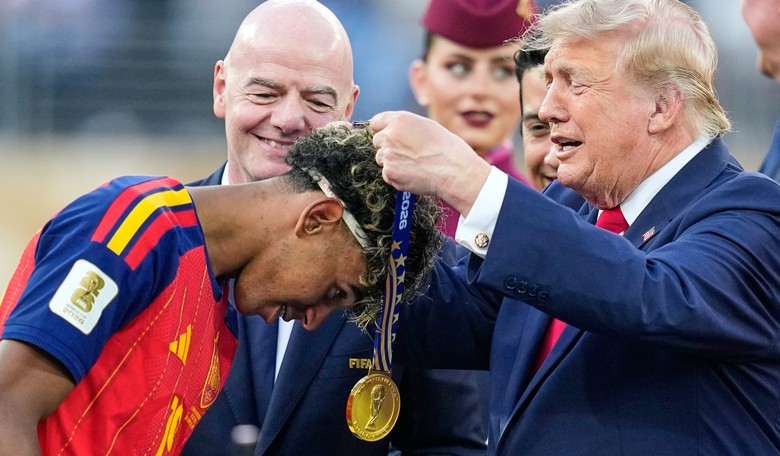
Just weeks after countless Americans fell in love with soccer while watching the World Cup, news came down that the 2030 World Cup might be in peril due to a threatened European boycott.
All 55 UEFA countries have unanimously voted to boycott the World Cup due to FIFA's plans to sell stakes in the tournament to private investors, per The Times
— Dexerto (@Dexerto) July 30, 2026
"The World Cup is not for sale" pic.twitter.com/nmTSJWCMAs
The boycott is in response to a move by FIFA executives to open the World Cup up to private investment in the amount of $20 billion through the FIFA Forward Enterprise. The investment would give participants significant control over the most watched and influential sporting event in the world.
Critics claim that the organization has no right to sell the tournament due to FIFA’s status as a non-profit entity. Some have accused the organization of offering a “pay-to-play” to incentivize cash-poor countries into supporting the move through $40 million payments if the resolution was approved. Should the resolution fail, only $10 million would be paid out. Regional federations of soccer have claimed that they were not informed of the proposed deal and only found out through media reports.
Gianni Infantino, in an interview with himself, calls FIFA Forward Enterprise part of a “democratic” and “consultation” process.
— Margaret Fleming (@mgfleming12) July 29, 2026
He gave federations until Sept 19 to accept. If it passes, they each get $40 mil. If it fails, $10 mil. pic.twitter.com/P0YfbcnDPp
FIFA responded by stating that FIFA Forward Enterprise would be a for-profit entity that only oversees the organization’s commercial and “operational event delivery activities.” They have also stated that FIFA “would own and control permanently” the FIFA Forward Enterprise in a statement, not mentioning that a significant portion of the entity would be sold off. FIFA states the proposal would allow for greater investment in soccer activities across all 211 member nations.
— FIFA Media (@fifamedia) July 31, 2026
The regional federations comprising Europe and North America have announced that they will be voting against the measure entirely. CONCACAF, the federation of which the United States is a member, criticized the proposal by questioning the need for additional investment following “the most profitable FIFA World Cup in history” held across America. They further criticized “the lack of due process” and “the artificially short deadline” of September 29.
UEFA, the federation comprising the European states, has announced a boycott of all FIFA events along with stating their intention to reject the proposal. 16 of the 2026 World Cup’s participants were UEFA members, the largest share of participants by far. CONCACAF has not stated whether or not they will join the boycott at this time.
Fans of soccer are worried about corruption that may develop as a result of such highly valued investments. FIFA has already been embroiled in numerous corruption scandals over the past years as a result of Qatar and Saudi Arabia’s successful bids to host the World Cup in 2022 and in 2034 respectively. The scandals, among others, forced the resignation of former FIFA president Sepp Blatter, who was subject to two ethics bans from the sport for financial impropriety.
Notoriously-corrupt nations like Russia and South Africa have played host to the tournament in the past. China has been floated as a potential bidder for future tournaments as well. Speculators fear that powerful and wealthy groups from questionable backgrounds could gain significant influence over the future of the World Cup in hopes of rehabilitating their or their country’s image in a practice known as “sportswashing.”