
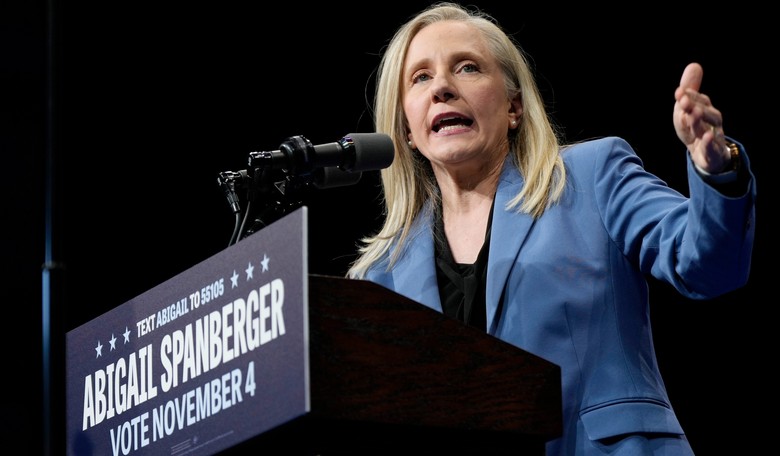
Or will she and Virginia’s legislature follow California, New York and other energy follies?
After four years of Republican Executive Branch rule, Democrats again control Virginia’s Executive Branch and its Senate and House of Delegates. What can Virginians expect?
Governor Abigail Spanberger campaigned as a moderate and said energy efficiency and affordability would be central to her first legislative session. Democratic strategist Ben Tribbett expected “a measured approach” from her, instead of “radical change.” Senate Majority Leader Scott Surovell said “voters put [Democrats] in charge to focus on affordability and bring some rationality and stability” to the fore.
Republicans feared Democrats would push high-tax, big-spending, heavy-regulation policies that would reduce energy affordability, stall economic growth, hurt small businesses and families, and impact school choice, voting and safety. They worried that the energized, aggressive leftist base that helped rout Republicans during the 2025 elections would drive radical changes on multiple fronts.
Initial legislative and other proposals suggest that “moderation,” “rationality,” and “stability” will be the exception. Early actions certainly underscore this, and the Conservation Network’s preliminary list of 58 House and Senate energy, climate and environment bills adds to this concern.
While I follow other issues, I focus on energy, climate change and environmental policies, whether they meet sound scientific and economic standards, and how they affect health, jobs and living standards. At this stage in the process, several policies, actions and bills merit much more careful review – by voters and energy consumers, and by the governor, state agencies and legislators.
- The governor’s plan to rejoin the Regional Greenhouse Gas Initiative will almost certainly mean her administration hears only one perspective on climate and weather dangers, renewable energy benefits, and whether a few US states can alter major global trends. That bodes ill for efficiency and affordability. Earth’s climate has changed frequently throughout history, and the Ice Ages, Medieval Warm Period and Little Ice Age dwarf anything happening today. Average global temperatures and sea levels have increased only slightly in 100 years. Hurricane frequency and intensity show little change since 1865, no Category 3-5 hurricanes struck the USA from 10/2005 to 08/2017 (a record), and tornado frequency and intensity have declined since 1950. China emits one-third of the world’s greenhouse gases, more than all historically developed nations combined; India and Indonesia account for another tenth. They’re building coal-fired power plants at a rate of one per week. Even if all RGGI states eliminated their fossil fuel use and GHG emissions, there’d be no global reduction. Renewable energy involves mining, pollution and child labor at unprecedented levels; results in huge installations across croplands, scenic areas and wildlife habitats; kills 1,000,000 birds and bats annually nationwide; and impairs electricity reliability and affordability. Poor families get hit hardest.
- Governor Spanberger and many legislators support expanded wind and solar electricity generation, including photovoltaic panels on homes, solar canopies in parking lots, and industrial installations on hundreds or thousands of acres. These systems will certainly generate power, but only 25-30 percent of the year, 7-8 hours per average day, at unpredictable times, for unpredictable lengths of time. When stacked or stored for long times outdoors or in warehouses or damaged by weather, panels often crack – letting in water and seeping out toxins that can pollute soils, streams and groundwater. Leakage can also result in reduced electricity generation and even fires. Converters (to turn DC into AC current) can also pose fire hazards; so can home backup power batteries.
- House Bill 214 would support local flood resiliency grants. But it’s largely based on assumptions that “recurrent” flooding results from climate-driven rising sea levels and increasing rainfall. However, NOAA data showing a doubling in the rate of sea level rise in recent decades puts that increase at one-eighth inch per year – and a total of just 9 inches since 1880! Moreover, perceived sea level rise is often due to land subsidence in Norfolk, Virginia and elsewhere.
- To account for intermittent power generation due to unpredictable wind and sunshine, HB 895 would revise the Virginia Clean Economy Act to increase utility grid-scale battery storage requirements. Now Appalachian Power and Dominion Energy must construct or procure something on the order of 135 Gigawatt-hours (135,000 Megawatt-hours) of short, medium and long-duration grid-scale storage capacity. (Virginia homes, businesses, hospitals, data centers and other users currently consume over 270 GW-h per average day; much more during extreme heat or cold.) The mandated totals depend on how many batteries are 4-hour or 10-hour or still nonexistent 24-hour, and whether they export their full nameplate storage value – or only a more realistic 80 percent. What storage would be required for the predicted January 24-26 weekend snow and ice storms and near-zero cold, with no solar and zero to minimal wind? Blackouts could be widespread and long-term. Families could literally freeze to death in the dark – if Virginia lacked adequate coal, gas and nuclear.
- The governor also supports giving the State Corporation Commission more authority to review grid efficiency and limit unnecessary transmission line construction. But how can it limit transmission line construction while installing all the proposed and mandated wind, solar and battery equipment? Far better to build gas and nuclear power plants close to power-hungry data centers and cities. The 13-state (including Virginia) PJM Interconnection already faces serious energy security threats: significant shortfalls in critically needed dispatchable electricity, soaring prices, and Pennsylvania losing new generation to neighboring states with clearer, faster approval rules. Virginia government, take note.
- Renewable energy promoters claim wind and solar power costs (and thus consumer prices) are now on par with or lower than coal, gas or nuclear electricity.
These claims focus on initial costs of installing turbines and panels. They leave out the enormous costs of constructing, maintaining and operating duplicative coal- and gas-fired backup power plants that must operate 24/7 on idle and be ready to go full-throttle every time wind and sunshine are insufficient.
Backup batteries are even more costly. HB 895 directs Dominion to build or buy 64,000 MW-h of 4-hour batteries, which would cost around $33 billion. The rest of the mandated batteries could double that cost.
Grid-scale backup batteries also carry significant fire and toxic emission risks, as with the 300-megawatt battery inferno at Moss Landing, California.
Lobbyists and legislators also gloss over subsidies via taxes and hidden charges on electric bills – and payments to utilities for not producing electricity when they must shut down because of high winds or because overall generation exceeds supply or grid capacity.
They don’t mention the exorbitant cost of replacing Atlantic Ocean wind turbines every 10-20 years, due to salt spray and storms; replacing huge solar panel installations destroyed by hailstorms; or building hundred-mile-long high-voltage transmission lines at $1-8 million per mile.
Virginia’s governor, legislators and regulators need to pause their buffalo stampede of laws, rules, regulations and spending – including nearly 2,400 legislative bills so far. Thoughtful analysis and debate, common sense, and careful attention to energy, ecological and economic reality will best serve voters, consumers, reliability and affordability. Other states must do likewise.
Paul Driessen is senior policy analyst for the Committee For A Constructive Tomorrow (www.CFACT.org) and author of books and articles on energy, climate change and human rights.