
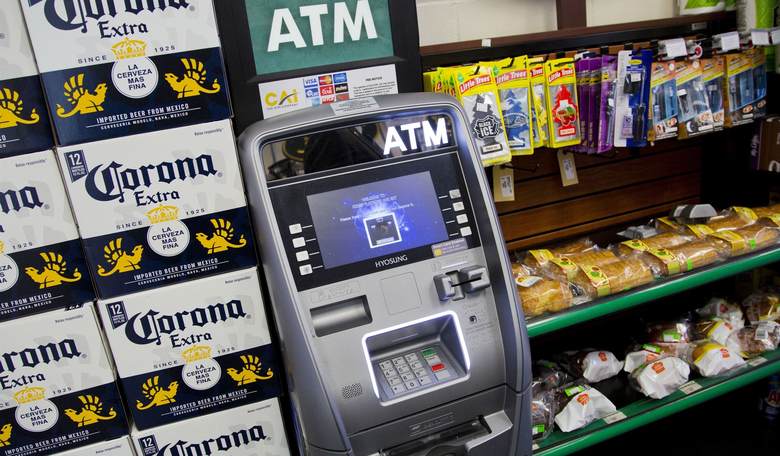
The U.S. Secret Service and partners from several law enforcement agencies conducted a payment card skimming outreach operation in Tampa Nov. 19.
Law enforcement visited 390 businesses and removed five illegal skimming devices, preventing an estimated potential loss of approximately $5.2 million. More than 4,400 point-of-sale terminals, gas pumps and ATMs were inspected.
Teams also distributed educational materials about credit card skimming to help businesses identify illegal skimming devices in their point-of-sale terminals, gas pumps and ATMs. Criminals install fake card readers by wiring it into the machine. The skimming devices store data to be downloaded or wirelessly transferred later.
“Illegal skimming devices placed by criminals can have major impacts on consumers and businesses. Proactive operations such as this remove illegal skimming devices off the streets before stolen card numbers fall into the hands of criminals,” said Robert Engel, Special Agent in Charge of the U.S. Secret Service’s Tampa Field Office. “We are thankful to the agencies that participated in this operation and are committed to working alongside our law enforcement partners to further combat credit card skimming.”
Criminals who steal payment information either use the cards to buy things for themselves or sell the information on the dark web.
More than 4,400 point-of-sale terminals were inspected by the Secret Service and law enforcement partners in the Tampa area during Operation Skim Reaper, keeping an estimated $5.2 million out of the hands of criminals.
— U.S. Secret Service (@SecretService) November 20, 2025
📰 https://t.co/QADGZQnURu#SecretServiceInvestigates pic.twitter.com/LYB3uxhx3M
Personnel from the Hillsborough County Sheriff’s Office, Pasco County Sheriff’s Office, Tampa Police Department and Florida Department of Agriculture participated in the operation.
This effort follows a series of similar operations conducted by the U.S. Secret Service and law enforcement partners nationwide.
Criminals often steal payment card numbers by installing illegal skimming devices on ATMs, gas pumps and merchant point-of-sale terminals. Scammers use skimming technology to capture card information from credit cards and encode that data onto another card with a magnetic strip. It is estimated that skimming costs financial institutions and consumers more than $1 billion each year.
There are several precautions consumers can take to protect themselves:
- Inspect ATMs, point-of-sale terminals and other card readers. Look for anything loose, crooked, damaged, or scratched. Do not use a card reader if anything appears unusual.
- Whenever possible, use tap-to-pay technology or use debit and credit cards with chip technology.
- If using a debit card at a gas station, run it as a credit card to avoid entering a PIN. If that is not an option, consumers should use their hand to hide their PIN to block scammers who may be using tiny pinhole cameras above the keypad area to record entries. Use ATMs in a well-lit, indoor location, which are less vulnerable targets.
- Be alert for skimming devices in tourist areas, which are popular targets.