
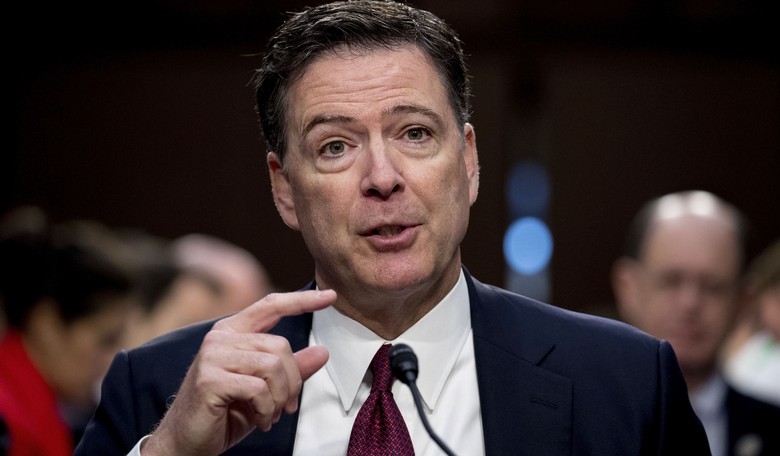
The Department of Justice's Inspector General, Michael Horowitz, last week released a new report detailing at least six terrorist attacks on American soil that the FBI could have prevented between November 2009 and January 2017 under former FBI Director James Comey's supervision.
According to Horowitz, the FBI was made aware of six homegrown violent extremists (HVE), but because of the agency's rush to close terrorism cases, threats were not adequately assessed and vetted.
The FBI established the HVE policy after the September 11th attacks to prevent future terrorist threats.
Following these attacks, the FBI conducted reviews and determined there were weaknesses in its HVE assessment processes. However, we found that the FBI has not taken sufficient action to address these weaknesses. Additionally, in 2017, the FBI conducted an enterprise-wide review and identified potential terrorist threats that may not have been adequately assessed during calendar years (CY) 2014 through 2016, which amounted to 6 percent of the total assessments reviewed. We found that the FBI did not take adequate action on nearly 40 percent of these assessments for 18 months. After we inquired about the lack of action, the FBI reexamined these assessments and, in some instances, the reexamination resulted in the opening of an investigation. We further found that the FBI has experienced a substantial influx of reports of suspicious incidents, but has not developed comprehensive strategies for addressing the challenges associated with the potential cross-over between terrorist threats and other categories of threats, for example, those posed by individuals with mental health issues and criminal threats to life.
Specifically, the FBI had information on the following incidents:
- Ft. Hood attack carried out by Nidal Hasan on November 5, 2009. Thirteen people died and more than 30 others were wounded.The FBI opened a counterterrorism investigation into Hasan on January 1, 2009. The investigation was closed on June 17, 2009. The FBI determined he posed no threat.
- Boston Marathon attack carried out by Tamerian and Dzhokhar Tsarvaev on April 15, 2013. Three people died as a result of the attack and more than 260 were injured. In March of 2011, the FBI opened a Guardian assessment on Tamerian. It was closed June 24, 2013, when the FBI determined he posed no risk to national security.
- Garland, Texas attack carried out by Elton Simpson and Nadir Soofi on April 30, 2015. Both gunmen were killed and one other person was injured. The FBI opened an investigation into Simpson on August 1, 2006 and closed it on November 7, 2014. Between February 4, 2015 and February 24, 2015, there were numerous Guardian assessments opened on Simpson. On March 3, 2015, the FBI reopens its investigation into Simpson.
- Pulse Nightclub shooting carried out by Omar Marteen on June 12, 2016. Forty-nine people died and more than 50 were injured. The FBI opened a case into Marteen on May 20, 2013, based on statements "indicative of radicalized ideology."
- New York and New Jersey bombings carried out by Ahmad Rahami between September 15th and September 17th, 2016. Although 30 were injured, thankfully, there were no fatalities. The FBI opened a Guardian assessment on August 27, 2014. The case was closed on September 19, 2014, as "No Nexus to Terrorism could be determined."
- Ft. Lauderdale Airport shooting carried out by Esteban Santiago on January 6, 2017. Five people were killed and more than 40 were injured. The FBI opened a Guardian assessment on November 8, 2016. The case was closed on November 30, 2016, when he was determined not to be a national security threat. He was also taken to a psychiatric institute for evaluation.
The report highlighted issues in how the FBI failed to handle information. One of the recommendations Horowitz made was for the FBI to develop "formal policies on the assignment and completion of routine counterterrorism assessments to address issues of timeliness and to encourage prioritization of counterterrorism assessments. In addition, this review identified concerns about the assignment of Task Force Officers as the lead investigators on certain assessments and investigations, and the need for increased training for counterterrorism Task Force Officers."
According to the report, FBI agents were quick to close terrorism cases. Those quick closures meant the FBI failed to assess potential threats adequately.
Since September 11, 2001, HVEs have carried out over 20 attacks in the United States, some of which occurred after the FBI closed a counterterrorism investigation or assessment on the individual. Following these attacks, the FBI conducted reviews and determined there were weaknesses in its HVE assessment processes.
However, we found that the FBI has not taken sufficient action to address these weaknesses.
Additionally, in 2017, the FBI conducted an enterprise-wide review and identified potential terrorist threats that may not have been adequately assessed during calendar years (CY) 2014 through 2016, which amounted to 6 percent of the total assessments reviewed. We found that the FBI did not take adequate action on nearly 40 percent of these assessments for 18 months. After we inquired about the lack of action, the FBI reexamined these assessments and, in some instances, the reexamination resulted in the opening of an investigation.
DEVELOPING: New IG report “...we found at least six attacks committed in the United States by individuals who the FBI had previously assessed or investigated...” including 2009 Fort Hood, 2013 Boston Marathon bombing, 2016 Pulse Nightclub READ: https://t.co/0zNzEHTZSm @CBSNews pic.twitter.com/msBeTbZxEp
— Catherine Herridge (@CBS_Herridge) March 4, 2020
Sen. Rand Paul (R-KY) slammed former FBI Director James Comey's leadership for not taking responsibility for the agency's failure to protect innocent Americans, specifically those who were at Pulse Night Club.
When I asked James comey after the Pulse mass shooting if in retrospect the FBI concluded too soon that Mateen was not a threat. The arrogant Comey refused to admit any mistake & maintained the opinion that Mateen was not a threat. Comey: tell that to the 49 people who died. pic.twitter.com/JSyduiUTjm
— Senator Rand Paul (@RandPaul) March 6, 2020
Below is the full report: