
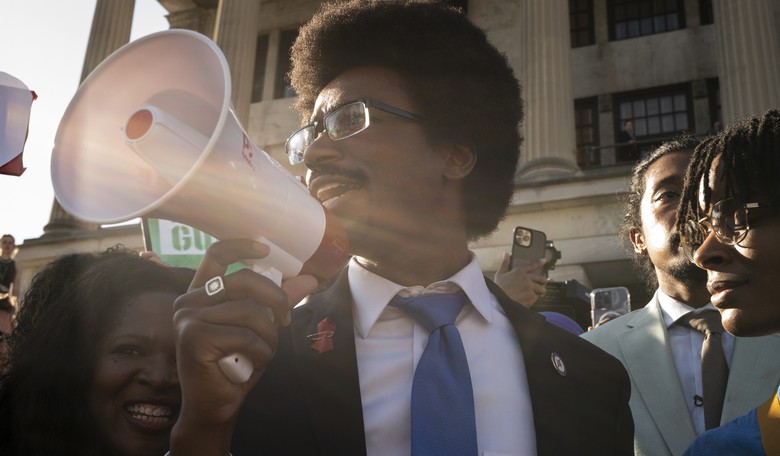
A federal judge blocked the Memphis City Council from barring dissenting views during council meetings.
This follows a lawsuit Vanderbilt’s Stanton Foundation First Amendment Clinic filed on October 14 on behalf of six residents, including Democrat state Rep. Justin Pearson, after the council barred five of them from attending future meetings.
The decision followed a heated gathering over a moratorium on AI data centers.
The council enforced rules against speech determined to be “personal,” “impertinent,” “slanderous,” “defamatory,” “abusive,” or “gossip.”
The court found that the bans were arbitrary and selectively applied. However, it left rules on profanity and vulgarity intact pending further briefing.
Judge Sides With Democrat Justin Pearson, Lifts Ban From Memphis City Council Meetings https://t.co/Ww7VUPgZoJ
— The Right News, Right Now. (@BradPorcellato) October 21, 2026
The plaintiffs call the council’s actions “violations of Plaintiffs’ First Amendment rights to freedom of speech and petition.”
The complaint argues that “The Memphis City Council enforces a ‘Speech Restriction Policy’ at its public meetings” and treats public comment as something other than a constitutional right. It notes that the policy constitutes viewpoint discrimination and is unconstitutionally vague and overbroad. “By relying on undefined, ambiguous, and illusory terms, the policy leaves Plaintiffs uncertain about its meaning and unsure how to comply, forcing them to self-censor.”
We won our first amendment lawsuit! After a targeted and unconstitutional ban from Memphis City Council & my family being doxxed by my SpaceXAI-backed opponent because of a leaked letter about, a judge has ruled that we have a RIGHT to attend & speak at local meetings. More ⬇️ https://t.co/mZfc1PiC8I
— Justin J. Pearson (@Justinjpearson) October 20, 2026
The lawsuit further claims the council applied the policy in a retaliatory manner. “Each of the banned Plaintiffs is an active community leader and well-known activist in Memphis who was targeted because of their consistent and sustained advocacy and leadership in the fight against AI data centers, not because of any disruptive behavior.”
Other recent federal court rulings have prevented local governments from preventing critics from speaking out during city council meetings by using vague rules to stifle dissent.
In June, the Fifth Circuit in the case of Merriott v. City of Bossier City in Louisiana held that a policy barring “personal, impertinent or slanderous remarks” or becoming “boisterous” during public comment was unconstitutionally overbroad and vague.
Another federal judge in April ruled in Maine’s Blanchard v. Augusta Board of Education that a school board was blocked from enforcing bans on similar types of speech, determining that the language in the rules was also vague.