
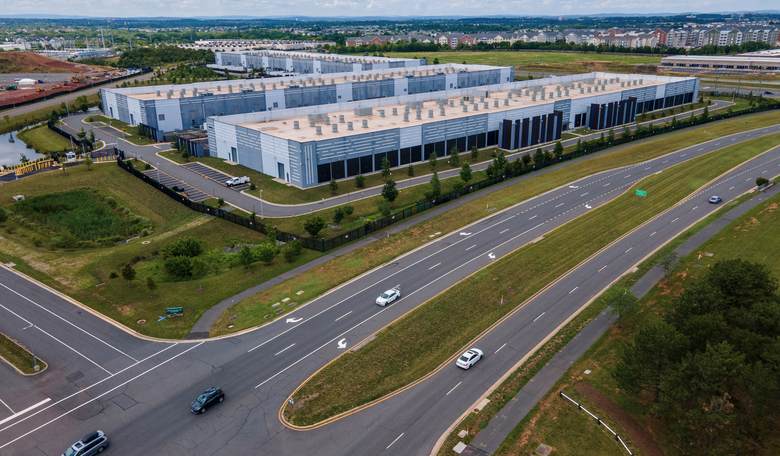
One of the most pernicious falsehoods in the debate over AI data centers is that Americans don’t want them. Polling seems to support that view. About three-quarters of Americans oppose their construction, and midterm exit polling from last week found that more than half said AI data centers were a “crucial” or “major” factor in deciding how to vote.
Of course, that opposition is at odds with Americans’ continued use of artificial intelligence to handle daily tasks, run businesses, launch new ventures, and drive economic growth, not to mention all the other technology they use every day that depends on data centers. In other words, Americans may say they oppose the construction of AI data centers, but their actions tell a different story. In reality, they are signaling that they don't just want more data centers; they need more.
Joe Martino, a fifth-year pipefitter apprentice helping build a data center near Reno, Nevada, put the contradiction plainly in an interview with Reuters.
🔥🔥🔥 Union worker in Reno: “If you guys wanna slow down on data centers, you gotta do a big shift and go back into the dinosaur ages.” “If the work's here, we're gonna build it.” https://t.co/LCwS8ZM69o
— Innovation Council (@innovationcncl) November 10, 2026
“As far as data centers go, if you guys don't want to keep building them, you guys are going to have to go old school. Start breaking out paper and pencils again,” Martino said.
“If you guys want to slow down on data centers, you've got to do a big shift and go back into the dinosaur ages.”
Rejecting new technology may not send the United States back to the dinosaur ages, but a country does not have to move backward to fall behind. Standing still is enough.
Right now, we have far more to lose by standing still. One in four Americans uses artificial intelligence every day, and about 60 percent have used it in the past six months. There is good reason to expect that use to grow. For all its risks, AI is remarkably useful for tedious, everyday tasks. It helps people work more efficiently, solve problems, and spend less time on routine chores. Many of its benefits are already apparent, others remain to be discovered.
Yet as Americans embrace the technology, they oppose its physical backbone in AI data centers often based on overblown concerns about water use, utility costs, the environment, and local economies.
But we must also confront the conflicting signals they are sending. In their daily lives, they demand more AI. At the ballot box, many reject the data centers needed to support it. These facilities would not be built in the first place without demand for the technology they make possible.
Until Americans reconcile those positions, the claim that they simply “don’t want data centers” holds little ground.