
What is driving the riots that engulfed France over the weekend and are now spreading across Europe? On the right, the answer is immigration from the developing world. On the left, it is a demand for more redistribution and more progressivism. But both explanations miss the larger point: The unrest is a revolt against the failure of the promises made under the name of European socialism, and social democracy.
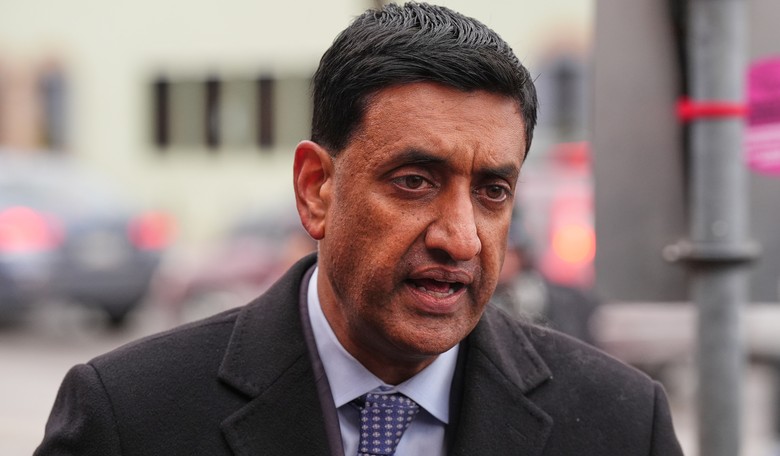
On Sunday, California Rep. Ro Khanna voiced support for the protests in France, portraying them as the cry of young people denied a stake in their own economy: an education that leads somewhere, a chance to build wealth, a fulfilling job. In short, the very things modern progressives insist their policies will deliver. While Khanna meant to make the case for the progressive model he so badly wants to lead at home in the United States, he instead offered a succinct account of its failure.
From the high schools of France to the streets of Madrid to the universities of Tirana, young people are telling their governments the same thing: in an age of massive wealth inequality, they want a future they can believe in. In France, students and teachers are asking for safe schools, enough teachers and smaller classes. In Spain, for affordable rent and housing. In Albania, for good jobs and an end to corruption. @JDVance says this is what happens when a nation lets in too many immigrants from the global south. He is not just morally wrong, but misreading the moment. The is what happens when nations let wealth and power accumulate in the hands of a few. This is what happens when young people lose hope in their future. In America, let us listen to our young. We need an economic and political transformation. America's Next New Deal.
— Ro Khanna (@RoKhanna) October 19, 2026
"From the high schools of France to the streets of Madrid to the universities of Tirana, young people are telling their governments the same thing: in an age of massive wealth inequality, they want a future they can believe in," Rep. Khanna wrote. "In France, students and teachers are asking for safe schools, enough teachers and smaller classes. In Spain, for affordable rent and housing. In Albania, for good jobs and an end to corruption."
"JD Vance says this is what happens when a nation lets in too many immigrants from the global south. He is not just morally wrong, but misreading the moment," he wrote. "The is what happens when nations let wealth and power accumulate in the hands of a few. This is what happens when young people lose hope in their future. In America, let us listen to our young. We need an economic and political transformation. America's Next New Deal."
Has France failed to be progressive? Is that really the argument?
France has already embraced the big-government model Rep. Khanna is prescribing. Government spending amounted to roughly 57 percent of GDP in 2024, while social-protection benefits alone amounted to 31.9 percent, the second-highest share in the European Union. This is not a country that has failed to try redistribution.
Nor has France neglected to tax “the wealthy.” Its top ordinary income-tax bracket is 45 percent, applying above €181,917 in taxable income for a single taxpayer. For a married couple with two tax shares and no children, the corresponding threshold is €363,834. America’s top federal rate, by comparison, is 37 percent, beginning in tax year 2026 above $640,600 for single filers and $768,700 for married couples filing jointly, before any applicable state income taxes.
France has not refused to tax, spend, or redistribute. It has built an extensive welfare state around doing precisely that. If Khanna’s answer is that France needs more redistribution, he has failed to explain why its already enormous commitment to redistribution has failed so miserably in its goals.
But that is the progressive escape hatch: the policies never fail; they simply haven’t gone far enough. Khanna looks at France and sees another excuse to sell Americans more of the same.
What we see in France is the culture of entitlement that socialism and progressivism foster: a government that promises to fix everything, then faces the fury of citizens who expect it to do precisely that. Housing is unaffordable? The state owes them cheaper housing. Groceries cost too much? The state owes them lower prices. Never mind that it was free markets, not centrally planned economics that brought these things in the first place.
The riots are little more than a tantrum. Voters embrace promises of comfort today, then rage at the economic constraints those promises cannot abolish tomorrow. Rather than reconsider the bargain, politicians like Khanna tell them to demand more. That is the culture taking root in the United States, and the one that conservatives must oppose not just the spending it demands, but the premise that government owes everyone a life free of tradeoffs.