
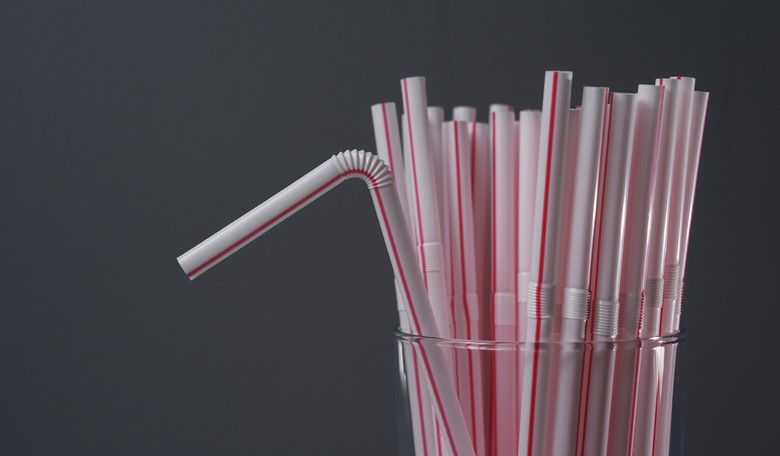
We've all been there. You go out for a drink or dinner and your server puts a paper straw on your table. It starts getting soggy and losing structural integrity about two sips into your beverage, and you get the added bonus of bits of wet paper in your drink. We're supposed to tolerate this because some 9-year-old kid in Vermont made up a number about how many straws Americans use (500 million per day). The media — ever eager to listen to children about environmental issues — ran with this number blindly.
But now a new study says those "eco-friendly" straws may be worse for the environment than their plastic counterparts.
Paper straws worse for the environment than plastic ones, says study https://t.co/9LjSEQtXEZ pic.twitter.com/fZDDUchY4m
— New York Post (@nypost) October 26, 2026
A damning study out of South Korea has revealed that paper straws might actually be worse for the planet than plastic ones, especially when their life cycle is traced from the factory floor to the landfill.
The findings suck the air out of some long-winded environmental protests, which claimed for a decade that plastic straws were on par with toxic fumes or forest fires — and fought to make iced lattes nearly impossible to drink through a soggy, wilted tube of cardboard.
The research comes from South Korea’s Ministry of Climate, Energy and Environment, which analyzed four types of straws — paper, plastic, biodegradable plastic, and sugarcane-based — across 16 environmental categories.
The study showed that of the four types, those plastic straws had the smallest environmental footprint in 10 of 16 categories. Those categories include human toxicity, particulate matter, and overall climate change impact.
Paper straws were found to generate six times more carcinogens than standard plastic and double the acidification. Straws made from renewable sources like sugarcane produced 16 times the carcinogenic impact and six times the acidification damage.
Acidification is the metric scientists and researchers use to measure pH changes in soil and ocean water. Because paper straws have water-resistant coatings and industrial glues holding them together, they do not break down easily, require more energy to process, and can still have microplastics in them.
And because straws are so small, paper straws often fall through sorting equipment at recycling facilities, meaning few are actually recycled.
According to The New York Post, South Korean lawmaker Kim Wi-sang blasted environmental groups and the South Korean government for "prioritizing feel-good narratives over hard science."
"The government must acknowledge the failure of its greenwashing policy, which fixated on ineffective substitute materials," Wi-sang said.
That's what you get for listening to a nine year old.
— Goldens Rule (@retiredgolden) October 27, 2026
Probably not a wise idea.
Paper straws also contribute to infertility https://t.co/LTge9AznvX
— Tom Elliott (@tomselliott) October 27, 2026
Environmentalists probably see this as a feature and not a bug.
So much of the climate hysteria is just aimless guilt roaming the earth in search of futile acts of atonement. https://t.co/0oUbRRRVvH
— DHH (@dhh) October 27, 2026
Yes. It's become a religion of its own, with rituals, acts of penance, and sacraments.