

The curtain is falling on the world's most expensive soap opera. For decades, a cast of unelected bureaucrats and subsidized academics fought to keep the production alive, but the audience has finally walked out. The climate-crisis clown show is over.
In early January, President Donald Trump formally withdrew the United States from the 1992 United Nations Framework Convention on Climate Change and severed ties with over 60 associated UN organizations. By ending support for the Intergovernmental Panel on Climate Change – the self-anointed arbiter of planetary truth – the U.S. stopped bankrolling the institutions that have long conspired to dismantle the economic sovereignty of nations.
Mainstream commentators are scrambling to frame this as a retreat into isolationism. But this represents a rational, economic calculation rooted in evidence rather than the hysteria of doomsday cults. What deserves attention, however, is that Trump is merely doing openly what Asia's energy superpowers have been doing quietly for years.
Beijing long ago stopped pretending to care about the sensibilities of European climate activists. The Chinese Communist Party understands that power – both electrical and geopolitical – comes from hydrocarbons. China is outpacing the rest of the world in building coal-fired power plants at an unprecedented pace.
China is also securing energy lifelines beyond its borders. China National Chemical Engineering signed construction contracts worth $20 billion for the Ogidigbon Gas Revolution Industrial Park in Nigeria. Beijing-based Sinopec committed $3.7 billion to construct an oil refinery in Sri Lanka. Chinese financial institutions have lent $52 billion to Africa's energy sector, with about half going to fossil fuel projects since the early 2000s.

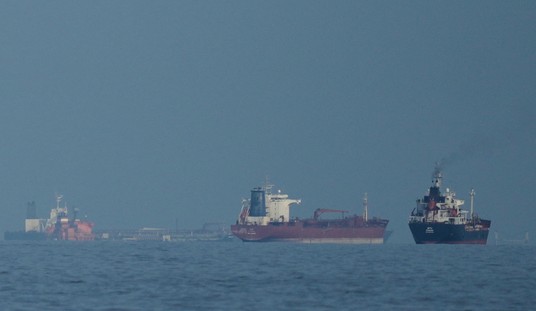
China's construction of the Kyaukphyu deep-sea port and Special Economic Zone in Myanmar serves as another telling indicator. Valued at approximately $7.3 billion for the port itself and $1.3 billion for an adjacent economic zone, this project will be a strategic bypass around the congested Malacca Strait – a chokepoint through which over 70 percent of China's oil and gas trade passes.
The signal is unmistakable: China is not preparing for a post-hydrocarbon world. It is ensuring reliable, diversified supply chains for energy resources, especially oil and natural gas.
India, too, has quietly ended its flirtation with Western green agendas. Indian consumption of petrochemicals is set to grow by 6-7 percent annually. To meet this demand, India is aggressively expanding oil and gas exploration and refining capacity. In November alone, Indian processing of crude oil grew to 22.3 million metric tons, a 2.3 percent increase from the previous year.
Late last year, the Indian government auctioned blocks of coal with combined geological reserves of over 3 billion metric tons. India's planning documents ignore natural gas as a "bridge fuel" and identify coal as the nation's mainstay fuel.
Worldwide, there are 460 coal plants under construction. Another 500 have been permitted or are about to be, with an additional 260 new plants expected to be announced. The vast majority of all this activity is in China and India.
These nations are not "transitioning" from coal; they are cementing its dominance. Even Indonesia, which was once the poster child for the West's "Just Energy Transition Partnerships," has faced reality as it canceled the early retirement of the massive Cirebon coal-fired plant.
Trump's withdrawal from the UN's climate tyranny and the parallel actions of Asian energy giants are a recalibration of global priorities. Nations are reasserting the right to pursue policies rooted in their own economic interests rather than follow "international" edicts of a favored few. Governments and businesses are investing billions in extracting and transporting hydrocarbons. Ports, pipelines, and refineries designed to function for decades are being built.
The Trump administration has simply ended American participation in a system that was already irrelevant to the actual decisions being made by the world's major energy consumers.
In part, the narrative of an "energy transition" survived by being presented as inevitable. That sham has been exposed. A transition will likely occur someday, but only when new technologies prove to be affordable and reliable.
In the meantime, expect more exits, more quiet defiance, more recalibration. Climate rhetoric will continue to diminish as investments in hydrocarbons accelerate.
Vijay Jayaraj is a Science and Research Associate at the CO2 Coalition, Fairfax, Virginia. He holds an M.S. in environmental sciences from the University of East Anglia and a postgraduate degree in energy management from Robert Gordon University, both in the U.K., and a bachelor's in engineering from Anna University, India. He served as a research associate with the Changing Oceans Research Unit at University of British Columbia, Canada.