
When a hostile nation, a terrorist cell, or a solar storm takes down the power grid, Americans won’t find out what to do from a smartphone app. Cell towers will go dark within hours, and internet service will go with them. But one technology will still be talking: AM radio.
That is why the AM Radio for Every Vehicle Act matters. On September 15, the House passed it with overwhelming bipartisan support. Its Senate companion has more than 60 cosponsors and has cleared committee. It is ready for passage today. Yet the bill still waits for Senate floor time. With a broad bipartisan majority ready to pass it, a lone procedural objection should not be enough to stand between the American people and the most resilient communications system the nation has. Now is the time for the Senate to act.
Built for the Worst Day
Most Americans have never heard of the Primary Entry Point (PEP) system, but they depend on it. Working with FEMA, a network of dozens of radio stations, most of them AM, has been fortified to serve as the backbone of the national Emergency Alert System. These stations exist so that the president can address the nation when every other channel has failed.
PEP stations are hardened against electromagnetic pulse attacks. They keep enough backup fuel on hand to broadcast for days without commercial power. Many have separate, protected broadcast facilities and sleeping quarters so staff can stay on site through a prolonged crisis. Together, they can reach the vast majority of Americans.
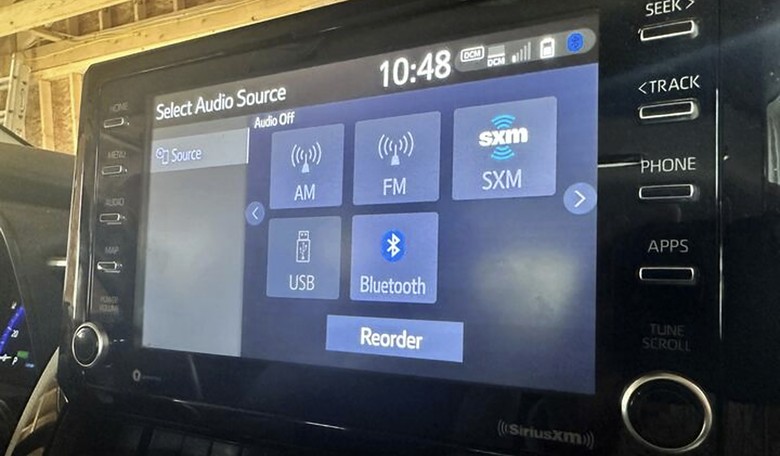
But every dollar invested in that infrastructure is wasted if Americans have nothing to receive it with. Eighty-seven percent of Americans still listen to broadcast radio each week, and much of that listening happens in the car. In a disaster, the car is often the only working radio a family has left. It has its own power source and its own antenna, and it goes wherever the family goes. If automakers continue stripping AM receivers from new vehicles, they are quietly unplugging the endpoint of America’s emergency communications system.
Disasters Have Already Shown Us
As a former radio station general manager, I know serving the public interest during an emergency was top of mind for me and our entire staff. And we don’t have to imagine what happens when the grid and data networks fail. Natural disasters have already run that test, and the results are the same whether the cause is a storm or sabotage.
When wildfire tore through Lahaina in 2023, power outages and disrupted cell service left many residents struggling to get information as they tried to flee. Outdoor warning sirens never sounded. Many received little warning before smoke and flames reached their neighborhoods.
When Hurricane Helene devastated western North Carolina in 2024, mountain communities were cut off for days. Many residents lost power, cell service, and internet access, while roads were washed out or blocked. Local radio became a lifeline, delivering emergency coverage and helping families locate loved ones, find essential supplies, and learn where help was available.
During the Los Angeles wildfires in January 2025, residents faced power outages, disrupted cell service, and an erroneous evacuation alert sent to millions far outside the intended warning area. Local broadcasters provided continuing coverage of evacuation orders, road closures, and fire conditions as residents struggled to make sense of conflicting alerts.
When the power fails and data networks crash, broadcast radio is still standing.
A National Security Priority
America’s strength has always rested on preparation. Modern threats to our infrastructure are real. U.S. officials have confirmed that state-backed hackers from China have burrowed into American telecommunications networks and critical infrastructure, positioning themselves to disrupt them in a future conflict. That’s exactly why our resilience matters so much. AM radio is one of the quiet advantages this country already has: a proven, hardened system that keeps working when other networks don’t. A nation that can always reach its citizens is a nation that can lead them through anything.
Automakers argue this is about electromagnetic interference from electric motor components and product design. Make no mistake: those engineering challenges can be solved with shielding and filtering, and several manufacturers already offer AM radio in their electric vehicles. National resilience is not a feature to be removed in a software update. Seven former FEMA Administrators from both parties have urged Congress to protect AM radio for exactly this reason.
The AM Radio for Every Vehicle Act is a modest, common-sense step. It requires that AM radio stay standard equipment in new vehicles at no extra cost to the driver. Nothing more. When the worst happens, Americans will still be able to hear the warning.
The Senate Must Act
The House has done its job, and President Trump has repeatedly expressed his support for keeping AM radio in our vehicles. A broad, bipartisan majority of senators is ready to act. All that’s missing is floor time. If unanimous consent can’t be reached, Senate leadership should bring this bill up for an up-or-down vote and let the Senate decide. One objection shouldn’t outweigh a supermajority.
When the lights go out, AM radio will still be there. The question is whether our cars will be able to hear it.
Nic Anderson is Vice President of Government Affairs at Salem Media and Vice President of Public Policy at NRB.